

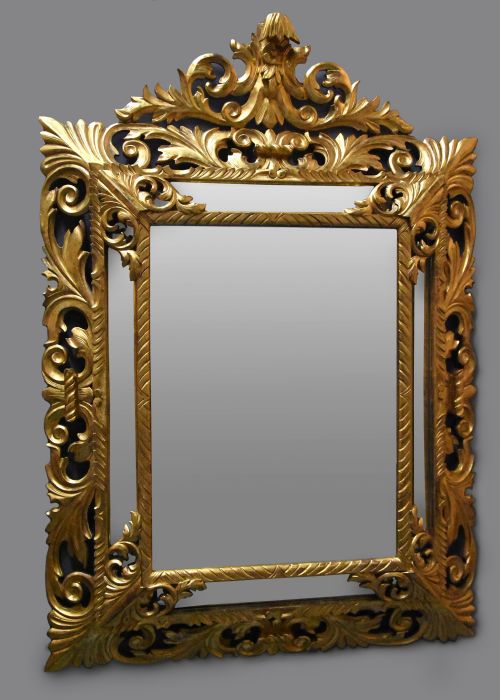
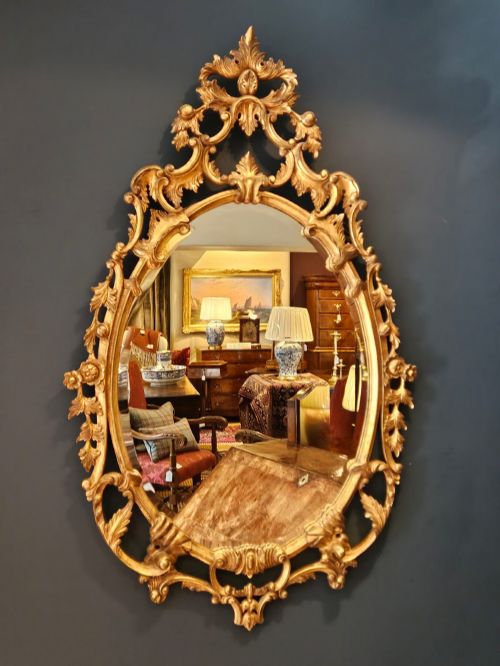


Gilded Baroque Mirror
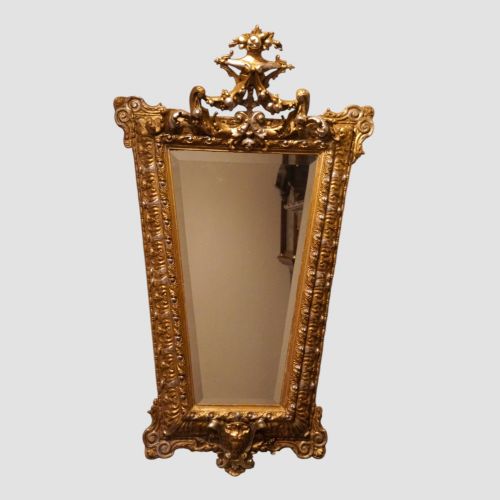
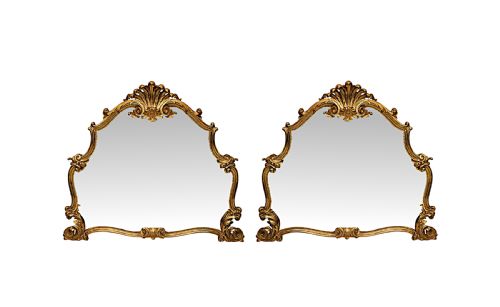
A gilded baroque mirror brings theatrical depth to a room through heavy carved ornamentation and brilliant metallic surfaces.
Gilded Baroque Mirror
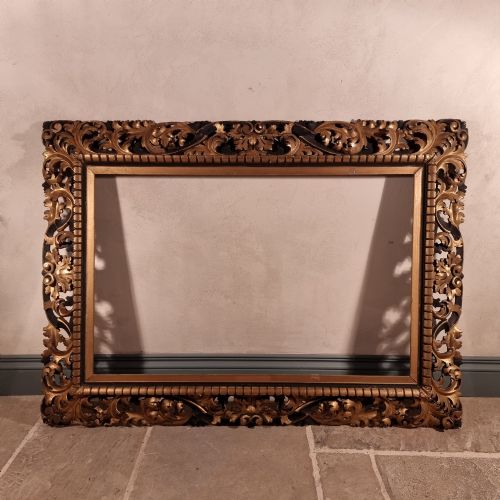
When you search for a gilded baroque mirror, you encounter pieces that originate primarily from the seventeenth and eighteenth centuries, alongside later revivals from the nineteenth century. These objects include wall mirrors, overmantels, pier glasses, girandoles, and cushion frames.
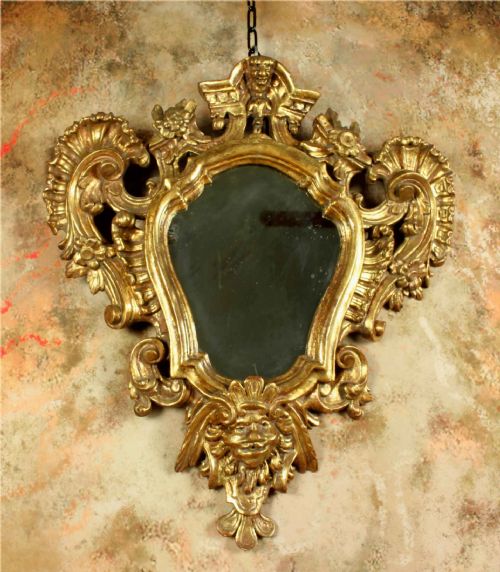
The version you are most likely to meet on this page is an Italian creation, frequently originating from Florentine or Venetian workshops. They combine robust carved wooden structures with ornate gesso and gold or silver leaf decoration.
These items function as focal points in a hallway, above a mantelpiece, or as dressing mirrors. Their forms range from small table mirrors to grand architectural wall fixtures.
How they were made
Artisans carved the primary structure from timber, often utilising softer woods that accepted intricate detail readily. Carvers shaped deep scrolls, foliage, and occasionally figurative elements like masks or lion heads into the wooden substrate.
A layer of gesso provided a smooth preparation surface for the application of metal leaf. Guilders laid gold leaf or silver leaf over this base, burnishing the metal to achieve a high sheen or leaving it with a matte finish.
Listings feature pieces spanning from the 17th century through the Victorian era, utilising carved wood, gesso, and mirror glass.
What varies in quality
The depth and conviction of the carving dictate the artistic success of the piece. Finer examples display undercut foliage and crisp, confident detailing that holds the eye across a room, whereas lesser items rely on shallow surface moulding.
The handling of the gilding alters the character of the object significantly. Superior work shows a nuanced interplay between burnished highlights and shadowed recesses, rather than a flat, uniform metallic coating.
The Gilded Baroque Mirror Glossary
- Gesso
- A plaster mixture applied to carved wood to create a smooth base for gilding. It allows for sharp detail work before the metal leaf is laid.
- Giltwood
- Timber that has been coated with gold leaf or silver leaf. This method provides the appearance of solid gold while utilising a lighter wooden structure.
- Pier glass
- A tall mirror designed specifically to hang on the wall space between windows. These pieces often matched console tables placed directly beneath them.
- Girandole
- A decorative wall mirror featuring attached candle sconces. The reflective glass multiplies the candlelight to illuminate the interior space.
- Cushion frame
- A mirror frame with a broad, rounded profile that swells outward toward the edges. This style creates a pronounced three-dimensional effect on the wall.
Gilded Baroque Mirror: Frequently Asked Questions
How do I hang a heavy antique mirror safely?
Secure the piece directly into wall studs using appropriate steel fixings rated for the weight. Heavy frames require professional hanging hardware to distribute the load evenly.
Avoid relying solely on plaster walls or lightweight picture wire. Consult a specialist if the mirror possesses an exceptionally heavy carved timber and gesso construction.
Where should I place a baroque mirror in my home?
Hang the piece above a fireplace mantel or in a hallway to bounce natural light around the room. These grand objects anchor large wall spaces effectively.
Ensure the mirror faces a light source or an interesting architectural feature to maximise its reflective impact within the interior.
How do I clean an antique gilded frame?
Dust the carved wooden surfaces gently with a soft, dry brush to remove particles without disturbing the delicate gold leaf. Avoid moisture and chemical cleaning solutions entirely.
Water or commercial sprays can lift the gesso and damage the historic metallic surface. Leave deep cleaning to professional conservators.
How can I distinguish an 18th-century mirror from a 19th-century revival?
Examine the construction of the wooden backboards and the hand-cut joinery for signs of age. Eighteenth-century pieces typically exhibit tool marks and timber shrinkage consistent with early craftsmanship.
Revival pieces from the nineteenth century often display machine-sawn elements and different nailing techniques. The crispness of the gesso application also differs across eras.