

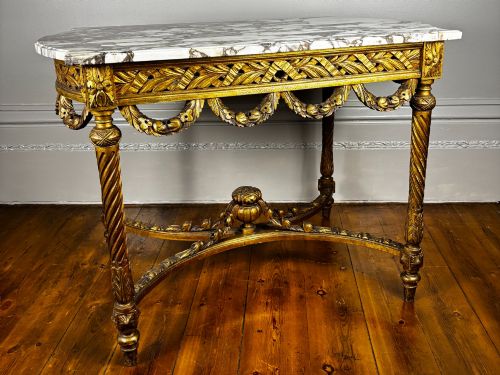
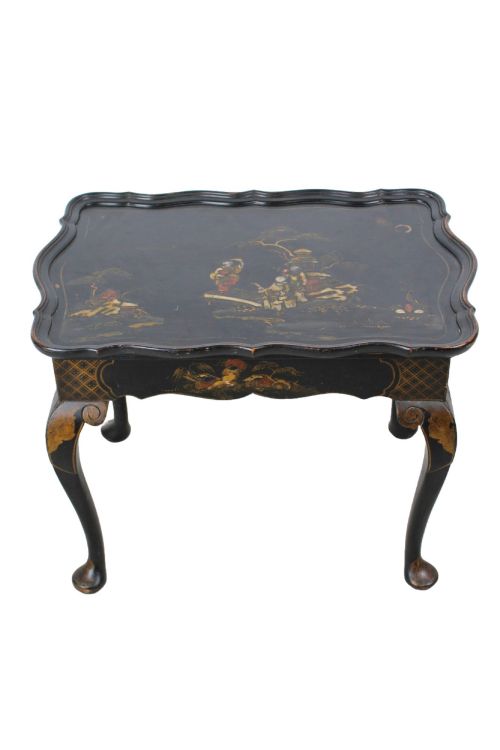
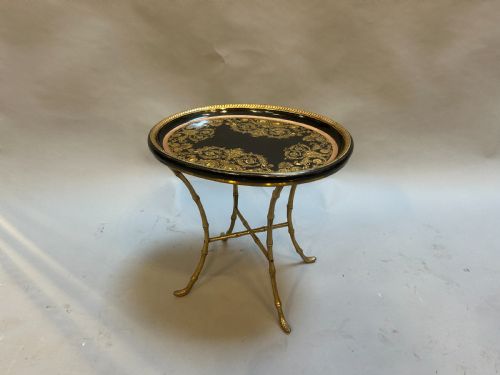

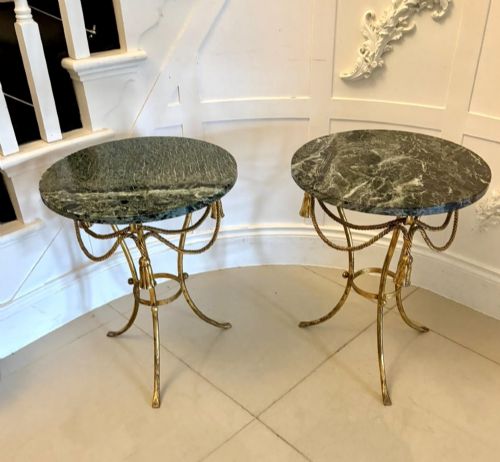

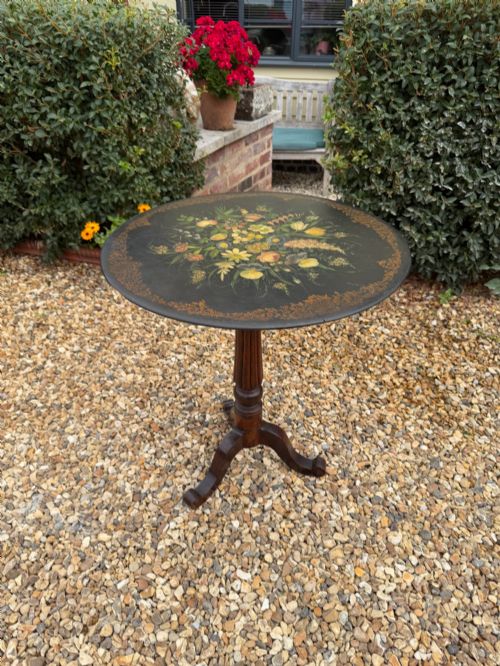
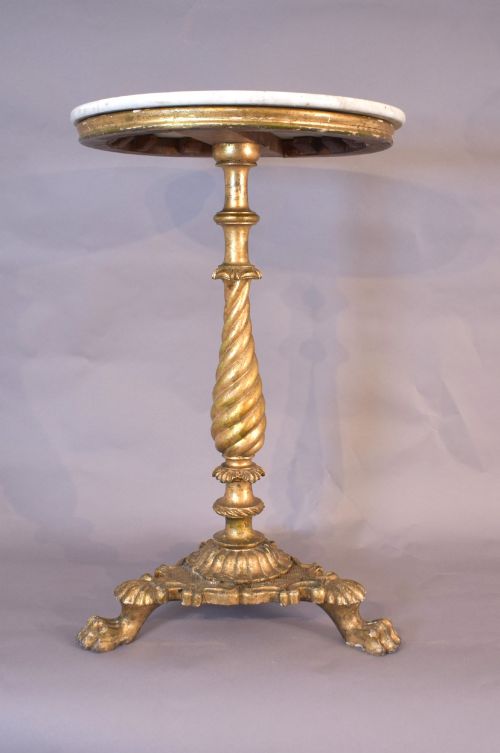
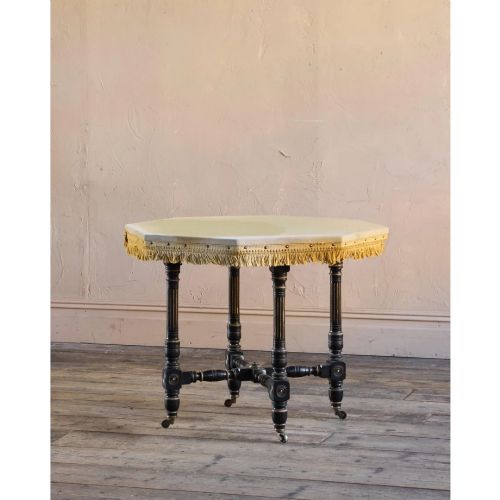
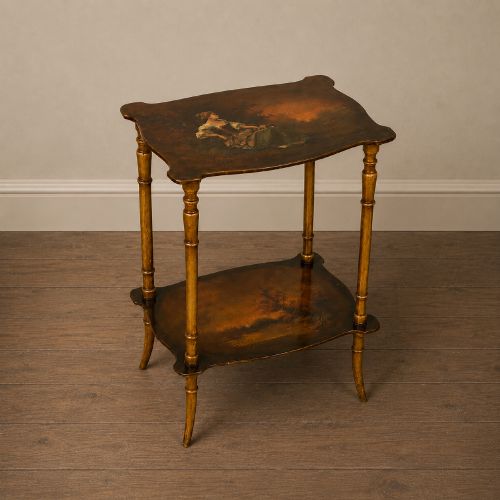
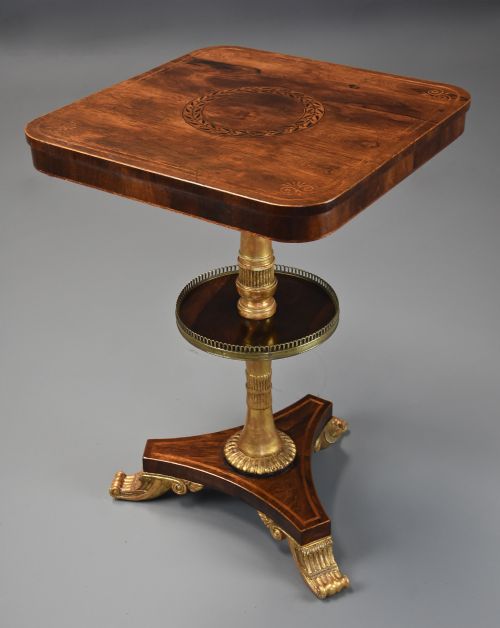

Gilded Accent Side Table
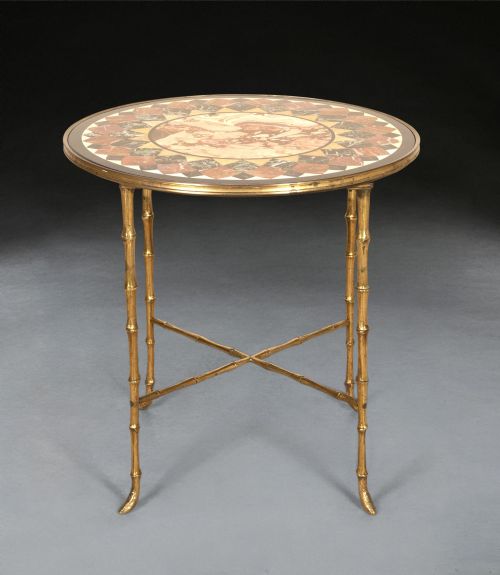
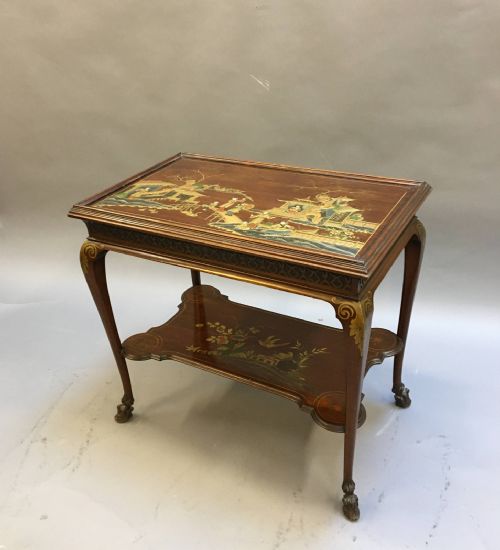
A gilded accent side table brings light and reflected surface into a room, combining timber or marble with gold leaf and brass.

Gilded Accent Side Table
A gilded accent side table serves as a functional surface while introducing metallic warmth and decorative detail to an interior space. These pieces emerge across nineteenth-century and early twentieth-century periods, drawing on Regency, Victorian, Edwardian, and continental design traditions.
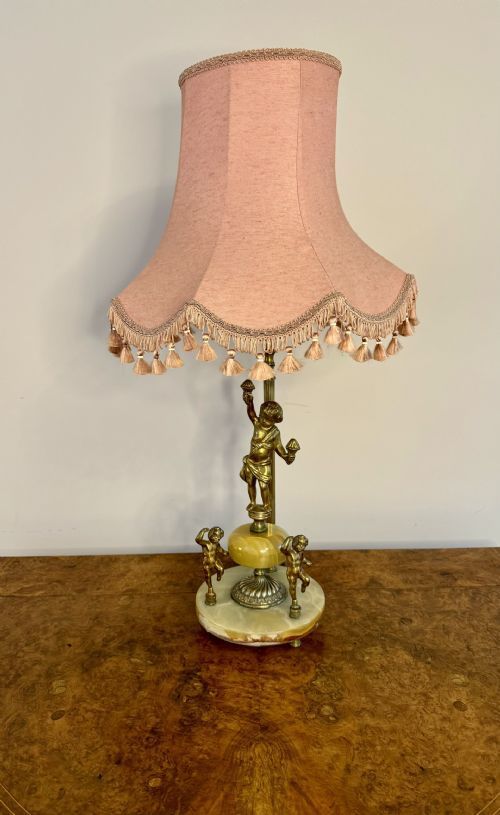
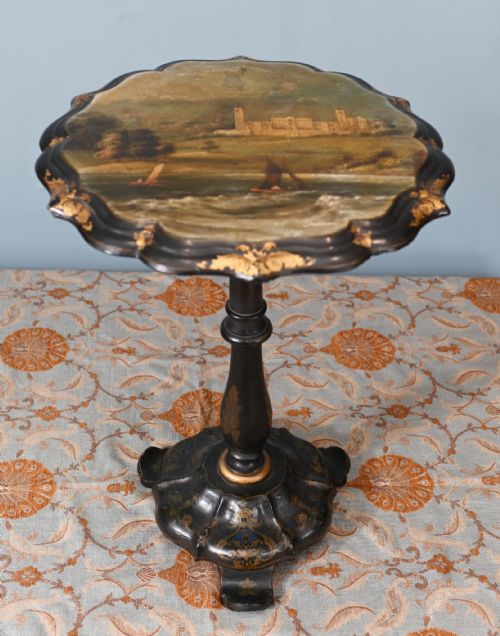
The selections available here range from small lamp tables and occasional stands to two-tier étagères and tray top coffee tables. Buyers frequently encounter forms bearing carved giltwood, marble tops, or painted and parcel gilt surfaces reflecting French and Italian aesthetics.
Makers and workshops utilised diverse woods such as mahogany, rosewood, kingwood, and walnut as structural bases for metallic enrichment. The resulting forms integrate classical motifs like dolphins, swans, and floral mouldings into domestic reception rooms and boudoirs.
Materials and construction methods
Craftsmen applied gold leaf, gesso, and ormolu mounts to solid timber frames, lime wood, or carved giltwood to create durable yet ornate metallic finishes. Marble and onyx inserts frequently provided inset tabletops, supported by brass columns or carved wooden pedestals.
Joinery techniques combined traditional cabinet-making with specialised surface decoration, including hand-painting, lacquer, and Vernis Martin varnishing. Ormolu and gilt bronze mounts were cast and chased before being secured to mahogany, rosewood, and kingwood carcasses.
Gilded Accent Side Table Retail Price Guide 2026
Typical asking prices for gilded accent side table among the pieces listed under this phrase on Sellingantiques today, from the lower quarter to the upper quarter. They describe what is for sale here now, not the wider market.
Periods represented span the eighteenth century, nineteenth century, Regency, Victorian, Edwardian, and 1930.
Determinants of quality
The refinement of the carving and the purity of the gilding separate exceptional examples from standard production pieces. Hand-tooled ormolu mounts, genuine marble or onyx slabs, and dense timber cores indicate superior workshops.
Proportion and decorative restraint dictate the standing of a piece within its period style, whether executed in a French Louis XVI manner or an English Regency idiom. Crisp detailing on wooden mouldings and secure attachment of structural bronze elements reflect the original maker's skill.
Hindley And Sons·George Bullock·Zwiener
The Gilded Accent Side Table Glossary
- Giltwood
- Timber that has been coated with gold leaf over a prepared gesso ground. This technique creates a luminous surface common on eighteenth and nineteenth-century frames and tables.
- Ormolu
- Finely chased and gilt bronze used for decorative mounts and furniture fittings. It gained widespread popularity in French Neoclassical and Rococo Revival pieces.
- Vernis Martin
- A type of simulated Japanese lacquer developed in France during the eighteenth century. It employs multiple layers of translucent varnish to achieve depth and lustre.
- Étagère
- A piece of furniture consisting of open shelves for displaying small objects or serving drinks. These multi-tiered tables appear frequently in Edwardian and continental interiors.
- Parcel Gilt
- A decoration method where only specific portions of an object are gilded while the remaining surface shows painted wood or natural grain.
Gilded Accent Side Table: Frequently Asked Questions
Where should I place a gilded accent side table?
These tables suit reception rooms, hallways, and beside seating where a reflective surface and compact footprint add utility and light.
Their decorative nature allows them to function as lamp stands or display points for small objects without dominating the room's proportions.
How do I identify a Regency period piece?
Regency pieces often display classical architectural motifs, dark woods like rosewood and mahogany, and restrained brass or giltwood enrichment.
Proportions remain balanced, drawing inspiration from Greek and Roman design rather than the elaborate curves of earlier French styles.
What is the difference between marble and onyx tops?
Marble provides a dense, veined stone surface with varied mineral patterns, frequently utilised on heavy nineteenth-century console and centre tables.
Onyx offers a translucent, banded appearance that catches light differently, often found on lighter occasional and lamp tables from the Edwardian era.
How do I care for gilded and painted surfaces?
Dust surfaces gently with a soft, dry cloth and avoid harsh chemical cleaners that can lift gold leaf or damage delicate paintwork.
Keep tables away from direct heat sources and strong sunlight to prevent timber movement and fading of applied finishes.