
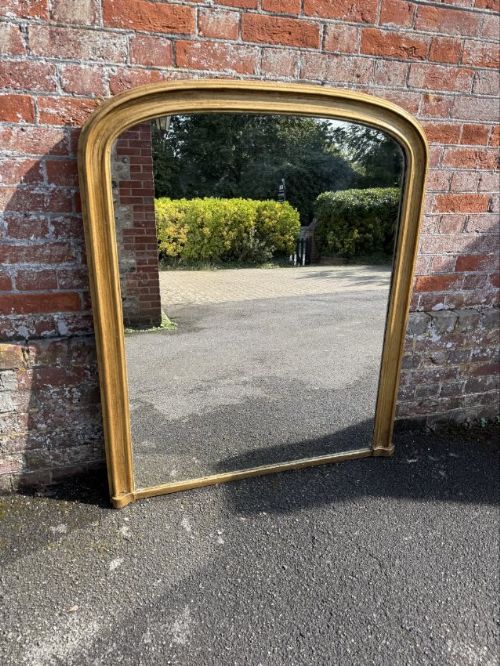
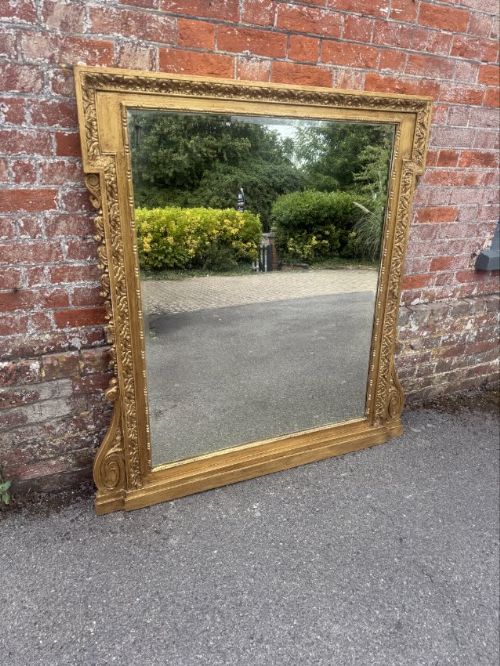
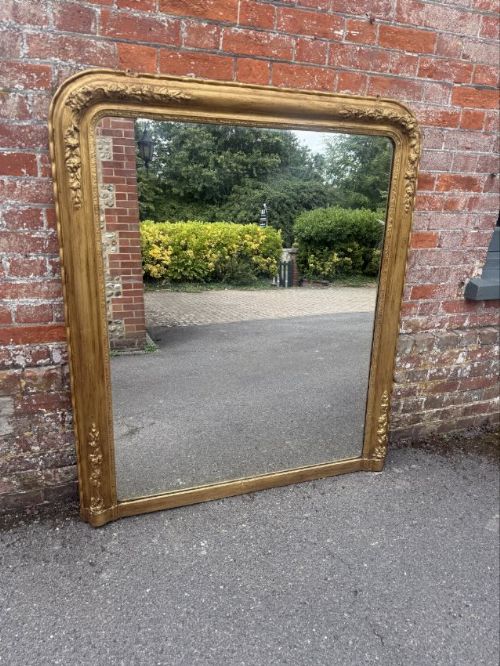
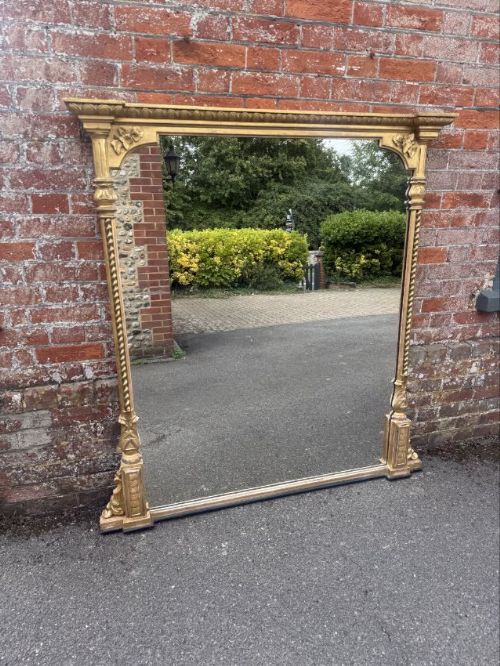


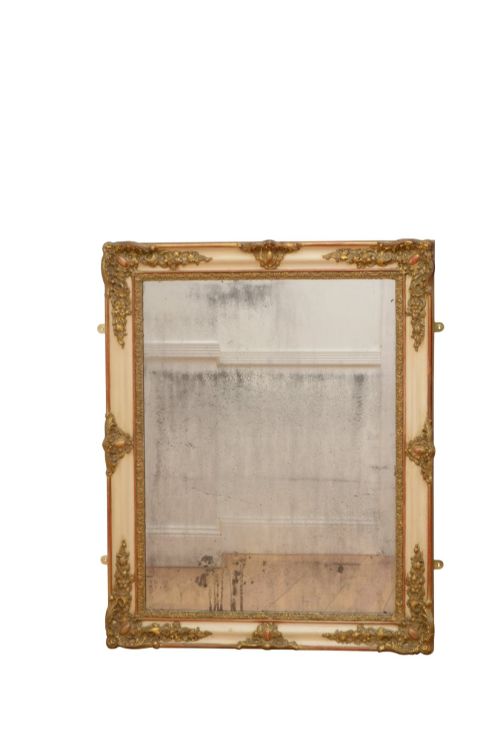
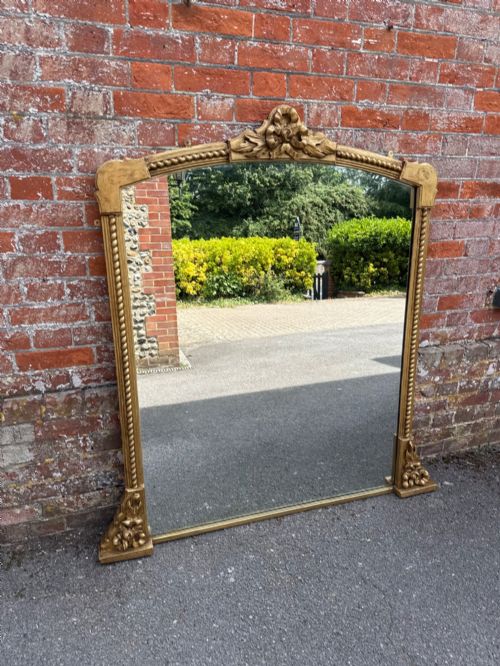
Gesso Gilt Overmantel
A gesso gilt overmantel brings structural presence and reflective depth to a chimney breast, combining nineteenth-century craftsmanship with grand decorative scale.
Gesso Gilt Overmantel
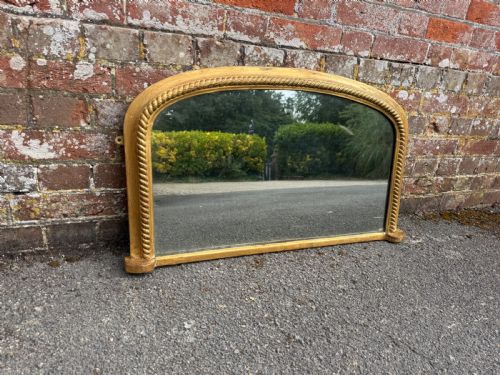
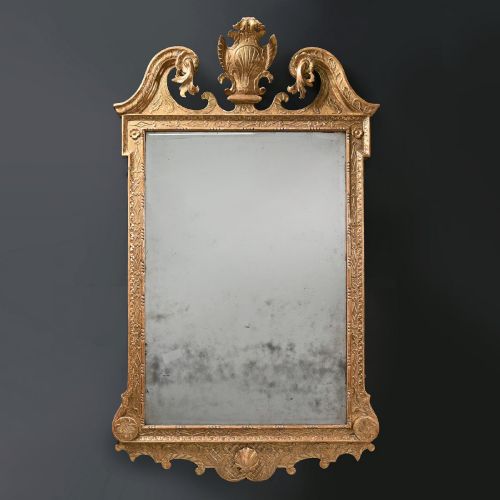
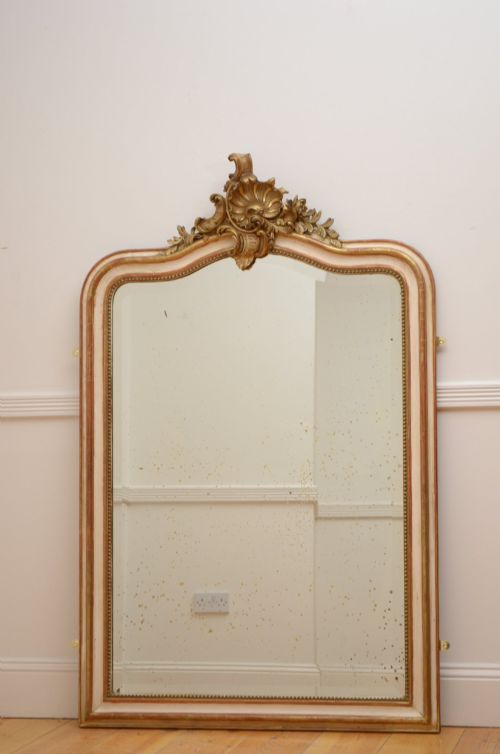
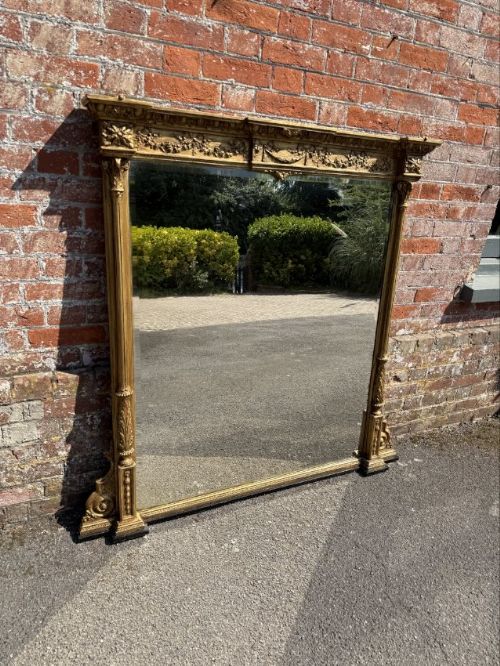
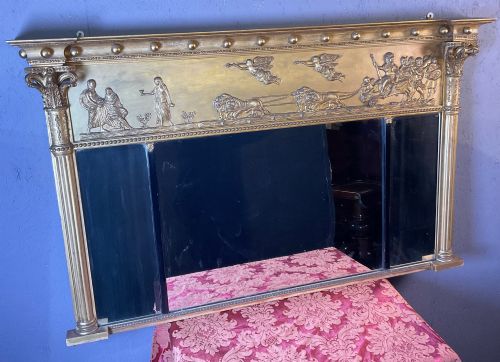
A gesso gilt overmantel is a large-scale mirror designed specifically to sit above a fireplace mantel, serving as a central focal point in a reception room. These pieces command attention through generous proportions and ornate framing that reflects period interior design.
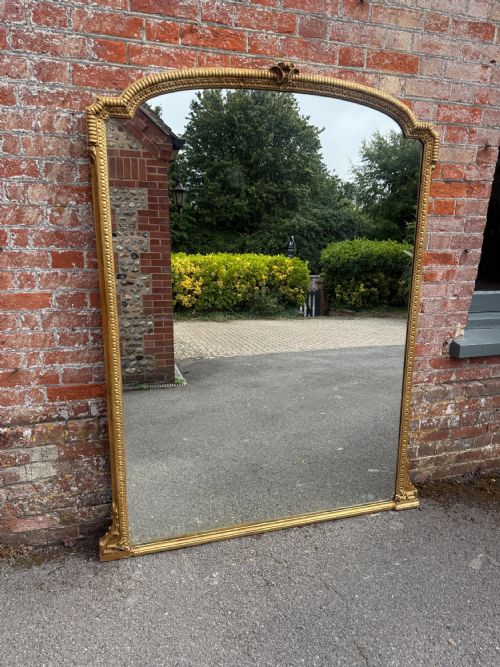
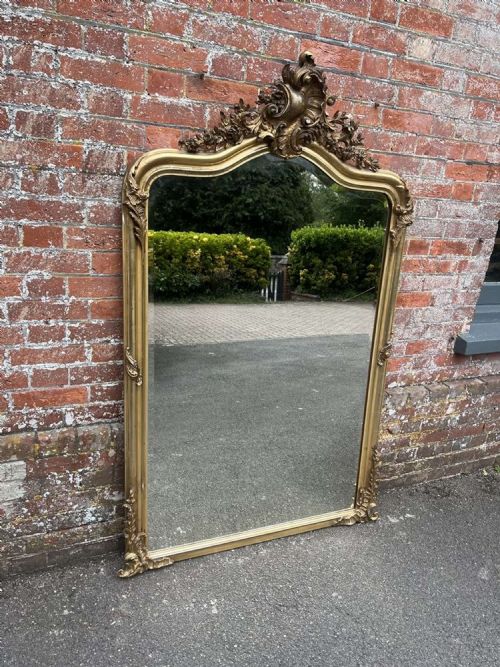
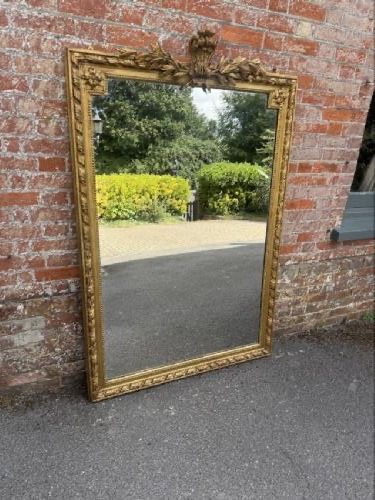
Most examples encountered here originate from the nineteenth century, spanning Victorian English workshops and French chateau aesthetics. They appear primarily in arched top, shaped top, and rectangular formats designed to mirror the architectural opening below them.
How They Were Made
Artisans constructed the primary foundation from carved wood, creating a sturdy structural carcass capable of supporting heavy glass plates. Over this wooden base, they applied layers of gesso - a chalk and binder mixture - which provided a smooth, responsive surface for intricate ornamentation.
The decorative relief was then finished with gold leaf or liquid gilding applied over the prepared gesso ground, sometimes accompanied by painted highlights. This multi-step layering method created the rich, reflective metallic sheen characteristic of period giltwood and gesso frames.
Several mirrors harbour cheerful Victorian cherubs peeking out from the gesso scrollwork, watching over the hearth below.
What Varies in Quality
The depth and crispness of the carved wooden elements beneath the gesso layer dictate much of the piece's sculptural integrity. Finer examples display sharp, hand-tooled detailing in motifs like rope twists, ribbons, and classical columns rather than shallow, softened moulding.
The preservation of the original gold leaf and the underlying gesso determines the visual harmony of the surface over time. Superior pieces maintain their original gilded layers with minimal intervention, preserving the authentic warmth accumulated across centuries.
The Gesso Gilt Overmantel Glossary
- Gesso
- A dense mixture of chalk, gypsum, and glue binder applied to wood frames to create a smooth surface for gilding.
- Giltwood
- Timber framing covered with thin sheets of gold leaf, providing a bright and durable metallic finish.
- Overmantel
- A large mirror or painting specifically proportioned to hang on the wall directly above a fireplace mantelpiece.
- Rope Twist
- A carved spiral decorative motif resembling intertwined ropes, commonly seen framing nineteenth-century mirrors.
- Cartouche
- An ornamental framed tablet or scroll-like shield shape, often incorporated into the crest of elaborate mirror frames.
Gesso Gilt Overmantel: Frequently Asked Questions
Where should an overmantel mirror be hung?
These large mirrors are traditionally mounted directly above the fireplace mantelpiece, where they anchor the visual weight of the hearth.
Positioning them at this height also allows the glass to reflect light from opposing windows across the room, brightening the entire space.
How do I identify a Victorian gesso mirror?
Victorian examples typically feature robust carved wooden frames coated in thick gesso, often displaying arched tops, rope twists, or column details.
Many of these nineteenth-century pieces showcase English or French stylistic influences, ranging from ornate rococo revivals to simpler classical formats.
Were these mirrors made in France as well as England?
French workshops produced a vast number of these large mirrors, often incorporating distinct regional flourishes like Louis Philippe or Rococo styling.
English makers created similar proportions, frequently utilising heavy timber frames and traditional gilt finishes tailored to Victorian interiors.
How do I clean a giltwood and gesso frame?
Gilded and gesso-coated surfaces require gentle dusting with a soft, dry brush to prevent moisture damage and loss of the delicate metallic leaf.
Harsh chemical cleaners must be avoided entirely, as they can strip away the historic gold leaf and soften the underlying chalk composition.