
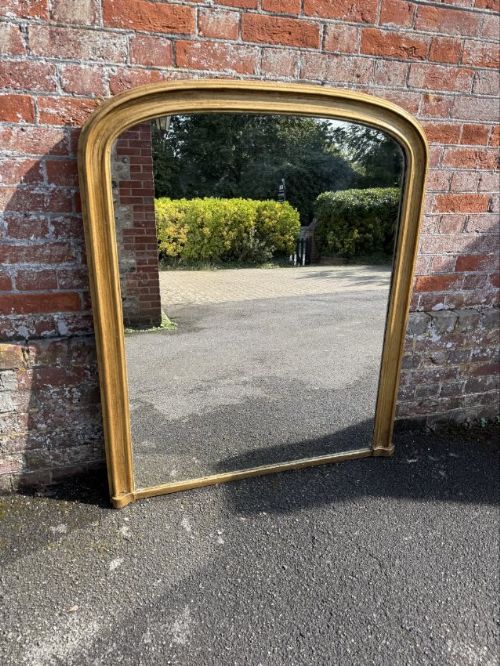
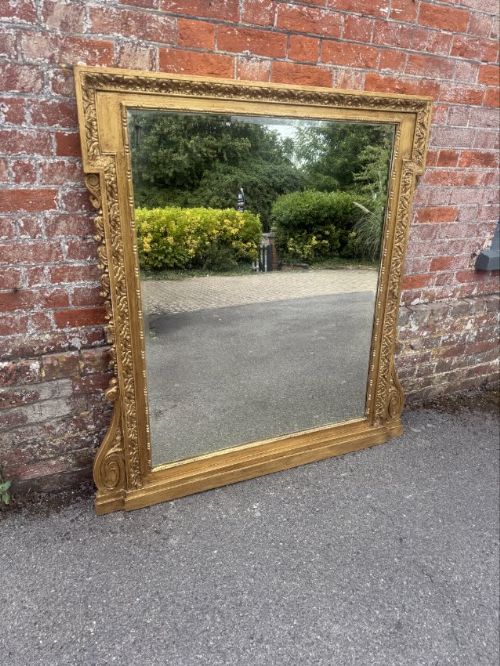
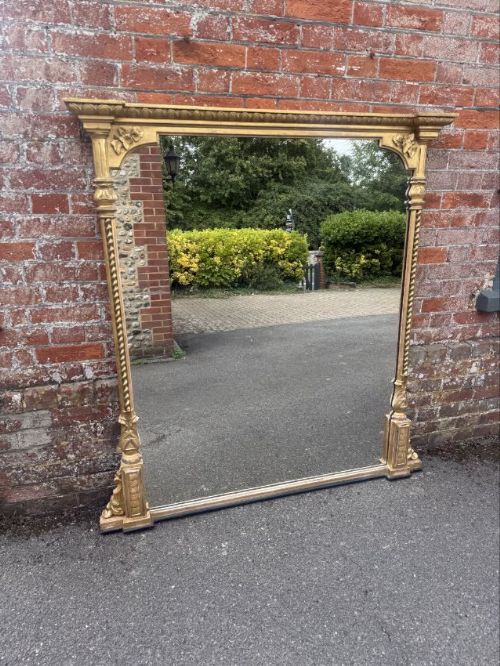
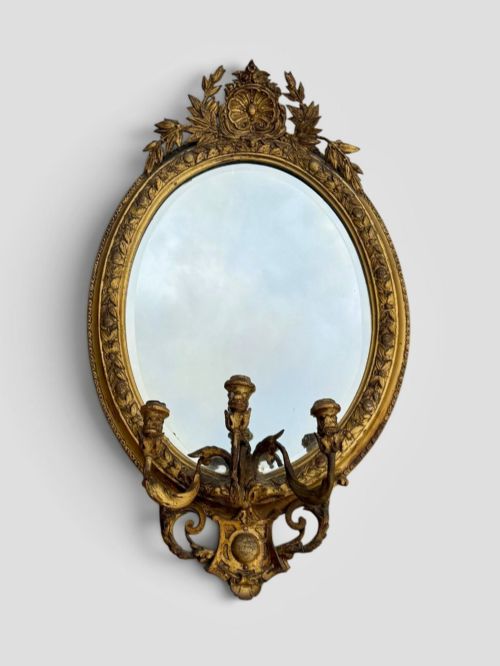
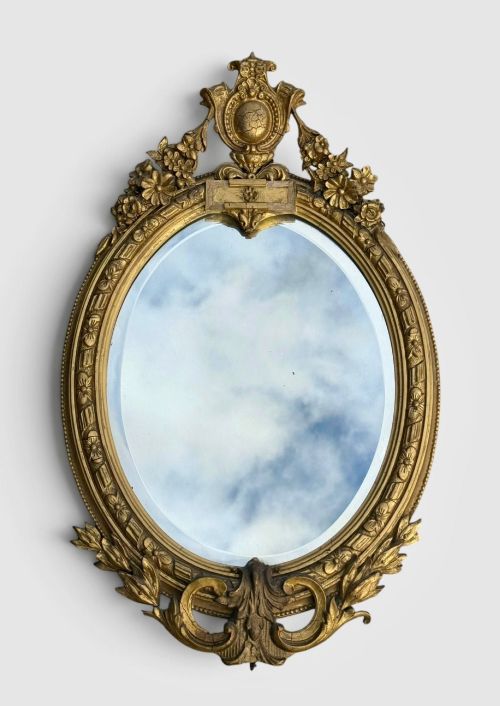
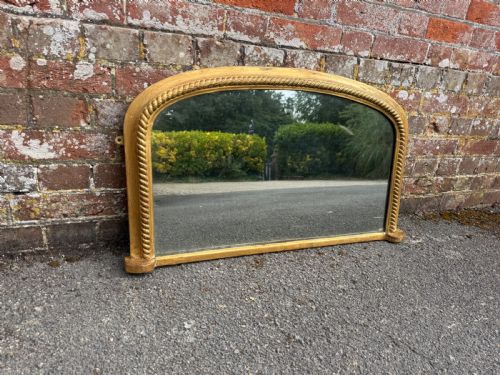
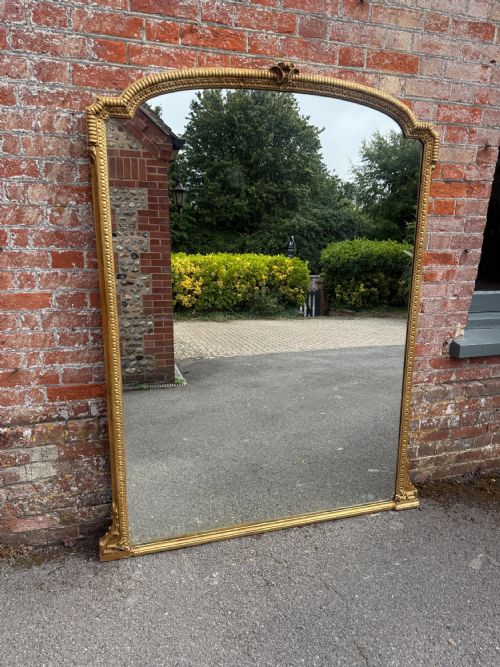
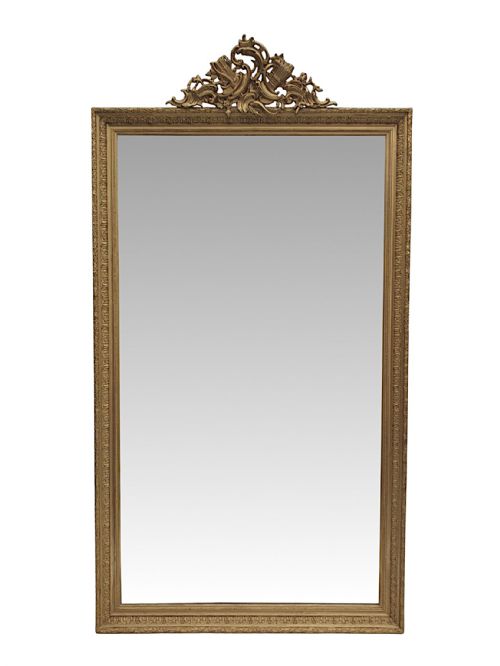
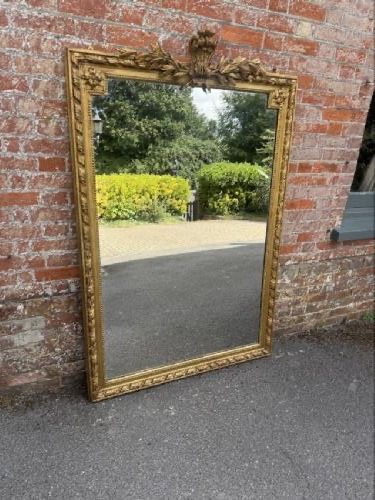
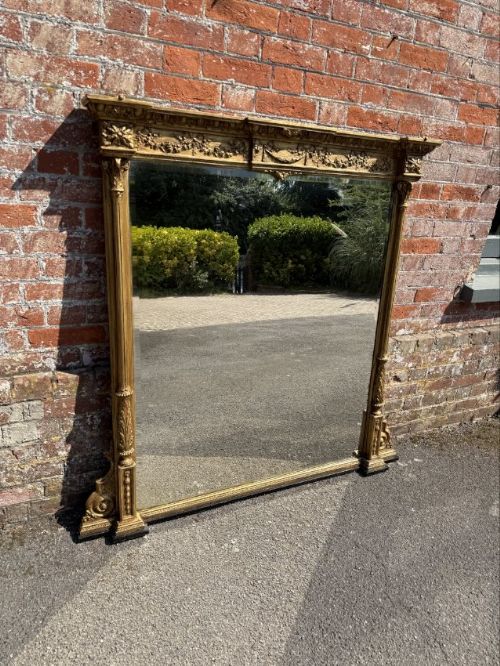
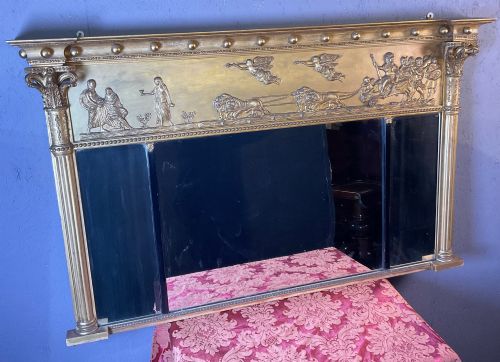
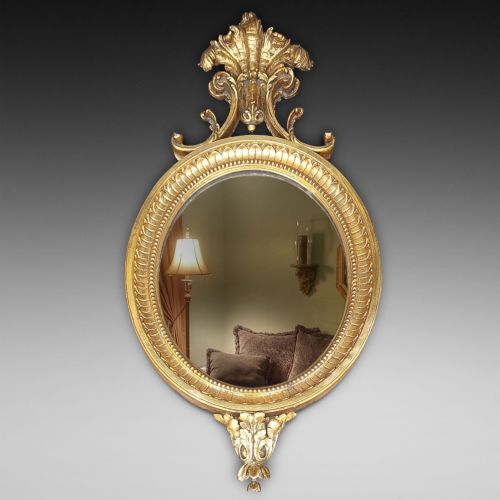
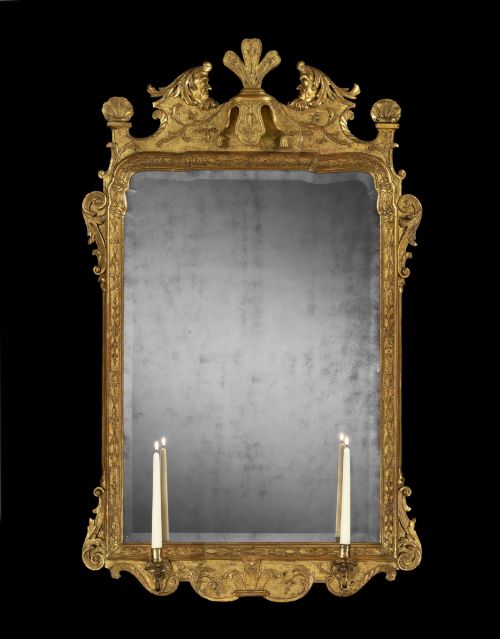

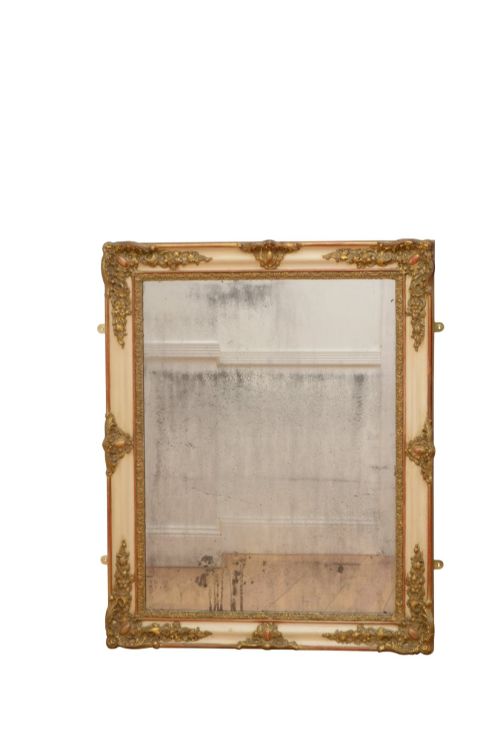
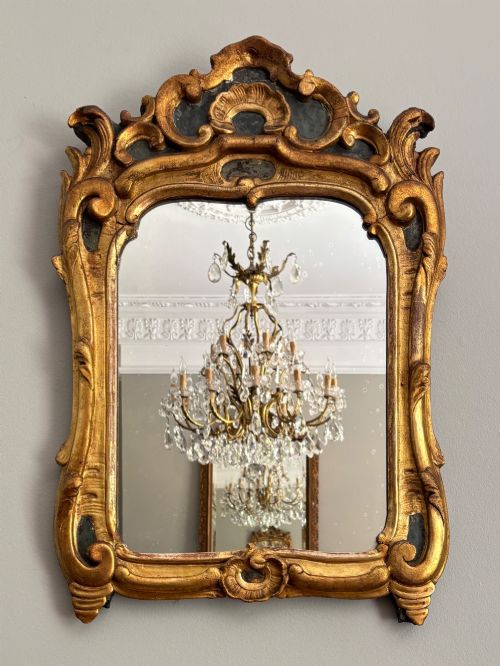
Gesso Framed Wall Mirror
A gesso framed wall mirror brings reflective depth and ornate period character to an interior.
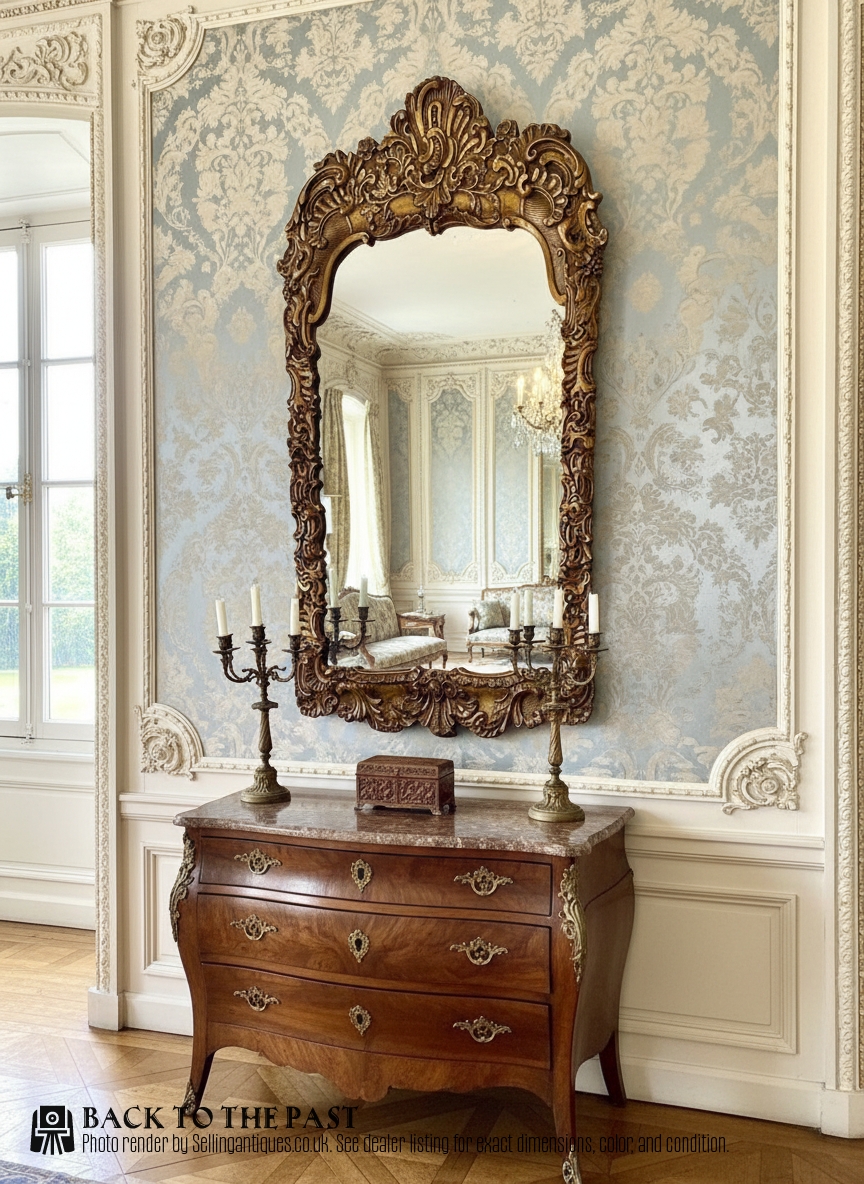
Gesso Framed Wall Mirror
A gesso framed wall mirror functions primarily to bounce natural light around a room while serving as a commanding decorative focus. These pieces span the 18th, 19th and early 20th centuries, drawing heavily on Victorian and French Rococo influences.
The most common format encountered here is the substantial overmantel mirror designed to sit above a fireplace. Wall mirrors, pier mirrors, girandole mirrors and leaner mirrors also appear across English and French origins from the 1860s and 1870s.
Makers utilised architectural forms such as arched tops, columns, rope twists and ribbed frames. Surviving examples range from intimate oval shapes to large rectangular wall pieces.
How They Were Made
Artisans built the underlying structure from carved wood, typically pine or oak, before applying multiple layers of gesso. This chalk and glue mixture provided a smooth, pliable surface for intricate moulding and relief work.
Gilders then applied gold leaf, silver or paint over the gesso, often burnishing the finish to achieve a brilliant metallic sheen. Original pieces frequently house period mirror glass, including mercury plate.
Some antique mirror glass retains tiny imperfections that capture candlelight with a wonderfully soft, dreamy blur.
What Varies in Quality
The depth and crispness of the moulded ornament distinguish superior pieces from simpler utilitarian versions. Hand-carved wooden elements integrated beneath the gesso layer demonstrate a higher level of craftsmanship than moulded composition alone.
The preservation of the original gilt surface and the integrity of the underlying gesso ground dictate the visual strength of the object. Surviving untouched mirror glass adds substantial historical weight to the piece.
John Belchier
The Gesso Framed Wall Mirror Glossary
- Gesso
- A dense plaster mixture composed of chalk, gypsum and size applied to a wooden base to form a smooth surface for gilding.
- Giltwood
- Timber that has been coated with gold leaf or gold paint, frequently used alongside gesso in ornate period frames.
- Overmantel Mirror
- A wide horizontal mirror specifically proportioned to hang on the wall directly above a mantelpiece.
- Girandole
- A decorative wall mirror featuring attached candle sconces that reflect and multiply candlelight.
- Mercury Plate
- Early mirror glass manufactured using a tin and mercury amalgam behind the glass, creating a mottled, soft reflection.
Gesso Framed Wall Mirror: Frequently Asked Questions
Where should a gesso framed wall mirror hang?
These mirrors traditionally hang above a fireplace mantel where their grand scale anchors the room.
They also work effectively on main living room walls to reflect light and create an illusion of greater space.
What is an overmantel mirror?
An overmantel mirror is a large format glass built to span the width of a fireplace surround.
These pieces often feature arched tops or heavy gilt frames designed to draw the eye upward.
How can I tell a Victorian mirror from an 18th-century piece?
Victorian examples often display heavy Rococo Revival styling, machine-rolled glass, and dense gesso mouldings.
Earlier pieces from the 18th century tend to feature finer hand-carved wooden foundations beneath thinner gesso applications.