

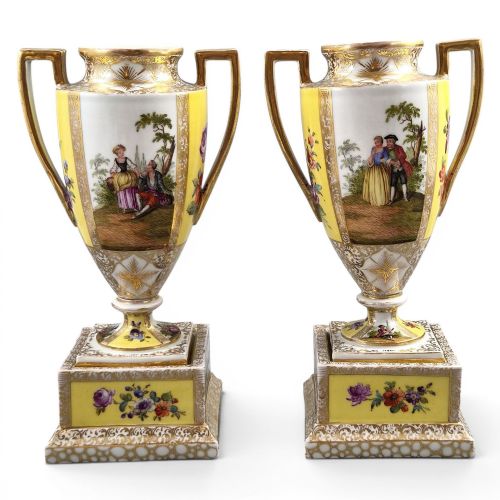


German Ceramic Vessel
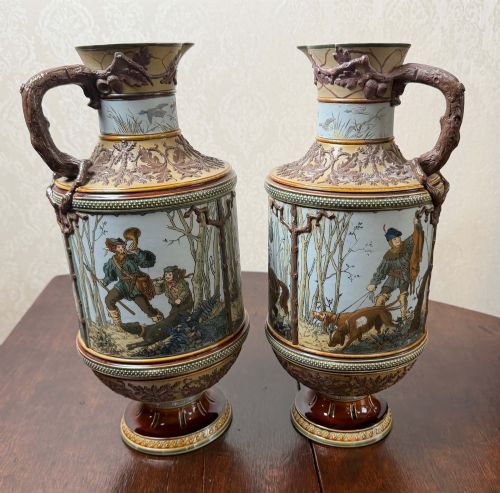
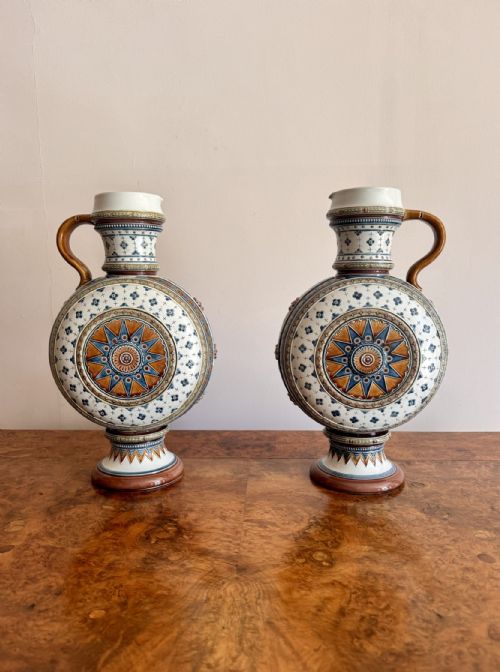
These heavy salt-glazed jugs and fine porcelain urns are the durable german ceramic vessel items that collectors prize for their rich historical ornament.
German Ceramic Vessel
A german ceramic vessel encompasses robust stoneware jugs, Westerwald tankards, and delicate porcelain urns spanning from the sixteenth century through the Victorian era.
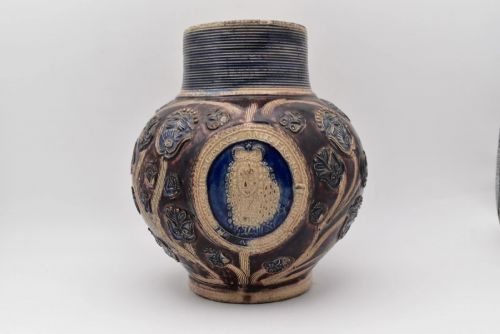
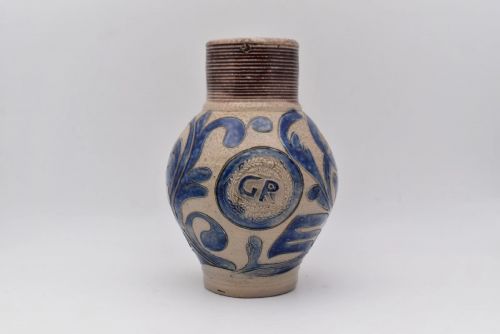
The version most commonly met on this page is the salt-glazed Westerwald jug or Bartmann piece, bearing historic ciphers or mask decorations in blue and grey tones.
Makers such as Villeroy & Boch and Mettlach also represent the later nineteenth-century output found within these listings.
How they were made
Potters threw dense clay on the wheel before applying salt during the kiln firing to create the characteristic pitted, impervious glaze found on early stoneware.
Porcelain pieces involved intricate moulding and hand-painting with enamel and gold leaf, particularly seen in the Dresden and Meissen items from the nineteenth century.
German Ceramic Vessel Retail Price Guide 2026
Typical asking prices for german ceramic vessel among the pieces listed under this phrase on Sellingantiques today, from the lower quarter to the upper quarter. They describe what is for sale here now, not the wider market.
A sixteenth-century German potter immortalised a stern bearded face on a stoneware jug, unwittingly giving us the cheerful company of the Bartmann.
What varies in quality
The clarity of the moulded mask decorations and the crispness of the Royal ciphers separate ordinary utilitarian items from superior collector pieces.
Execution of hand-painted enamel and the preservation of original gilding dictate the standing of porcelain urns and vases.
Villeroy & Boch·Helena Wolfsohn·Mettlach Pottery·Sitzendorf Porcelain·Royal Bonn·Meissen
The German Ceramic Vessel Glossary
- Salt Glaze
- A finish created by throwing common salt into the hot kiln, producing a texture resembling orange peel. This impervious coating protected the dense stoneware body.
- Bartmann
- A stoneware jug featuring a bearded mask on the neck, also known as a bellarmine. These vessels date primarily from the sixteenth and seventeenth centuries.
- Westerwald
- A German region renowned for grey stoneware pottery decorated in cobalt blue and manganese purple. These pieces often display heraldic designs or royal ciphers.
- Potpourri
- A lidded vase pierced to allow dried scents to diffuse from the interior. These decorative vessels were popular in nineteenth-century porcelain manufacture.
German Ceramic Vessel: Frequently Asked Questions
What is a Westerwald jug?
A Westerwald jug is a heavy stoneware container originating from the German region of the same name, typically decorated with cobalt blue incisions.
These pieces often feature royal ciphers or geometric patterns fired beneath a durable salt glaze.
How do I clean an antique vessel?
Antique ceramic and stoneware items require only gentle dusting with a soft dry cloth to preserve their historic surfaces.
Water and chemical cleaners can damage delicate enamel, exposed clay, or aged gold leaf on older pieces.
Where were these pieces made?
These items hail from historic German ceramic centres including Siegburg, the Westerwald, and later factories in Dresden and Meissen.
Production methods varied from regional kiln sites making salt-glazed utility wares to established houses crafting fine porcelain.
How old is a Bartmann jug?
A Bartmann jug typically dates from the sixteenth or seventeenth century, identified by the bearded mask applied to the upper neck.
These early stoneware vessels served as drinking containers and storage flagons across Europe.