

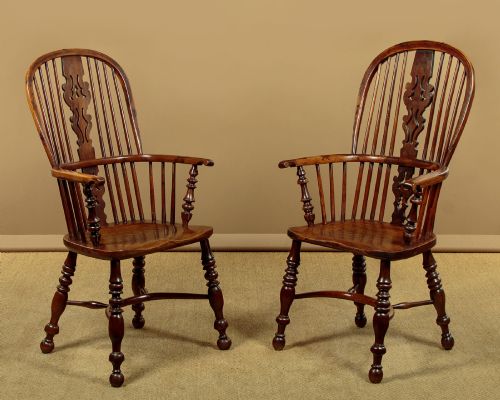
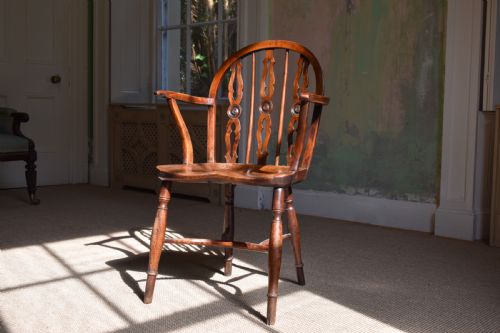
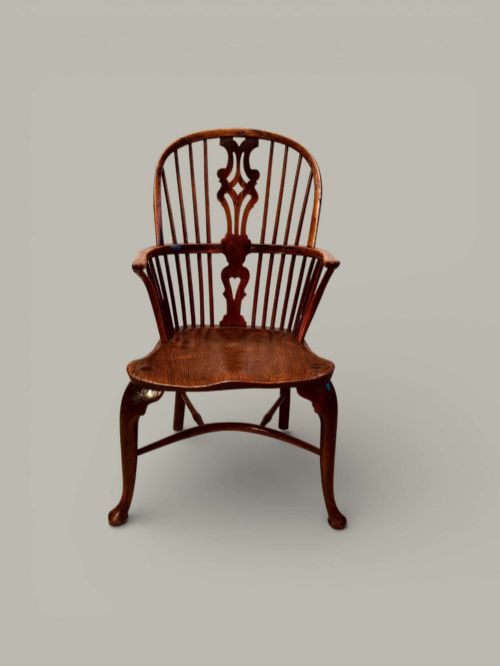
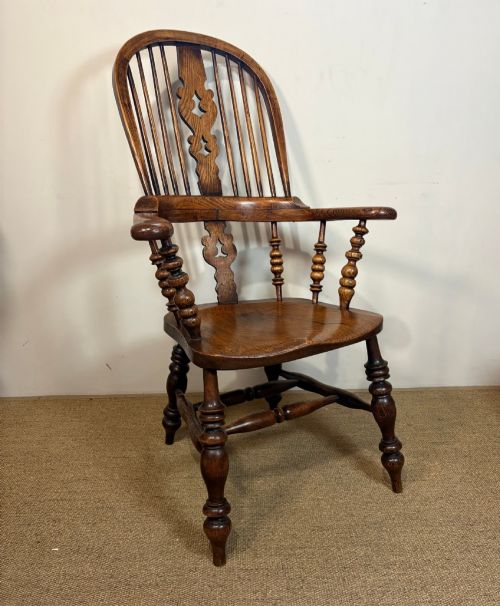
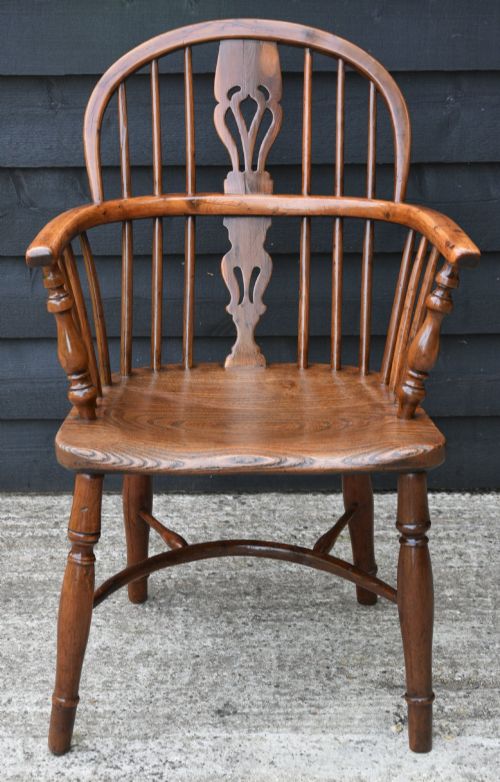
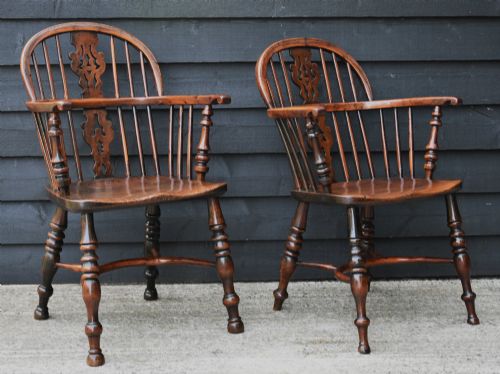
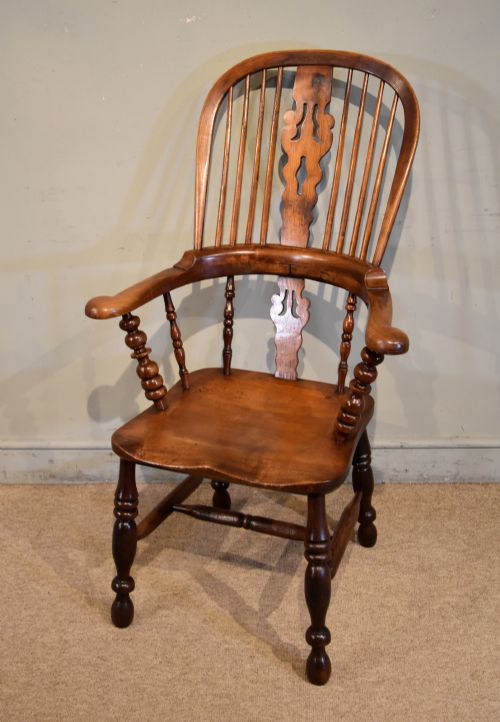
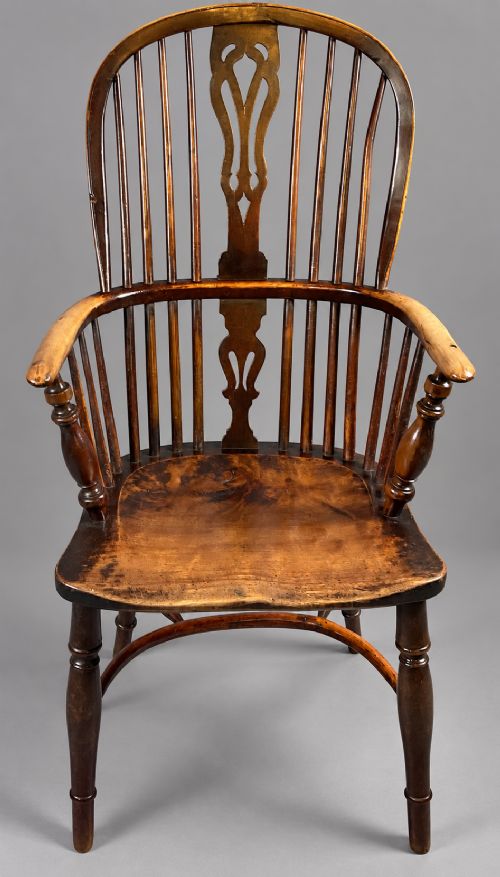
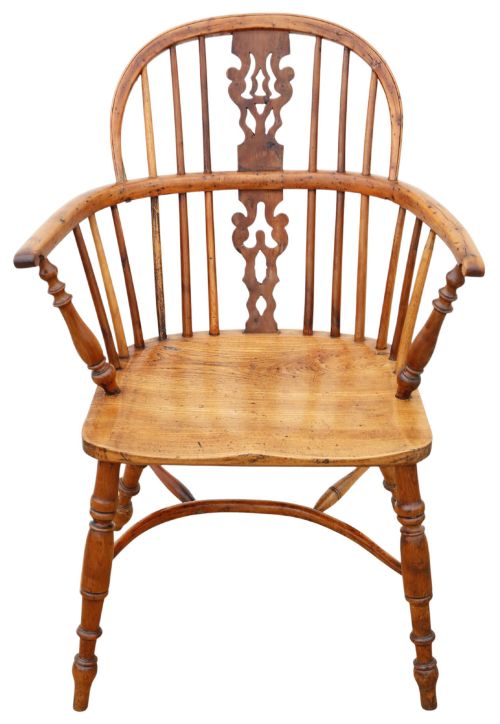

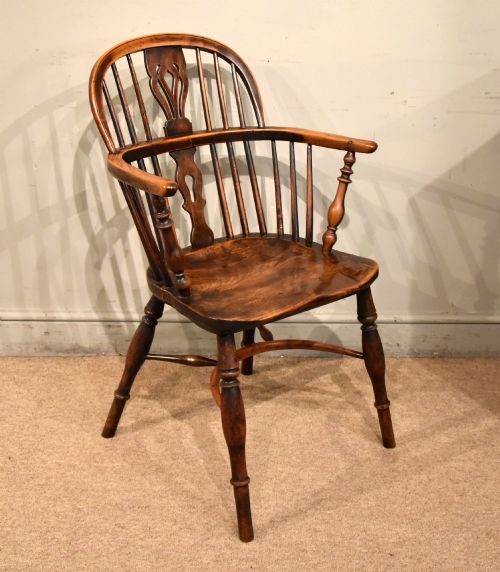

Georgian Yew Windsor Armchair
A georgian yew windsor armchair brings tactile warmth and robust vernacular design straight into a modern interior.
Georgian Yew Windsor Armchair
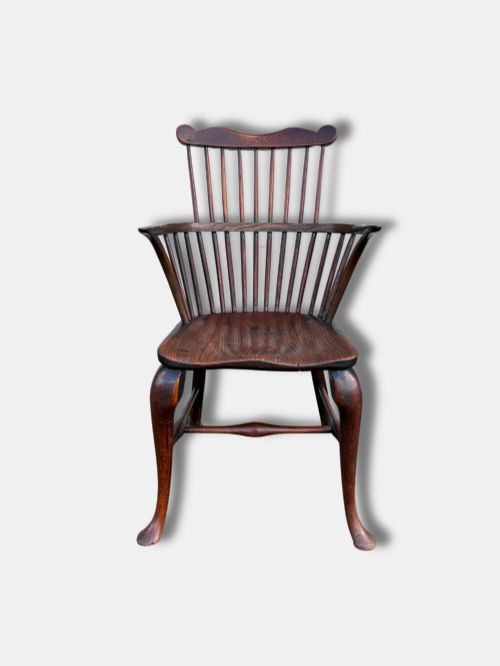
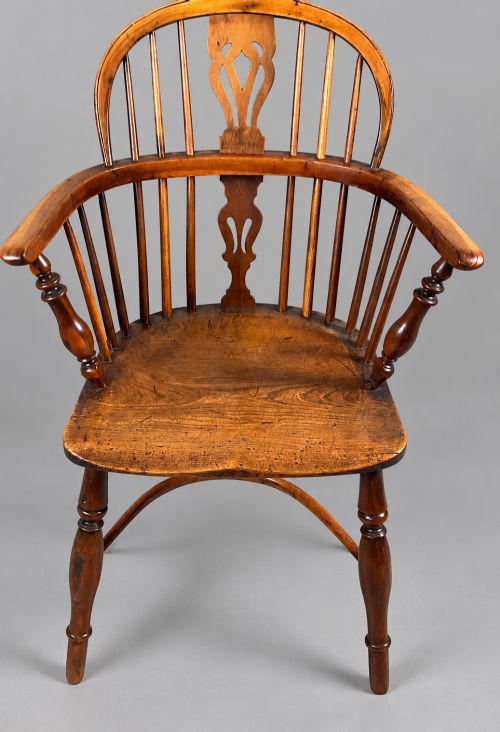
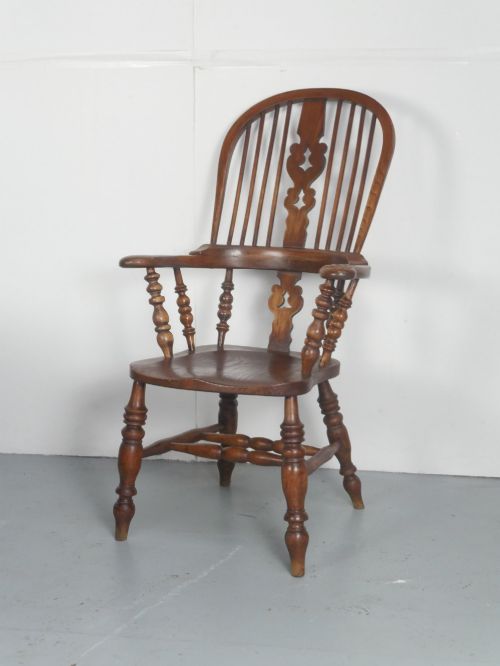
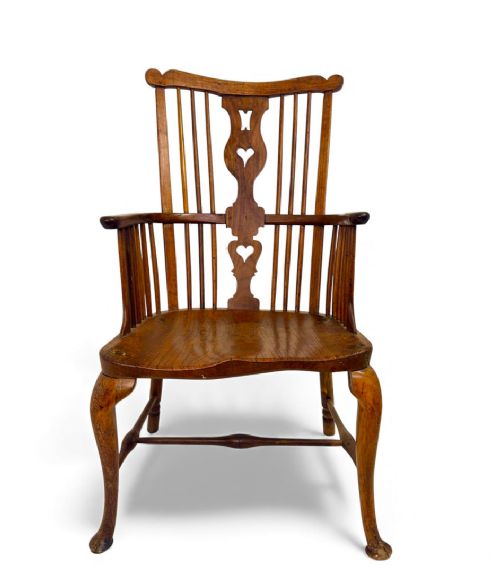
A georgian yew windsor armchair is a traditional wooden seating form characterised by a solid shaped seat, a distinct upper back assembly of spindles, and a sturdy undercarriage. These regional English chairs combine structural integrity with organic grace, evolving from everyday functional furniture into sought-after decorative objects.
The versions met most frequently on this page date from the eighteenth and nineteenth centuries, spanning Georgian and Victorian periods. Makers employed local timbers to construct low back, high back, comb back, and broad arm variations suited to domestic and rural life.
Examples often incorporate mixed woods, pairing figured yew with elm seats or ash framing. Whether sourced from the Thames Valley, Yorkshire, or specific regional workshops, each piece displays the distinct hand of its maker through subtle variations in turning and joinery.
How they were made
Construction relies on a combination of bodging and cabinet-making techniques, where turned spindles and legs fit tightly into drilled holes within a thick wooden seat slab. Craftsmen selected timber for its specific properties, utilising resilient yew for the bentwood hoops and arms, tough elm for the solid saddle seats, and flexible ash or beech for the structural turnings.
Makers shaped the components using drawknives, spokeshaves, and pole lathes, steaming the timber to achieve the characteristic curved crest rails and hoop backs. Traditional wedged tenon joints secure the uprights without relying on modern fasteners, allowing the wood to move naturally with changes in humidity.
Georgian Yew Windsor Armchair Retail Price Guide 2026
Typical asking prices for georgian yew windsor armchair among the pieces listed under this phrase on Sellingantiques today, from the lower quarter to the upper quarter. They describe what is for sale here now, not the wider market.
Materials recorded across current items include yew, elm, ash, beech, and fruitwood, frequently combined within a single armchair.
What varies in quality
The visual appeal depends largely on the figuring of the wood, particularly the depth of grain and warm tonal variations found within seasoned yew timber. Chairs featuring striking burr wood back splats or well-matched elm seat panels demonstrate superior selection of materials by the original maker.
Structural refinement also dictates distinction, marked by crisp detail in the turned arm supports, slender tapered spindles, and intact crinoline stretchers. Retaining a pleasing tactile surface patina through decades of use separates fine examples from utilitarian items subjected to heavy restoration.
John Brand of Sleaford·Rockley maker
The Georgian Yew Windsor Armchair Glossary
- Comb back
- A Windsor chair style featuring a low solid back topped by a horizontal crest rail with upward-projecting spindle tops resembling the teeth of a comb.
- Crinoline stretcher
- An arched or bowed wooden support connecting the legs beneath a chair, often found on better quality regional examples to provide rigidity.
- Broad arm
- A chair design incorporating wide, flat wooden armrests that flare outward to provide a comfortable surface for writing or resting.
- Hoop back
- A continuous bentwood rail that forms the upper frame and armrests of a Windsor chair in a single flowing curve.
- Thames Valley
- A recognised regional centre of English Windsor chair production known for refined yew and elm construction during the eighteenth and nineteenth centuries.
Georgian Yew Windsor Armchair: Frequently Asked Questions
What is a Windsor chair?
A Windsor chair is a distinct form of wooden seating where the legs and back spindles are driven directly into a solid sculpted wooden seat rather than fastened to a traditional frame.
This construction method provides exceptional strength and durability, making the chairs practical for everyday use in both historical and contemporary spaces.
How do I identify a yew wood chair?
Yew timber is distinguished by its rich reddish-brown colour, intricate grain patterns, and occasional small knots or burrs that create a deeply textured surface.
Over centuries of handling, this wood develops a warm, lustrous patina that feels smooth to the touch.
Were these chairs used at dining tables?
While many examples function as versatile armchairs or library seats, specific variations served around dining tables in country houses and vernacular settings.
Their sturdy proportions and supportive backs made them comfortable for prolonged seating during meals.
How should I care for an antique chair?
Maintain the timber by keeping the chair away from direct heat sources and sudden fluctuations in room temperature, which can cause the wood to dry out.
Apply a modest coat of suitable natural wax periodically to nourish the surface and preserve the historic patina.