




Georgian Writing Armchair
A georgian writing armchair brings together solid timber and practical desk seating from the eighteenth and nineteenth centuries for daily use.
Georgian Writing Armchair
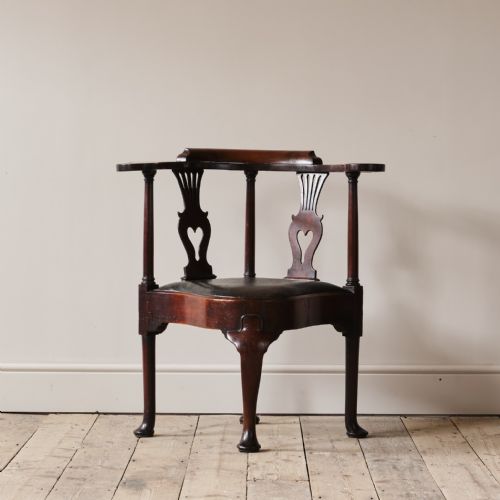
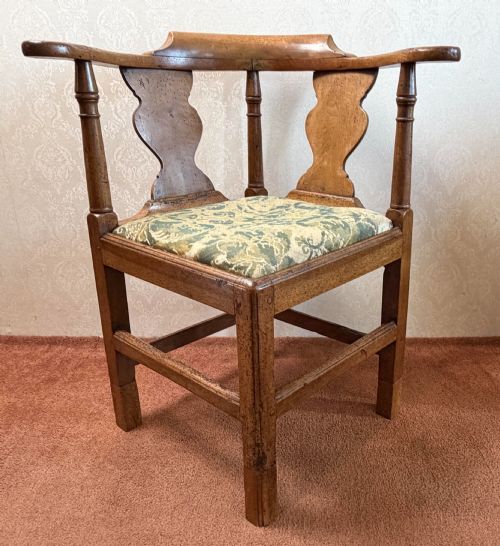
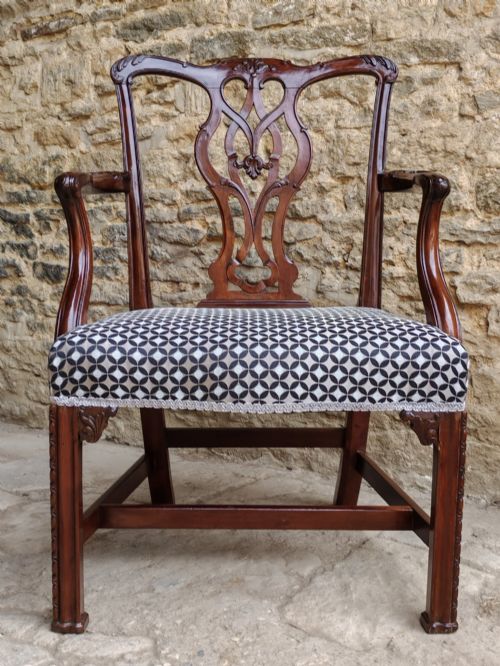
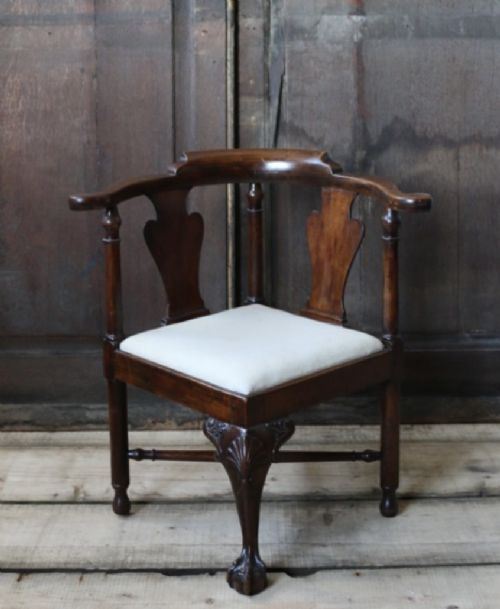
A georgian writing armchair is typically encountered on this page as a timber corner chair or desk chair designed for reading and writing. These seating forms span from the early eighteenth century through to the nineteenth century, encompassing regional country pieces alongside urban workshop production.
The dominant forms present here include sturdy mahogany and oak corner chairs, alongside walnut and elm desk chairs. Many feature padded seats in leather, fabric, or tapestry, constructed to provide support during extended periods of sitting at a desk.
Judging quality
Quality separates pieces through the selection of timber and the crispness of the joinery. Dense, well-figured mahogany or walnut indicates a higher standard of manufacture compared to simpler regional elm or oak.
Proportion and structural integrity dictate the standing of an individual chair. Original surfaces and minimal timber replacement elevate the standing of these pieces amongst collectors.
Several corner chairs include tapestry seats that have absorbed centuries of silent reading.
The Georgian Writing Armchair Glossary
- Corner chair
- A chair designed to fit into the corner of a room, featuring a continuous armrest supported by three or four legs with one leg set centrally at the front.
- Desk chair
- A seating form engineered for use at a writing table, often featuring a revolving mechanism or a wide, supportive backrest.
- Carver
- An armchair, typically used at the head of a dining table or as a companion to a set of matching side chairs.
- Mortise and tenon
- A traditional woodworking joint where a projecting tongue fits snugly into a corresponding cavity to lock timbers together firmly.
Georgian Writing Armchair: Frequently Asked Questions
What is a georgian writing armchair?
These pieces are eighteenth and nineteenth century timber chairs built with armrests, specifically configured for desk work, reading, or corner placement.
They combine robust structural frames with writing-friendly proportions to accommodate daily use.
How do I date these chairs?
Dating relies on stylistic markers associated with specific reigns, such as George II, George III, or William IV, combined with timber choice.
Construction techniques and regional traits also provide clear indicators of the era in which a chair was built.
Where were these chairs used?
They were positioned in studies, libraries, and parlours of period homes to serve individuals writing letters or reading books.
Corner versions often sat in the angle of a panelled room to save floor space while offering a supportive seat.
How should I care for timber chairs?
Keep wooden frames away from direct heat sources and sudden humidity changes to prevent the timber from splitting.
Apply traditional wax polish occasionally to nourish the surface and maintain the natural lustre of the wood.