






Georgian Wooden Whatnot
A georgian wooden whatnot provides tiered open shelving for a room, prized for combining display space with slender proportions.
Georgian Wooden Whatnot
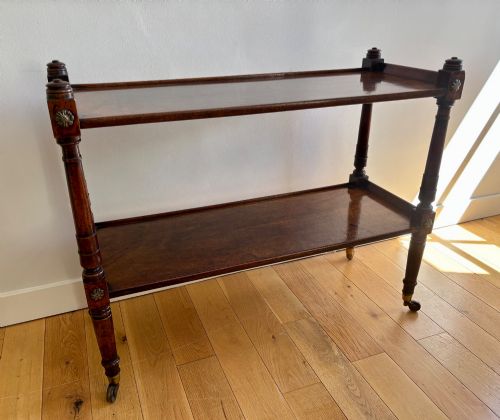
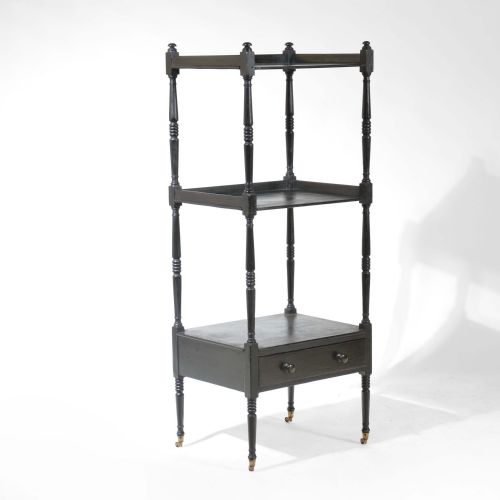
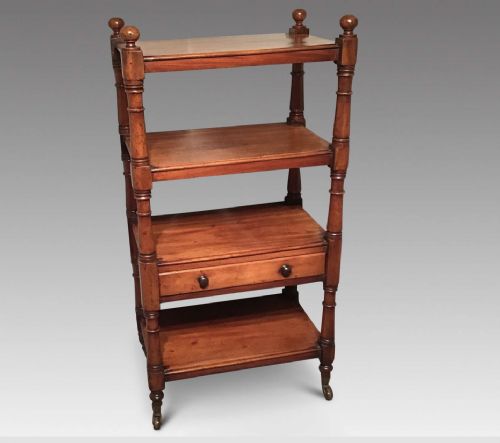
A georgian wooden whatnot stands as a tiered shelving unit designed for books, ceramics, or small ornaments. The form appears across the Georgian, Regency, and early nineteenth century periods, utilising compact footprints for domestic use.
Examples on this page span several forms including three-tier models, A-frame constructions, music stands, and corner cabinets. Certain pieces incorporate lower cupboards or take the specific shape of a Canterbury or dumb waiter.
Materials and construction
Makers built these pieces primarily in mahogany, alongside occasional birdseye maple, ebonised wood, and brass details. Timber selection prioritized rich grain patterns and durable structural integrity for vertical shelf supports.
Construction methods accommodated various tiered formats, ranging from bow-fronted corner units to tall stands and compact etageres. Joinery supported open shelves and enclosed lower compartments without heavy frames.
Judging quality in a georgian wooden whatnot
Distinctions across the range depend upon the crispness of the turning on vertical supports and the balance of the tiered proportions. Superior examples demonstrate refined timber selection and careful joint construction that maintain stability across multiple shelves.
Design variations such as A-frame bracing, integrated cupboards, or subtle bow-front shaping separate standard utilitarian pieces from more ambitious cabinet work.
The Georgian Wooden Whatnot Glossary
- Whatnot
- An open shelving unit with multiple tiers, designed for displaying small objects or holding books.
- Etagere
- A French term for a piece of furniture consisting of a set of open shelves for displaying ornaments.
- Canterbury
- A low, open-framed stand traditionally used for holding sheet music or books, often featuring slatted partitions.
- Dumb waiter
- A tiered serving stand or small table used to hold dishes or utensils during meals.
Georgian Wooden Whatnot: Frequently Asked Questions
What is a georgian wooden whatnot used for?
These pieces served historically for holding books, displaying ceramics, or keeping daily items within reach in sitting rooms and parlours. Today they function similarly as vertical display units in modern rooms.
Their open tiers allow for versatile placement in corners or against walls without dominating the floor space.
How do I identify a Regency period piece?
Regency pieces often display distinct classical proportions, specific mahogany grain patterns, and sometimes brass mounts or ebonised details. They reflect the design tastes of the early nineteenth century.
Comparing the shelf arrangement and turning style helps distinguish them from later nineteenth-century or twentieth-century interpretations.
Are corner whatnots common?
Corner variants appear in the evidence, specifically shaped with bow-front formats to fit snugly into room angles. They maximise vertical display capacity in limited floor spaces.
These pieces utilise the same mahogany construction and tiered shelving as freestanding standard models.
What woods were used?
Mahogany forms the primary material across the listed items, valued for its strength and rich surface appearance. Birdseye maple and ebonised wood also appear in specific pieces.
Brass fittings occasionally complement the timber structures on stands and shelf supports.