


Georgian Wooden Trinket Chest
A georgian wooden trinket chest offers compact storage for small valuables, bringing period craftsmanship and rich timber grains into domestic spaces.
Georgian Wooden Trinket Chest
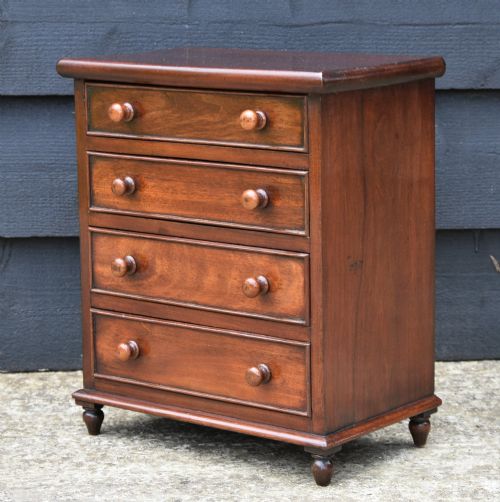
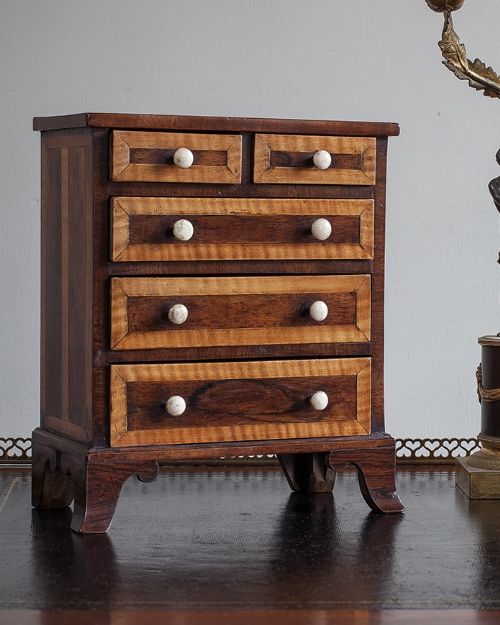
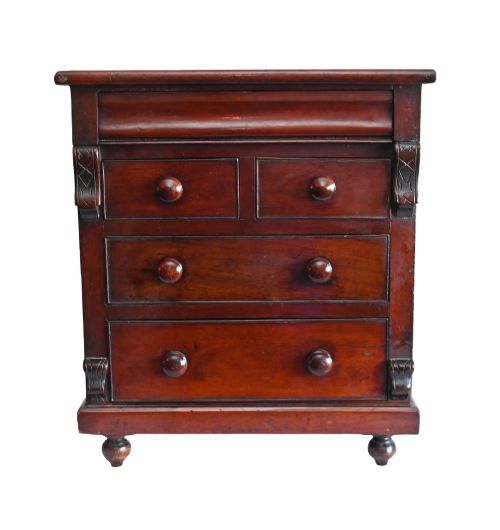
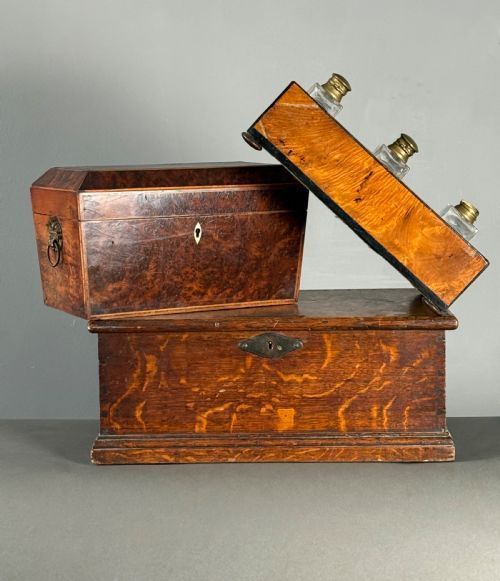
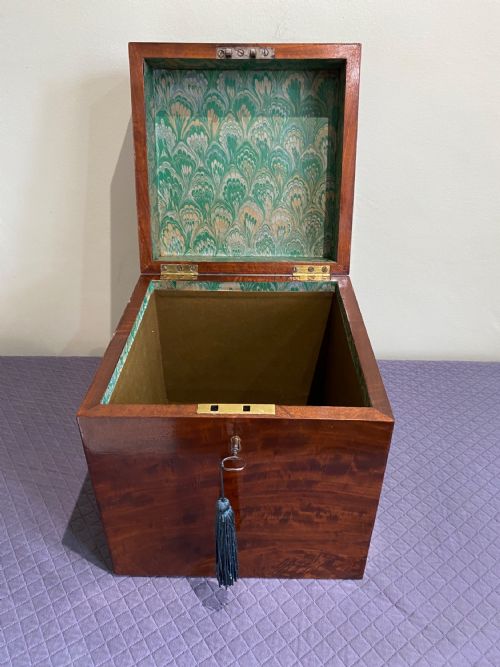
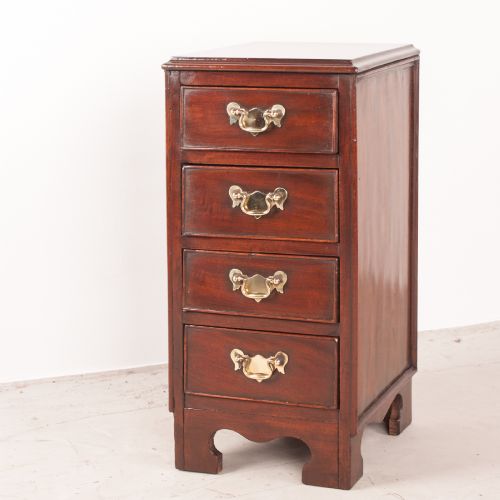
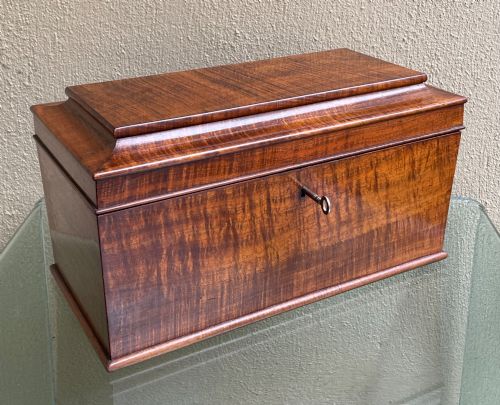
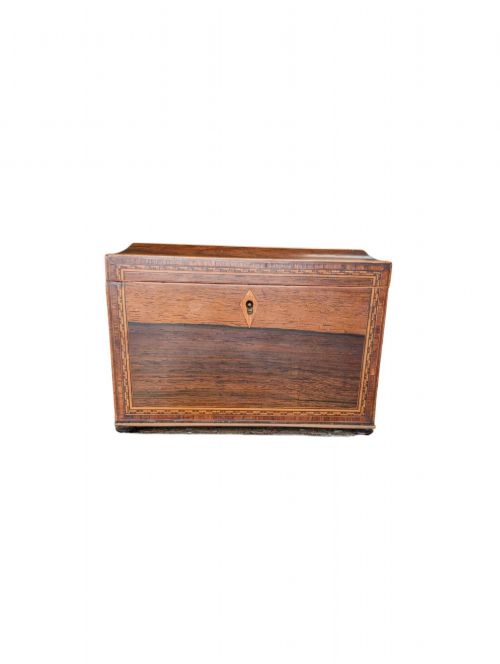
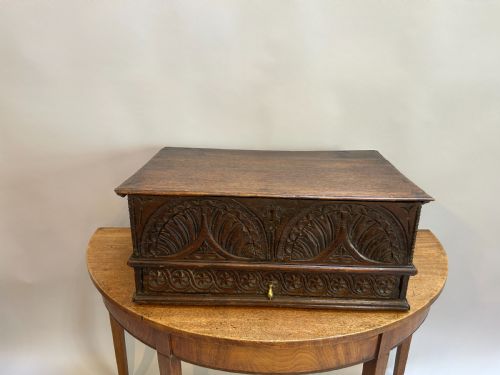
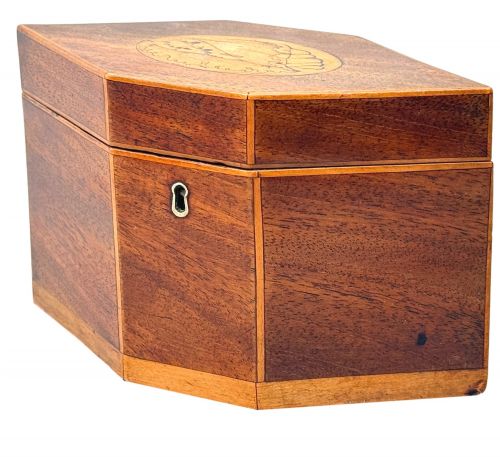
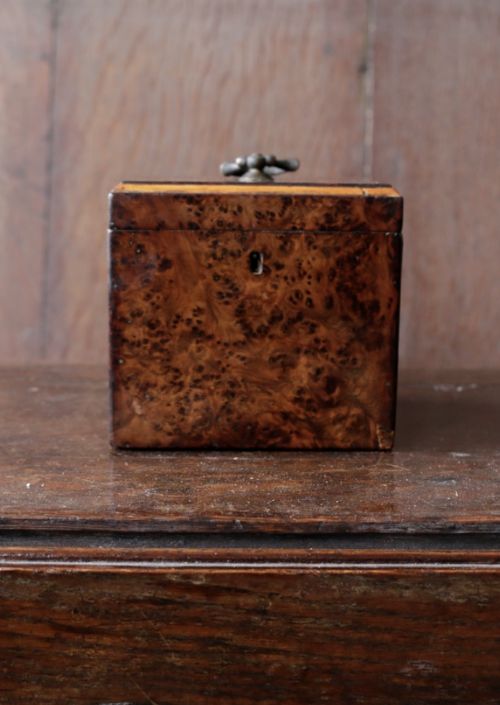
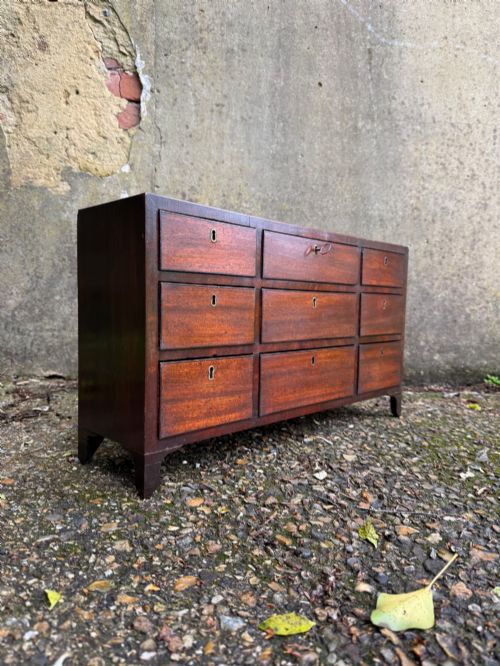
A georgian wooden trinket chest encompasses small storage vessels, miniature chests of drawers, and tea caddies originating from the eighteenth and nineteenth centuries. These pieces were designed to hold tea, jewellery, letters, and small personal keepsakes on desks or dressing tables.
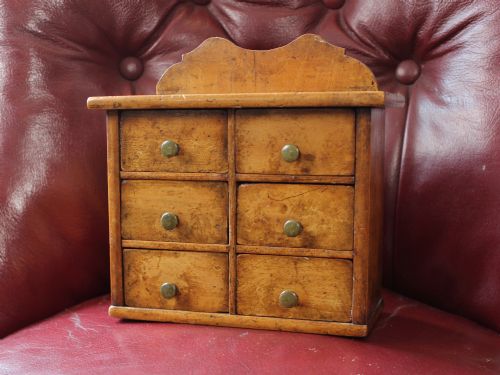
Buyers will most frequently encounter mahogany and rosewood tea caddies alongside miniature chests of drawers in mahogany, oak, and yew. Examples range from plain utilitarian boxes to elaborately inlaid chests reflecting Georgian, Regency, and Victorian tastes.
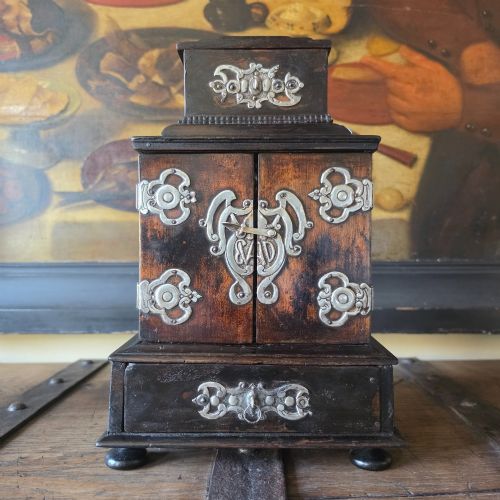
Formats vary from simple hinged lidded boxes to multi-drawer miniature chests and spice drawers. Many pieces bridge the functional categories of tea storage, stationery cases, and jewellery caskets.
How they were made
Cabinet makers constructed these small chests using dense hardwoods such as mahogany, rosewood, walnut, and oak, often selecting burr veneers for decorative lids and drawer fronts. Secondary timbers provided structural support inside the boxes and drawer carcases.
Decoration relied on contrasting natural materials rather than paint, incorporating boxwood stringing, bone details, mother of pearl, and brass inlay. Tunbridge ware and penwork added intricate surface patterns to specific Regency and Georgian examples.
Listings feature mahogany, oak, rosewood, and walnut across Georgian, Regency, and Victorian periods.
What varies in quality
The standard of timber selection and veneer matching defines the visual impact of a chest, with burr yew, amboyna, and figured mahogany marking the upper tiers. Superior pieces display continuous grain wrapping around the corners and precise alignment of inlay.
Internal fitting and hardware quality distinguish utilitarian boxes from deluxe cabinet work. Original brass escutcheons, working locks with keys, and finely dovetailed drawer construction separate standard workshop output from exceptional examples.
The Georgian Wooden Trinket Chest Glossary
- Tea caddy
- A small box or chest designed originally to store loose tea leaves securely under lock and key. These containers often featured internal foil lining and divided compartments.
- Miniature chest of drawers
- A small-scale set of drawers built either as a master cabinetmaker's apprentice piece or for storing small valuables on a desk. They mirror the proportions of full-sized furniture.
- Tunbridge ware
- A form of decorative woodwork originating from Kent, featuring mosaic patterns built from tiny geometrically arranged wood segments. This technique created detailed pictorial imagery on box lids.
- Penwork
- A decorative technique using fine ink drawing on light wood surfaces to create motifs and borders. It appears on select Georgian boxes.
- Stringing
- Thin lines of contrasting wood inlay used to outline panels, drawer fronts, and box lids. Boxwood was frequently employed against darker timbers like mahogany.
Georgian Wooden Trinket Chest: Frequently Asked Questions
What were small wooden chests used for?
These boxes stored precious commodities like dry tea leaves, jewellery, coins, and letters. Their lockable lids protected valuable contents in domestic settings.
Smaller chests also served as apprentice pieces, demonstrating a joiner's skill in miniature proportions before full certification.
How do I identify a Georgian chest?
Georgian chests typically feature dense native or imported hardwoods such as mahogany, oak, and walnut, often accented with simple brass handles. Construction methods include hand-cut dovetails and solid timber carcases.
Stylistic markers include bracket feet, boxwood stringing, and restrained classical proportions dating between seventeen fourteen and eighteen thirty.
Are miniature chests actual furniture?
Miniature chests of drawers were fully functioning small-scale storage units placed upon larger desks or tables. Some were apprentice pieces created to prove a craftsman's mastery.
Others served practical desktop roles for organising personal documents, stationery, and small trinkets.
What is a tea caddy?
A tea caddy is a specialised box built to hold expensive tea leaves when tea was a luxury commodity. They often included internal lids and compartments to separate green and black teas.
Over time, many lost their internal canisters but survived as decorative keepsake boxes.