


Brown Wood Apothecary Chest
A brown wood apothecary chest offers practical compartmentalised storage, bringing period character and modular organisation to a modern interior.
Brown Wood Apothecary Chest
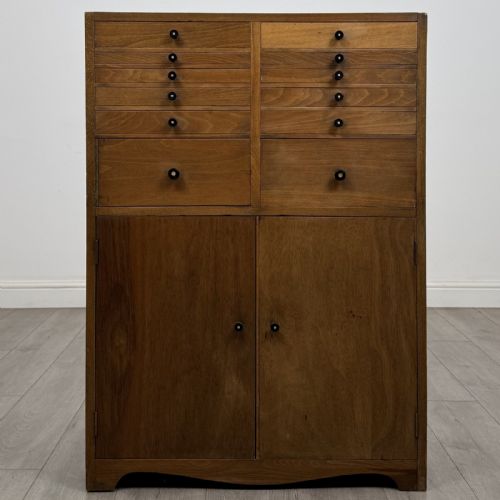
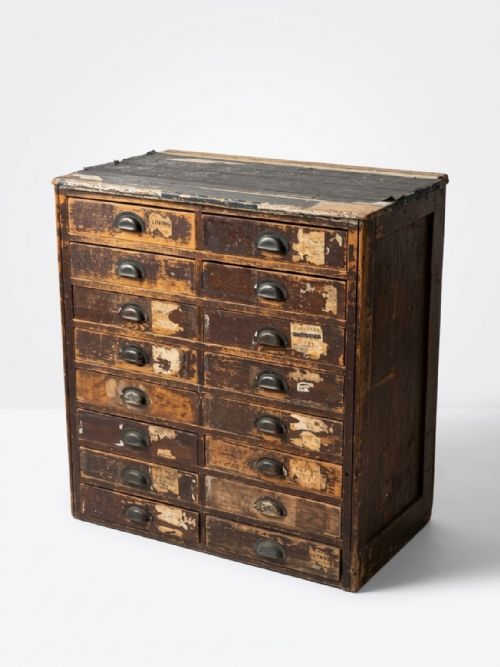
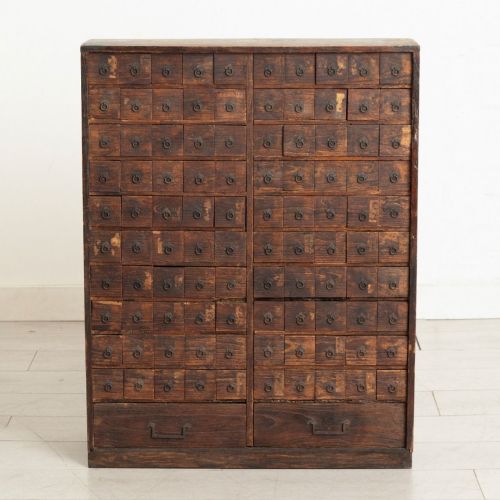
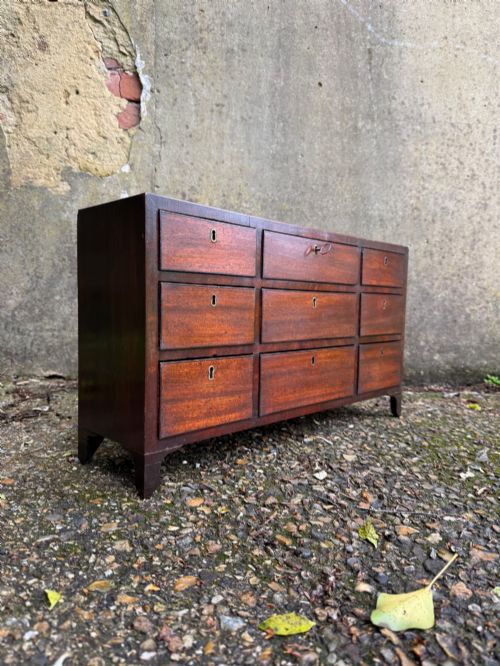
A brown wood apothecary chest brings together multi-drawer storage and dense timber construction, historically used for organising medicinal ingredients or small specimens. When exploring a brown wood apothecary chest, buyers encounter items ranging from compact tabletop banks of drawers to taller cabinets originating from various regional traditions.
The selections span distinct historical eras, with examples originating from the Georgian, Victorian, and Edwardian periods alongside international counterparts such as Japanese Meiji period banks of drawers and Chinese provincial chests. Common configurations include multi-drawer chests, glass-fronted collectors' cabinets, and specialised watch and clock repairer chests.
Most pieces utilise traditional timbers including mahogany, walnut, pine, elm, cedar, and stained deal, frequently complemented by brass hardware or iron fittings. These versatile vessels adapt easily to contemporary spaces for organising small items, desk accessories, or collections.
Materials and construction
Construction relies heavily on dense hardwoods and domestic softwoods like mahogany, walnut, elm, pine, and cedar, selected for durability and stability over numerous drawers. Cabinet makers employed traditional joinery techniques to build the multi-compartment carcasses necessary for housing rows of small drawers.
Metal components such as brass pulls, handles, and iron hinges were incorporated to withstand frequent daily access. Surface treatments range from polished wood finishes to inlaid mahogany veneers and stained deal.
Materials documented across the collection range from luxury hardwoods like walnut and mahogany to utilitarian pine, elm, cedar, and stained deal.
Factors determining quality
Quality in these chests is visible in the precision of the drawer fit, the choice of timber figuring such as burr walnut or inlaid mahogany, and the integrity of the original hardware. Superior examples display careful attention to internal compartmentalisation and uncompromised structural joinery across numerous small drawers.
Regional variations and stylistic details, from French pharmacy secretaire chests to Chinese provincial units, influence the overall character and visual weight of the piece. The preservation of original surface finishes and operational drawer movement distinguishes finer examples from simpler utilitarian storage.
The Brown Wood Apothecary Chest Glossary
- Bank of drawers
- A chest featuring many small drawers arranged in rows and columns, designed for sorting numerous distinct items. This layout is typical of apothecary and merchant storage.
- Collectors cabinet
- A specialised piece built to house small natural history specimens, coins, or curiosities, often featuring shallow glazed or panelled drawers. These cabinets prioritize systematic organisation and display.
- Deal
- A traditional term for timber cut from fir or pine conifers, commonly used in secondary furniture construction or stained for surface finishes. It provided a stable, workable medium for multi-drawer carcasses.
- Burr walnut
- Timber harvested from the growth excrescences of walnut trees, prized for its swirling, highly figured grain patterns. It was utilised on high-status Victorian cabinet facades.
- Secretaire chest
- A cabinet incorporating a drop-front writing surface alongside standard drawer storage, combining administrative workspace with compartmentalised containment. Pharmacy examples accommodated record-keeping alongside stock.
Brown Wood Apothecary Chest: Frequently Asked Questions
What were apothecary chests used for?
Apothecary chests served to store dried herbs, roots, powders, and mineral compounds safely in distinct, labelled compartments. Their compartmentalised design kept volatile or hygroscopic medicinal ingredients separated and protected from light and moisture.
Over time, these versatile pieces transitioned from working pharmacies into domestic settings for organising small collections, sewing supplies, or desk accessories. Today they offer functional storage that suits modern studies, kitchens, or living rooms.
Are these chests heavy?
The weight of an apothecary chest depends directly on its dimensions and the density of the wood used in its construction. Hardwoods like mahogany, walnut, and elm add considerable heft, especially when multiplied across dozens of small drawers.
Smaller tabletop versions remain easily portable, while taller floor-standing cabinets require stable placement. Solid timber carcasses inherently possess substantial physical presence regardless of their overall footprint.
How do I clean wooden drawers?
Maintenance involves gentle dusting with a dry, soft cloth to prevent particulate accumulation within the grain and around drawer joints. Avoiding harsh chemical cleaners preserves the historic patina and original polished wood surfaces.
Period timber benefits from occasional application of appropriate natural waxes to nourish the wood and maintain its moisture balance. Ensuring drawers slide smoothly without forced movement protects both the runners and the structural integrity of the bank.