




Georgian Wooden Magazine Stand
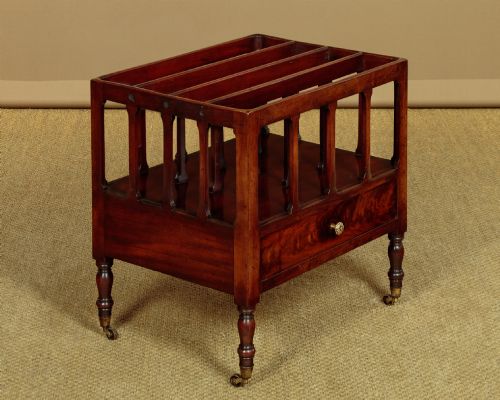
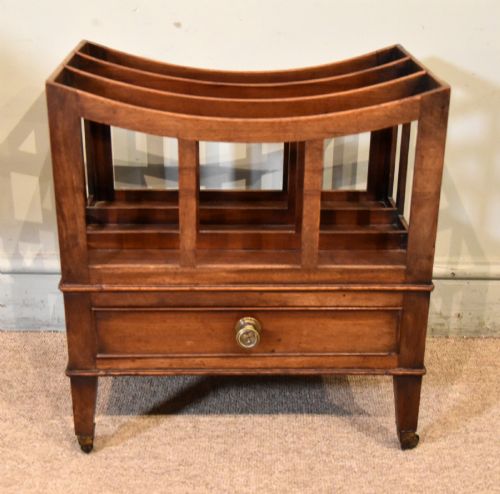
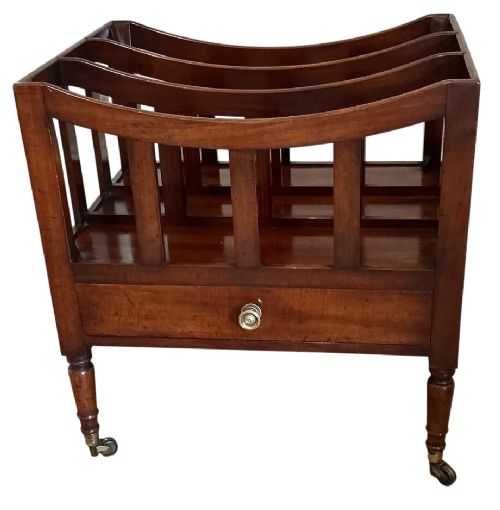
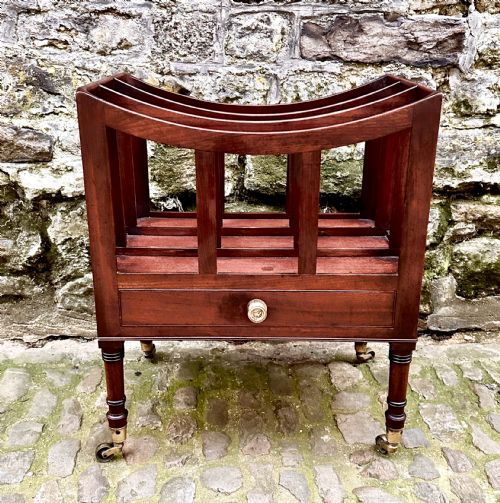
A georgian wooden magazine stand is a practical piece of furniture for holding periodicals, most often encountered here as a mahogany or rosewood canterbury from the Georgian or Regency periods.
Georgian Wooden Magazine Stand
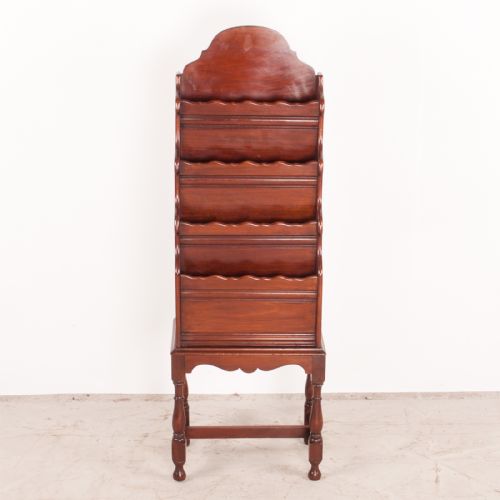
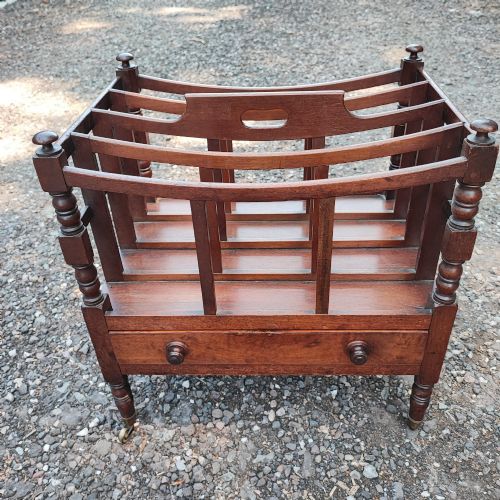
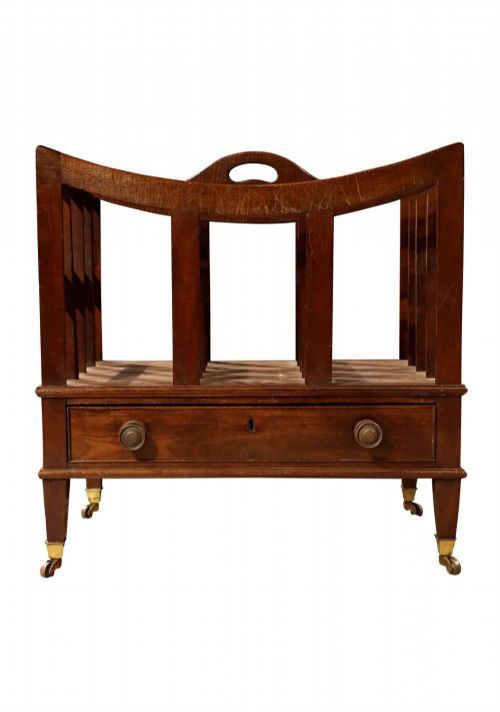
Buyers seeking a georgian wooden magazine stand will encounter a variety of multi-tiered furniture items historically known as canterburys, folio stands, or music stands. These pieces are designed with upright divisions to keep papers, sheets, and periodicals upright and sorted.
The versions most commonly met on this page date from the Georgian, Regency, and wider nineteenth century eras. They appear in forms such as boat-shaped racks, multi-division stands, and designs featuring a single drawer below.
Originating primarily in English country houses and urban drawing rooms, these items served to tidy reading materials near seating areas. Their survival reflects the enduring utility of compartmentalised wooden stands for domestic organisation.
Distinctions in Quality and Design
Quality separates standard utilitarian examples from pieces with finer craftsmanship through the selection of timber, such as highly figured flame mahogany veneer or rich rosewood. Superior items often display meticulous execution in pierced scroll divisions and precise boxwood or ebony banding.
Proportion and scale also dictate the hierarchy of these stands, ranging from standard four-division domestic items to oversized country house folio stands. The inclusion of integrated drawers and elegant turned legs adds structural complexity that elevates the standing of the piece.
Several stands boast boat-shaped profiles, suggesting eighteenth-century cabinetmakers briefly mistook their reading matter for naval vessels.
The Georgian Wooden Magazine Stand Glossary
- Canterbury
- A low multi-tiered stand fitted with upright divisions, used originally for sheet music, folios, and newspapers. The name reportedly derives from the Archbishop of Canterbury, who commissioned an early variant.
- Folio Stand
- A larger standing rack designed to hold oversized prints, maps, or bound volumes rather than loose periodicals. These often feature adjustable or rigid A-frame supports.
- Flame Mahogany Veneer
- A thin slice of mahogany timber cut from the point where a branch joins the main trunk, revealing a distinctive flickering flame pattern. Cabinetmakers applied this to prominent surfaces for visual depth.
- Bandings
- Thin strips of contrasting wood, such as ebony or boxwood, inlaid around the edges of panels or tabletops. This technique defines borders and highlights the geometry of the piece.
- Castors
- Small wheel attachments fitted to the base of legs to allow smooth movement across carpets and floors. They are frequently cast in brass on Regency and Georgian examples.
Georgian Wooden Magazine Stand: Frequently Asked Questions
What is a canterbury?
A canterbury is a compartmentalised stand designed to hold newspapers, magazines, and music sheets upright near a desk or chair. They became popular in domestic interiors during the late eighteenth century.
Most examples feature three or four vertical divisions, sometimes accompanied by a shallow drawer at the base for smaller accessories. They combine practical storage with decorative joinery.
How do I date these stands?
Dating relies on stylistic markers associated with periods such as George III, Regency, and William IV. Straight lines and classical restraint typically point to earlier Georgian dates, while sabre legs or boat shapes suggest the Regency era.
Secondary indicators include timber choice, such as the shift towards rosewood in the nineteenth century, and the presence of specific inlay patterns. Comparing the division shapes and leg turnings against documented pieces helps narrow the decade.
Where were they used?
These stands were principally placed in drawing rooms, libraries, and studies of large country houses and town residences. Their role was to keep current reading matter tidy yet immediately accessible to family members and guests.
Because they were designed for daily living rooms rather than formal display spaces, many retain a functional character alongside their decorative wood veneers. Their portable nature on castors allowed them to be repositioned easily.
What is the difference between a folio stand and a magazine rack?
Folio stands are generally larger, heavier pieces built to accommodate oversized bound volumes, architectural prints, or maps. They usually feature an A-frame configuration with solid wooden ends.
Magazine racks and standard canterburys are typically smaller, compartmentalised box-like structures intended for unbound periodicals and sheet music. Both serve paper organisation but cater to different scales of material.