


Georgian Wooden Drinks Chest
A georgian wooden drinks chest brings period proportion and fine timber into a room, serving as a dedicated vessel for bottles and decanters.
Georgian Wooden Drinks Chest
When searching for a georgian wooden drinks chest, buyers encounter functional antique containers designed to hold wine and spirits safely. These pieces appear most frequently as cellarettes, wine coolers, and decanter boxes originating from the eighteenth and nineteenth centuries.
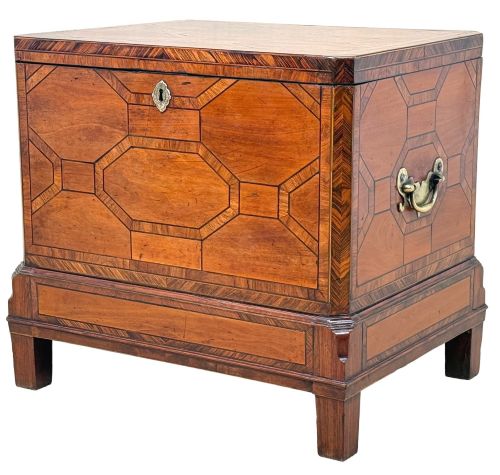
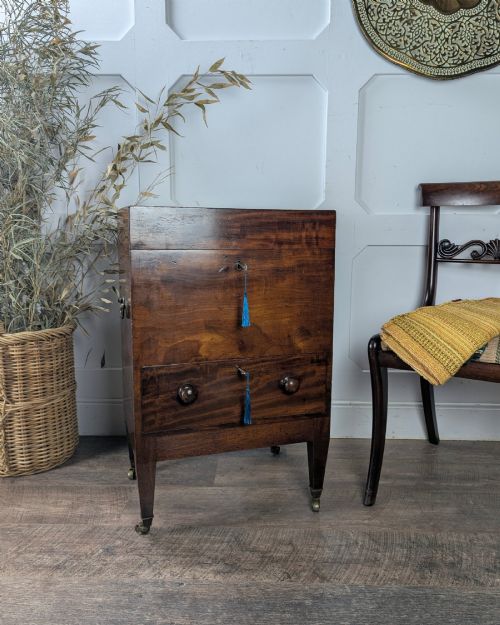
The primary forms take shape as octagonal boxes, sarcophagus bodies, and serpentine fronts designed to sit on the floor or on side tables. Mahogany dominates the selection, frequently enhanced by satinwood banding, boxwood inlay, or brass mounts.
Most examples date from the Georgian, Regency, and William IV periods, alongside later revival pieces from the nineteenth and twentieth centuries. Buyers select these items to introduce historic utility and rich cabinet work into dining spaces.
Construction and materials
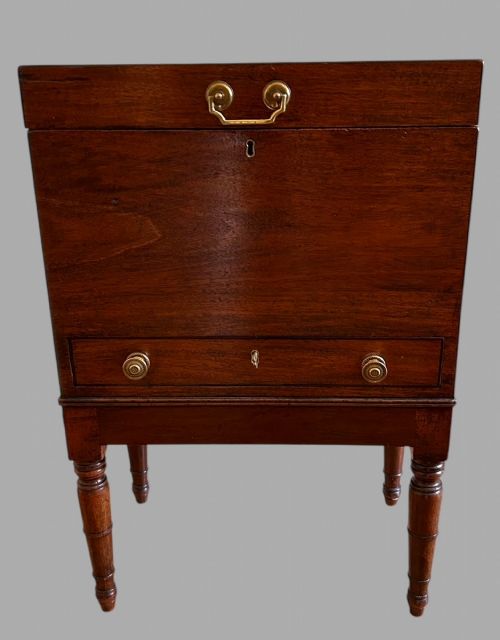
Cabinet makers utilised solid and veneered mahogany as the primary structural timber, often selecting figured boards for prominent surfaces. Secondary woods provide internal framework while brass handles, feet, and hinges offer robust support and structural contrast.
Decorative elements involve detailed boxwood and satinwood inlay, alongside cast or chased ormolu mounts on select Regency and George III examples. Interiors often feature fitted wooden dividers designed to cushion glass bottles and decanters securely during storage.
Current listings span the Georgian, Regency, William IV, and Edwardian eras, constructed primarily in mahogany with brass, satinwood, and ormolu.
Assessing craftsmanship and finish
Quality rests upon the crispness of the cabinet work, the choice of timber figure, and the integrity of the internal bottle dividers. Superior examples display precise dovetail joinery, finely figured mahogany veneers, and delicate stringing or banding.
Hardware execution further distinguishes finer items, where original brass carrying handles and secure locks remain intact. The sophistication of the silhouette, whether simple octagonal geometry or an elaborate serpentine sarcophagus form, dictates the tier of the piece.
Gillows of Lancaster and London·Whytock & Reid
The Georgian Wooden Drinks Chest Glossary
- Cellarette
- A freestanding or floor-standing box designed specifically to hold bottles of wine and spirits. These containers often feature internal divisions to separate individual bottles.
- Sarcophagus
- A monumental container shape with a peaked lid and flared sides, popular during the Regency period. This architectural form mimics ancient stone tombs on a domestic scale.
- Ormolu
- Gilded bronze mounts applied to furniture for decorative enrichment. This technique adds metallic highlights to mahogany bodies.
- Inlay
- The technique of embedding contrasting woods into a primary surface to create geometric or decorative patterns. Boxwood and satinwood frequently serve this purpose on mahogany pieces.
- Serpentine
- A furniture front curving inward in the centre and outward at the sides. This fluid outline requires advanced woodworking skill to execute properly.
Georgian Wooden Drinks Chest: Frequently Asked Questions
What is a georgian wooden drinks chest used for?
These chests served primarily to store wine and spirits securely near the dining table before bottles were left on display. They kept valuable vintages cool and organised within fitted internal compartments.
Today, collectors utilise them as statement side tables, decorative storage boxes, or authentic repositories for modern bottle collections.
How do I identify a Regency cellarette?
Regency pieces often feature architectural sarcophagus shapes, heavy brass lion paw feet, and prominent ring handles. They lean toward bolder classical proportions influenced by archaeological discoveries of the period.
Mahogany remains the standard timber, sometimes accented with ormolu mounts and carved details rather than delicate inlay.
Are these chests lined with metal?
Many examples retain internal lead or zinc linings designed to hold ice and water for chilling wine bottles. Other versions rely entirely on dry wooden dividers built to cushion glass decanters.
Checking the interior reveals whether the chest functioned as a wet wine cooler or a dry spirits box.
How do I fit one into a modern room?
A cellarette works effectively as a low side table beside a sofa or as a standalone accent piece in a study or dining room. The flat top surface provides a convenient place to rest drinks or display decorative objects.
Their rich timber tones pair well with both traditional interiors and minimalist contemporary spaces.