


Georgian Wooden Cup
A georgian wooden cup is a turned drinking vessel or treen piece shaped from native timber, prized for its tactile warmth and age.
Georgian Wooden Cup
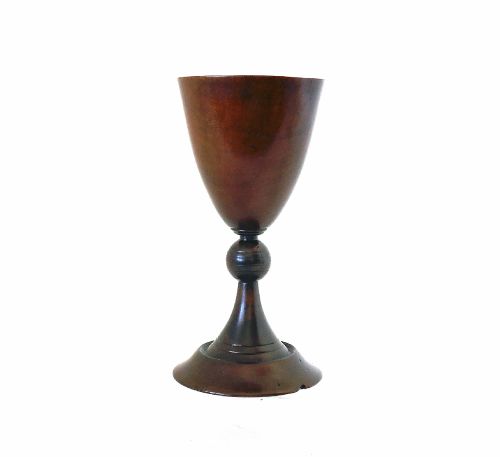
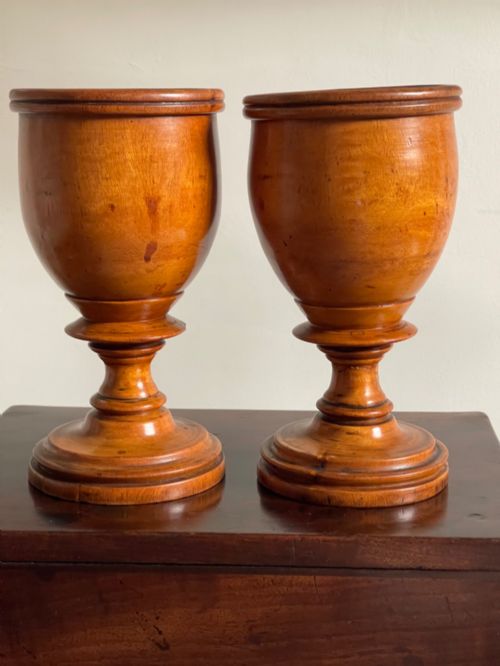
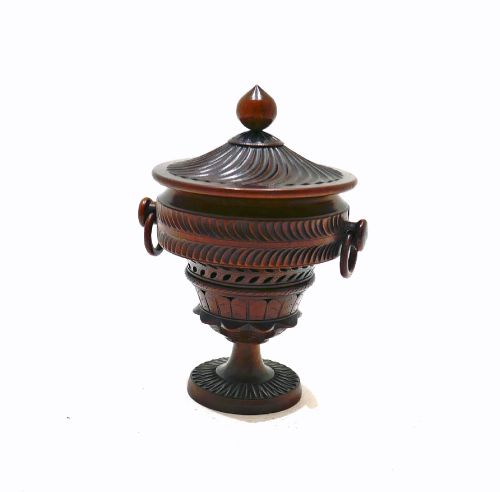
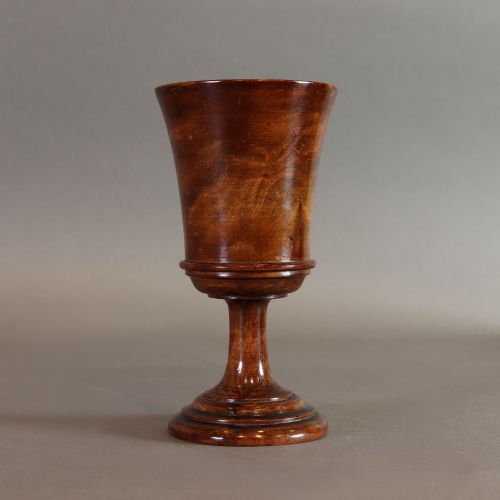
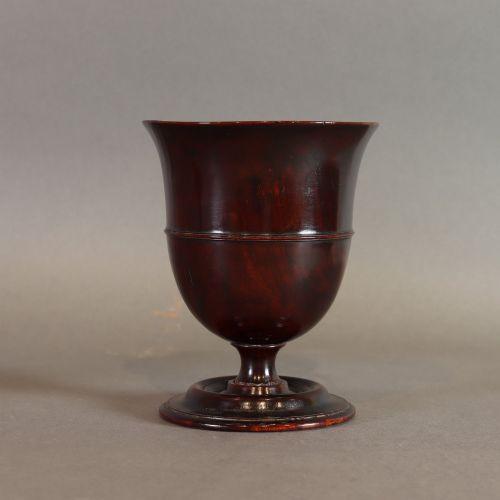
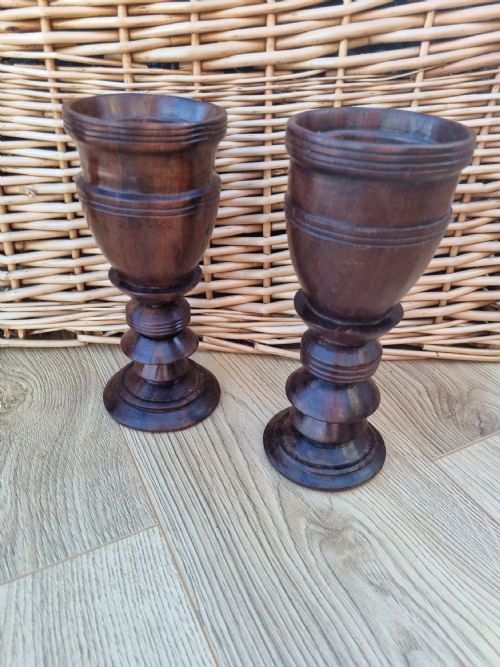
A georgian wooden cup encompasses functional drinking vessels and treen objects shaped from timber during the eighteenth and early nineteenth centuries. These turned items range from pedestal goblets in fruitwood and lignum vitae to lidded pomanders and spill holders.
The material origins trace across English and continental workshops, spanning the reigns of George III and the wider nineteenth century. Each piece reflects the utility and decorative craft of vernacular woodworking before industrial manufacturing took hold.
How they were made
Makers utilised a lathe to turn dense timbers such as fruitwood, walnut, oak and lignum vitae into symmetrical hollow vessels. This turning technique created the crisp profiles and pedestal bases characteristic of eighteenth-century treen.
Selection of close-grained hardwoods allowed craftsmen to achieve thin walls and smooth rims without splitting. Finished surfaces relied on natural oils and friction polishing rather than heavy varnish to highlight the timber grain.
Listings feature turned wood items spanning the eighteenth and nineteenth centuries, utilising fruitwood, oak, walnut, and lignum vitae.
What varies in quality
Quality rests upon the skill of the lathe work and the selection of the timber blank. Superior examples display balanced proportions, crisp turning rings and a rich, undisturbed surface patina.
Heavier timbers like lignum vitae yield sharper detail and greater weight in the hand compared to softer woods. The integrity of the turned profile and the absence of intrusive alterations distinguish finer domestic treen.
The Georgian Wooden Cup Glossary
- Treen
- Small handmade wooden household objects. The term encompasses everything from cups and goblets to boxes and domestic utensils.
- Fruitwood
- Timber sourced from fruit-bearing trees such as apple, pear or cherry. It provides a dense, fine-grained surface favoured by early turners.
- Lignum Vitae
- An exceptionally heavy and dense tropical hardwood used for turned vessels. Its natural oils give it a distinct dark tone and smooth finish.
- Pedestal Goblet
- A drinking vessel raised on a stem and foot. This form was widely produced in turned wood during the Georgian era.
Georgian Wooden Cup: Frequently Asked Questions
What is a georgian wooden cup?
A georgian wooden cup is a turned vessel created from dense hardwoods during the eighteenth or early nineteenth century. These objects served functional roles as drinking vessels or decorative treen.
Craftsmen shaped them on a lathe, using timbers like fruitwood, walnut and lignum vitae. Their survival relies on centuries of careful handling and natural material durability.
How were wooden cups used?
These vessels were primarily used for drinking ale, wine or cider in domestic settings. Some examples functioned as lidded pomanders or spill holders rather than drinking vessels.
Their substantial walls and turned stems made them practical items for daily tavern or household use. Over time, many transitioned from utility items to decorative cabinet pieces.
How do I care for treen?
Treen requires stable environmental conditions away from direct heat sources and strong sunlight. Excessive dryness can cause old timber to split or shrink.
Occasional light application of natural wax helps maintain the surface finish without sealing the wood. Avoid washing these vessels in water or exposing them to moisture.
How do I date a wooden cup?
Dating relies on identifying the timber species, turning style and tool marks left by the lathe. Georgian pieces typically show specific profiles and proportions distinct from later Victorian reproductions.
The presence of patination and wear patterns accumulated over centuries provides further indication of age. Comparing pieces to dated examples helps establish an accurate period.