





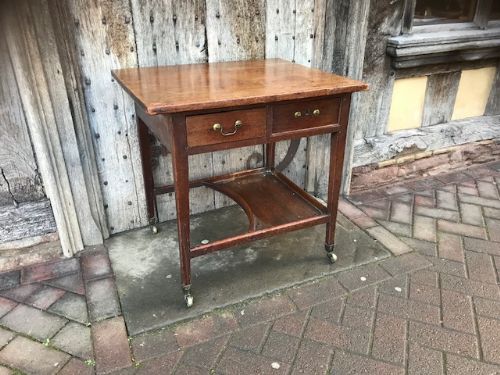
Georgian Washstand Drawers
Georgian washstand drawers bring compact timber craftsmanship into the bedroom, offering concealed storage for washing gear and daily grooming.
Georgian Washstand Drawers
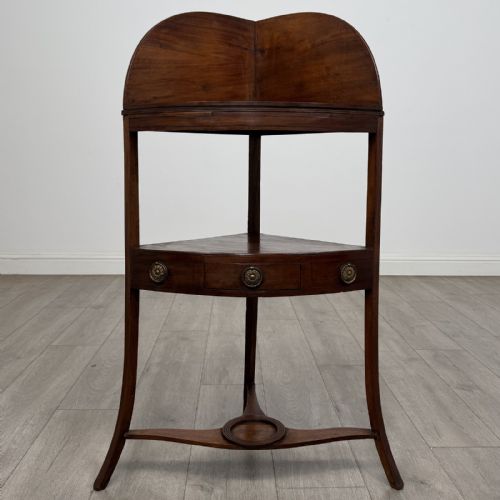
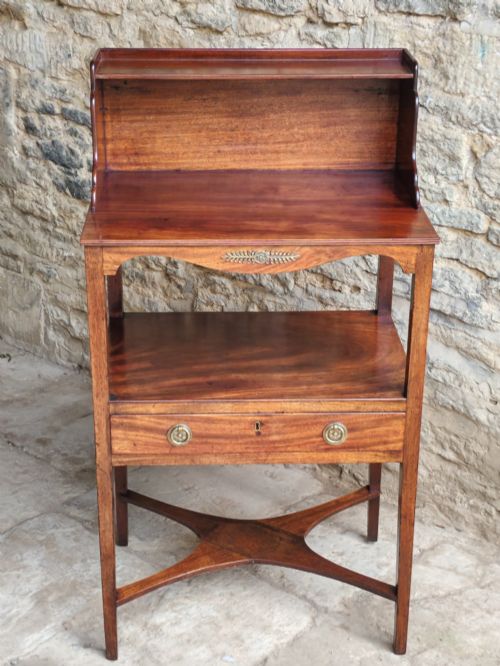
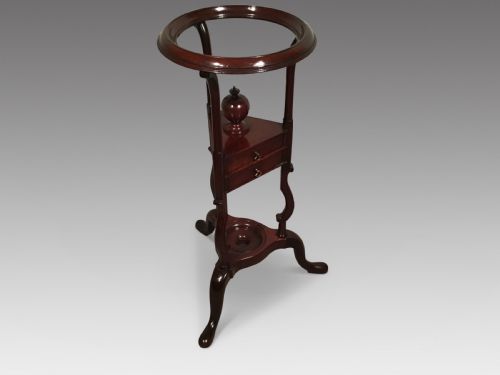
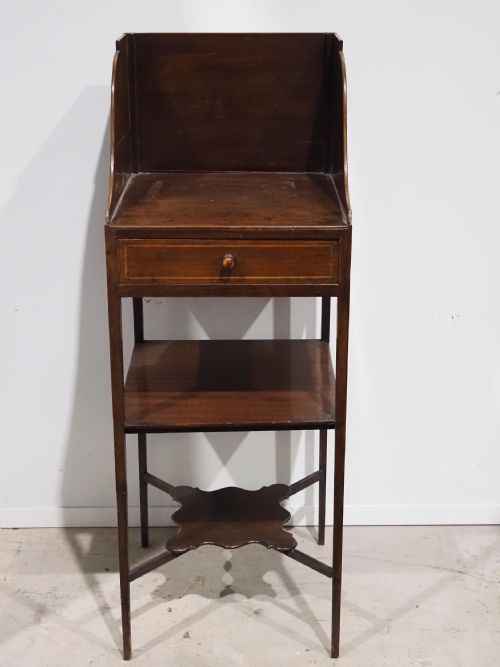
Georgian washstand drawers encompass small timber furniture pieces designed for personal ablutions, incorporating enclosed drawer storage into bedside tables, side tables, corner stands, and wig stands. Buyers searching for georgian washstand drawers encounter forms spanning the eighteenth century, the year 1800, and the nineteenth century under Regency and William IV styles.
The most common examples on this page are mahogany bedside tables and wig stands featuring fitted drawers and stands. These pieces reflect the domestic requirements of the period, providing functional surfaces and compartments within modest footprints.
Materials and construction
Makers utilised solid mahogany as the primary timber, valued for its rich grain and structural stability. Workshops incorporated boxwood and boxwood inlay to accent drawer fronts and structural edges.
Additional hardware utilised brass for pulls and key escutcheons, while glass elements occasionally appeared in related dressing components. Joinery techniques from the period ensured tight framing for drawers operating within washstands and bedside tables.
Georgian Washstand Drawers Retail Price Guide 2026
Typical asking prices for georgian washstand drawers among the pieces listed under this phrase on Sellingantiques today, from the lower quarter to the upper quarter. They describe what is for sale here now, not the wider market.
The inventory encompasses periods from the eighteenth century through to William IV styles of the nineteenth century.
Distinctions in quality
Quality rests upon the crispness of the boxwood inlay and the precision with which drawers fit their housings. Finer examples display harmonious timber selection across the entire carcass rather than mixing disparate grain patterns.
The sophistication of the turning on legs and supports distinguishes standard utility pieces from more ambitious workshop output. Original brass hardware and intact secondary timbers elevate the integrity of a surviving piece.
The Georgian Washstand Drawers Glossary
- Mahogany
- A durable tropical hardwood imported for high-end furniture production throughout the eighteenth and nineteenth centuries. Its deep reddish-brown colour darkened gracefully with age.
- Boxwood Inlay
- Contrasting light-coloured wood inserted into recesses on the timber surface to create decorative lines or geometric patterns. It demands precise hand-cutting to achieve tight joints.
- Wig Stand
- A specialised small-scale stand featuring a small basin ring or receptacle at the top and one or more drawers below for powder and grooming tools. These items reflect eighteenth-century fashion.
- Escutcheon
- A small protective plate surrounding a keyhole, frequently cast in brass on Georgian drawer fronts. It prevents the surrounding timber from wearing away through repeated use of the key.
Georgian Washstand Drawers: Frequently Asked Questions
What were georgian washstand drawers used for?
These compartments held small ceramic basins, soap, and personal grooming paraphernalia required for morning ablutions before plumbed bathrooms existed.
Drawers kept powders, brushes, and linens hidden away while the top surface supported the water jug and basin.
How do I date a georgian washstand?
Dating relies on examining the timber species, secondary woods inside the drawers, and the style of the leg turning or bracket feet.
Earlier pieces from the eighteenth century lean toward simpler structural lines, whereas Regency and William IV examples introduce bolder carved details.
Where were these pieces placed in a home?
They sat primarily in bedrooms, dressing rooms, or private bedchambers where personal hygiene routines took place.
Corner washstands made efficient use of awkward bedroom angles while keeping washing implements close at hand.
Are these tables sturdy enough for daily use?
Solid mahogany construction and traditional joinery make these pieces remarkably robust for everyday placement in modern rooms.
Care should be taken to protect finished timber surfaces from standing water and damp wash jugs.