

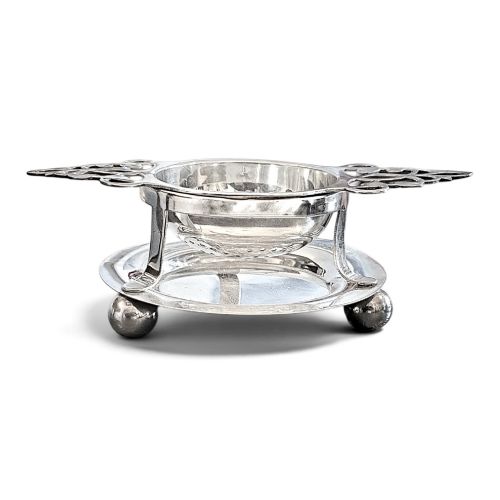
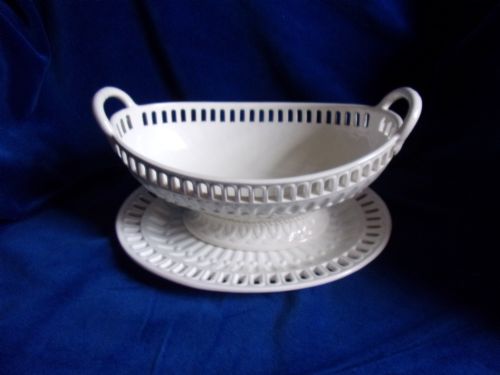
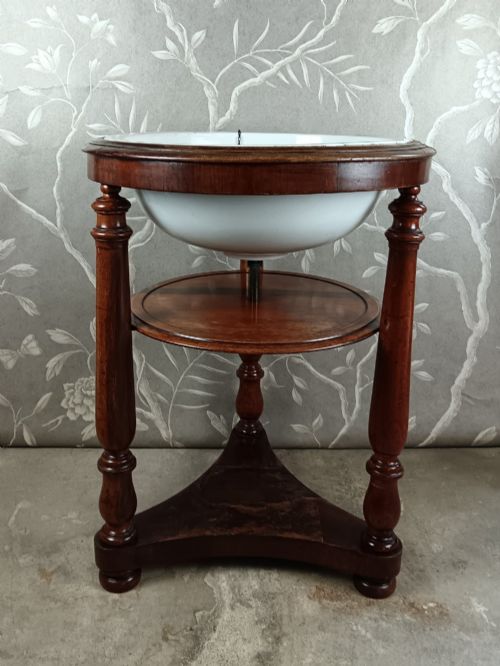
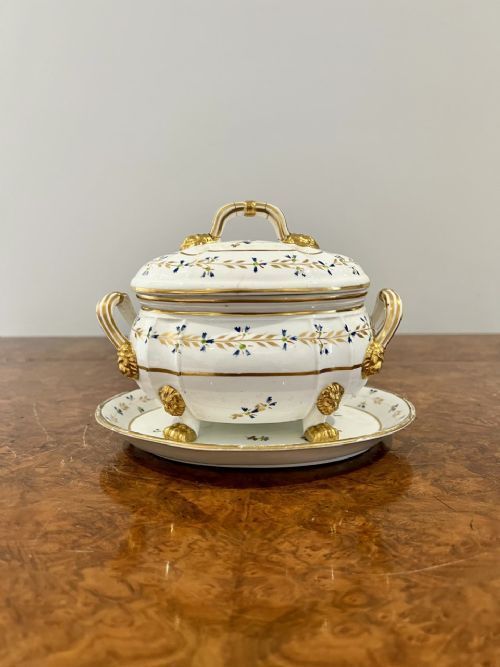





Georgian Bowl Stand
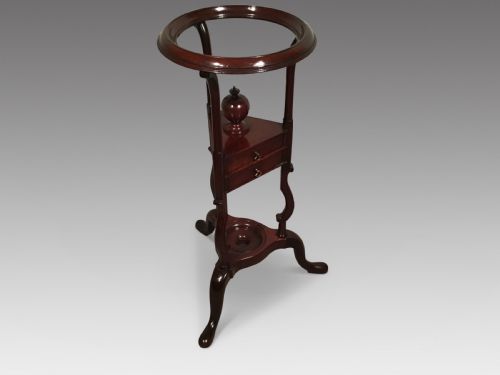
A georgian bowl stand is a purposeful piece designed to hold vessels, and you are most likely to meet mahogany washstands and timber cat stands here.
Georgian Bowl Stand
When you search for a georgian bowl stand, you encounter a specialised form of furniture designed to support washbasins, tureens, or decorative bowls. The listings show that these pieces frequently overlap with washstands, corner cabinets, and circular frames often termed cats.
The versions most common on this page span the georgian and regency periods, with later revivals appearing in mahogany and walnut. You will find both corner designs intended to fit tight spaces and freestanding circular tables made for holding specific ceramic or glass vessels.
Makers and manufacturers varied the forms significantly to suit domestic routines, producing everything from simple tripod basin supports to elaborate wig stands and chestnut basket frames. These utilitarian objects served bedrooms and dining rooms alike, adapting their height and ring diameters to the vessels they carried.
How they were made
Cabinet makers relied heavily on timber selection, utilising solid mahogany and figured walnut to construct the primary frames and tripod supports. Turning and joinery created the sturdy central shafts and sweeping legs necessary to bear the weight of heavy ceramic or glass bowls.
Metal components appear where structural strengthening or decorative accents were required, incorporating brass brackets, hinges, and occasional plating. Surface finishes typically relied on traditional polishing techniques that highlighted the natural grain of the wood without heavy pigmentation.
Georgian Bowl Stand Retail Price Guide 2026
Typical asking prices for georgian bowl stand among the pieces listed under this phrase on Sellingantiques today, from the lower quarter to the upper quarter. They describe what is for sale here now, not the wider market.
Several stands designed to hold cats turned out to be furniture for bowls rather than pets.
What varies in quality
The distinction between ordinary and superior examples lies in the crispness of the timber turning and the integrity of the structural joints. Finer pieces demonstrate careful selection of figured veneers and precise matching of grain across visible surfaces.
Proportion and stability separate standard utility pieces from high-status examples designed for prominent reception rooms. Superior stands retain original hardware and unaltered timber surfaces, whereas lesser items often show extensive timber replacement and converted fittings.
Crown Derby·Chamberlain Worcester·Mason’s Ironstone·Copeland Spode
The Georgian Bowl Stand Glossary
- Washstand
- A piece of furniture designed to hold a basin and ewer for personal washing. These often feature cutouts in the top tier to secure the bowl.
- Cat
- A low circular stand with three legs, traditionally used to support a bowl or dish near a fire. Walnut and mahogany were preferred timbers for this form.
- Chestnut basket
- A pierced ceramic or porcelain vessel with an accompanying tray used for serving fruit or chestnuts at the table. They frequently appear paired with dedicated stands.
- Flame veneer
- A highly figured timber veneer sliced from the point where a branch joins the main trunk, creating a flamelike pattern. This technique decorated the surfaces of finer georgian cabinets and stands.
- Tripod
- A three-legged support structure common to basin stands, tables, and cat stands of the period. It provided stability on uneven floors.
Georgian Bowl Stand: Frequently Asked Questions
How do I identify a georgian bowl stand?
You identify these stands by examining the circular top rings designed to securely drop a ceramic or glass bowl into the frame. The turned legs and timber choices, such as solid mahogany, point directly to period manufacturing.
Many examples double as corner washstands or small tables with shaped tiers. Checking the joinery and underside construction helps confirm the period.
Were these stands used in bedrooms?
Many of these stands served in bedrooms as washstands for morning ablutions, holding basins and related jugs. Corner versions were built to tuck neatly into domestic chamber spaces.
Other variants remained in dining rooms or parlours to support centrepiece bowls, epergnes, or serving baskets during meals.
What woods were used?
Mahogany and walnut dominate the construction of these stands, chosen for their strength and rich grain patterns. Cabinet makers occasionally applied flame veneers to enhance the visual appeal of visible surfaces.
Secondary woods like pine or oak frequently appear in interior framing and drawer linings where visual impact mattered less.