


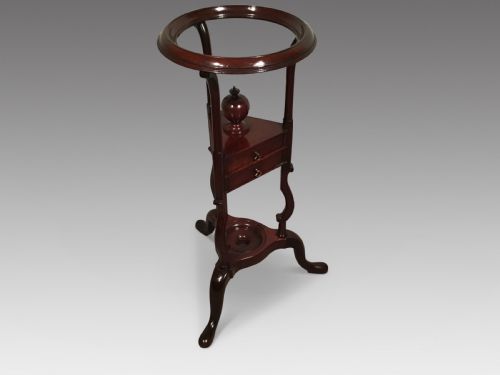


Tripod Washstand
A tripod washstand brings compact architectural elegance to a room, offering sturdy three-legged support for daily ablutions or display.
Tripod Washstand
A tripod washstand is a functional and decorative item designed to support basins, bowls, or plants on three supporting legs. When searching for a tripod washstand, buyers encounter forms ranging from compact wig stands to elaborate basin stands and jardiniere frames.
The pieces on this page span several distinct periods including the Georgian era, Regency period, and the nineteenth century. Common object types listed include washstands, basin stands, plant stands, stands and pedestals, and wig stands.
The version most commonly met on this page is the Georgian mahogany wig stand, alongside campaign washbowl stands, bowl stands in the George II style, bronze Athenienne examples, and Regency planter frames.
How they were made
Makers utilised solid and figured timbers, predominantly mahogany and stained timber, shaping the three-legged supports with turned or fluted stems. Joinery and turning formed the structural core of these stands.
Metal and stone elements frequently appear alongside woodwork, with brass, bronze, and marble integrated to hold basins or line frames. Glazed ceramic components also feature in the construction of bowls and vessels associated with the stands.
Listings feature mahogany, bronze, brass, and marble across Georgian, Regency, and nineteenth-century periods.
What varies in quality
Quality rests on the selection of timber and the precision of the turning on the tripod legs. Superior examples display dense, well-figured mahogany and crisp mouldings.
The integration of secondary materials like bronze, brass, and marble separates standard utility pieces from decorative statements. Finer stands maintain structural harmony between the three-legged base and the upper ring or frame.
The Tripod Washstand Glossary
- Tripod washstand
- A three-legged piece of furniture designed to hold a wash bowl or basin. These stands often feature circular rings at the top to support ceramic vessels.
- Wig stand
- A small tripod stand with a small circular platform or head designed for holding and powdering wigs in the eighteenth century. They share the same three-legged architecture as larger washstands.
- Athenienne
- A neoclassical tripod stand supporting a decorative bowl, inspired by ancient Greek braziers and often cast in bronze. These pieces served ornamental as well as practical domestic functions in Regency interiors.
- Jardiniere frame
- A decorative stand adapted to hold plants and flower pots rather than washbasins. Regency examples often employ timber and metal frames for this purpose.
Tripod Washstand: Frequently Asked Questions
What is a tripod washstand?
A tripod washstand is a three-legged piece of furniture historically used to support washbasins, bowls, or grooming equipment in domestic bedchambers.
Today, these versatile stands are frequently repurposed in modern homes as plant stands, side tables, or decorative display pedestals.
How do I date a tripod washstand?
Dating relies on examining the timber species, turning styles, and overall aesthetic characteristics associated with periods like the Georgian and Regency eras. Earlier pieces often feature rich mahogany construction and refined hand-turned legs.
Later nineteenth-century examples may incorporate bronze or campaign-style folding elements that reflect changing manufacturing techniques of the period.
Were tripod washstands only used for washing?
While originally built to hold washbowls and water jugs, many variations served specific grooming tasks such as supporting wigs or shaving gear. Some forms functioned primarily as decorative jardiniere frames for holding indoor plants.
This adaptability means surviving examples often display varied upper ring diameters and accessory drawers tailored to their specific historical function.
Where should I place a tripod washstand at home?
The compact three-legged footprint makes these stands ideal for corners, hallways, or beside seating where floor space is limited. Their open architecture prevents rooms from feeling visually crowded.
They sit comfortably in bathrooms holding towels, in living rooms as plant stands, or in bedrooms as sculptural display pieces.