




Georgian Walnut Swing Glass
Georgian walnut swing glass mirrors sit on tables to reflect the dressing routine with figured timber and moving plates.
Georgian Walnut Swing Glass
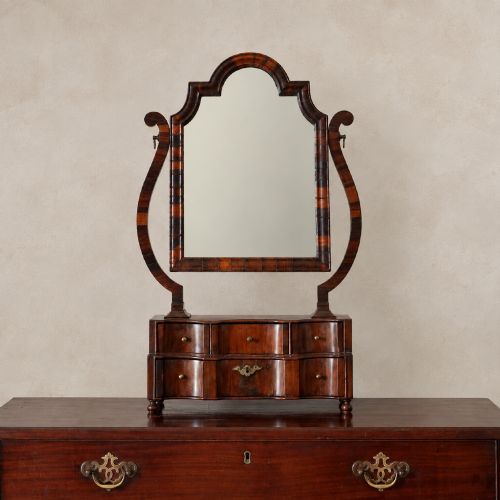
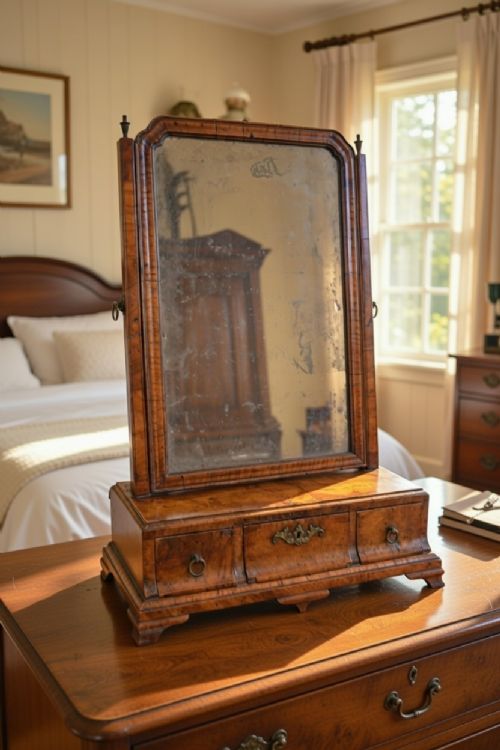
When you search for georgian walnut swing glass, you find movable plates framed in timber designed for the bedroom or dressing room. These objects function as toilet mirrors or dressing glasses, pivoting between upright supports to adjust the angle for the user.
The pieces listed on this page span the eighteenth and nineteenth centuries, including Queen Anne, George II, and George III eras. You will encounter forms styled with boxwood inlay, red walnut, and burr walnut, alongside Dutch neo-classical examples from around eighteen ten.
Most items take the form of a small box base fitted with drawers beneath the upright frame. These benchtop mirrors offer storage for small valuables while holding the glass plate securely in brass pivots.
How they were made
Cabinetmakers constructed these frames using solid walnut and burr walnut veneers applied to secondary timbers. Artisans often enhanced the surfaces with boxwood inlay and gold leaf details, selecting figured grains for the primary visual impact.
The mirror plates themselves consist of historic mirror glass held within rebated frames. Brass pivots and screws allow the glass to swing freely between the upright arms attached to the base or drawer section.
The listings on this page span the eighteenth and nineteenth centuries, featuring walnut, burr walnut, laburnum, and boxwood inlay.
What varies in quality
The sophistication of the timber figure defines the upper tier of these dressing glasses. Dense burr walnut and striking laburnum crossbanding elevate a simple box mirror into a piece of fine cabinet work.
Proportion and the integrity of the original plate also separate ordinary examples from exceptional ones. Finer pieces maintain balanced drawer arrangements and crisp mouldings that suit the scale of the pivoting frame.
The Georgian Walnut Swing Glass Glossary
- Swing glass
- A mirror plate mounted on pivots that allows the glass to tilt back and forth within its frame. This mechanism sits between two upright arms fixed to a base.
- Toilet mirror
- A small table mirror designed for personal grooming during the eighteenth century. These items typically rest on top of a dressing chest or table rather than hanging on a wall.
- Burr walnut
- Wood harvested from walnut tree growths that produces complex, swirling grain patterns. Cabinetmakers sliced this timber into thin veneers to ornament drawer fronts and mirror frames.
- Boxwood inlay
- Contrasting pale wood inserted into recesses cut into the darker walnut surface. This technique creates geometric lines and decorative borders around the edges of the base.
Georgian Walnut Swing Glass: Frequently Asked Questions
What is a georgian walnut swing glass?
A georgian walnut swing glass is a portable mirror mounted on pivots between two upright posts. These pieces sit on tables to assist with grooming and dressing.
The design includes a small box base with miniature drawers underneath the glass frame. This provides a stable footing and storage for small personal items.
Where did people put these mirrors?
These mirrors stood on top of dressing tables, chests of drawers, or dedicated washstands in bedrooms. Their portable nature allowed owners to move them around the house for the best light.
They belonged to the private chambers rather than the formal reception rooms. Owners used them while seated at a low table for shaving or arranging hair.
How do I date a walnut mirror?
Dating relies on the style of the base, the profile of the mouldings, and the construction methods of the drawers. Queen Anne and early Georgian examples feature different bracket feet and crestings compared to later George III pieces.
The presence of original mirror glass and specific secondary timbers also helps narrow down the period of manufacture.
Are the mirror plates original?
Many historic mirrors have replacement glass because the original silvering degraded over centuries of exposure to air and moisture. Finding a mirror plate with genuine age adds to the character of the piece.
Collectors look closely at the edges and back of the glass for signs of foxing and historic manufacture methods.