
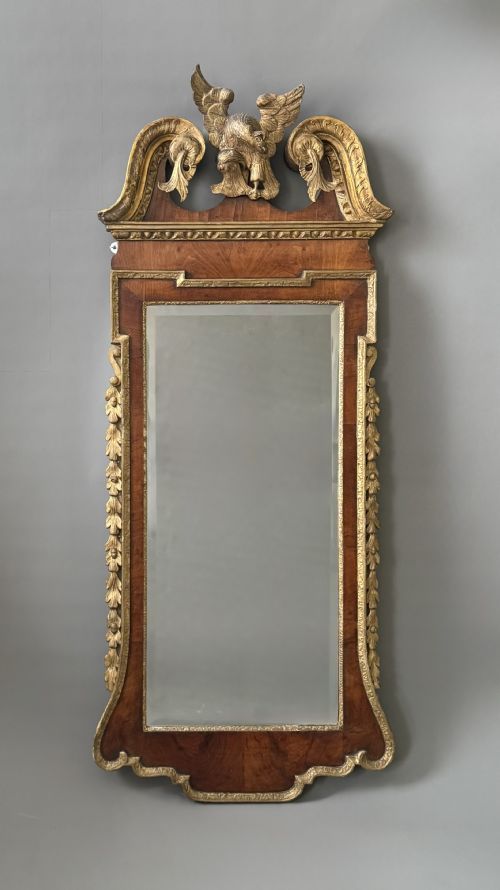
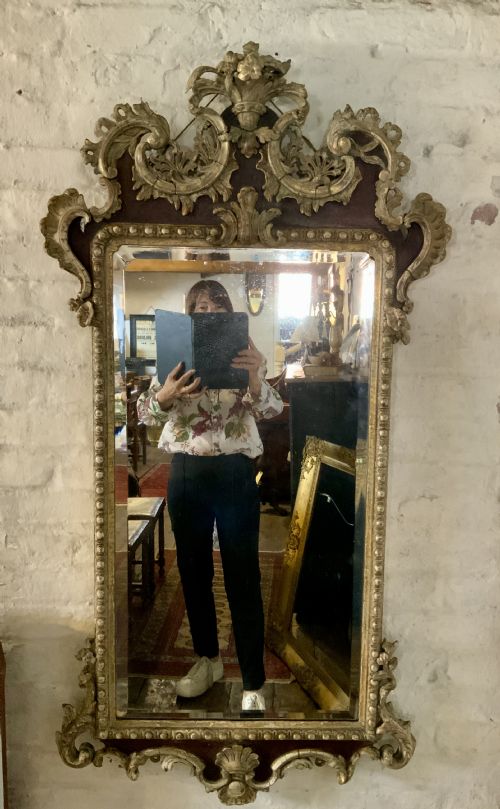


Georgian Walnut Pier Mirror
A georgian walnut pier mirror brings warmth and architectural presence to a room, framed in rich timbers and reflective glass.
Georgian Walnut Pier Mirror
A georgian walnut pier mirror is a vertical wall glass designed to hang on the narrow wall space between windows, known as the pier. These architectural looking-glasses reflect natural light deeper into panelled rooms while adding a formal decorative focal point to an interior.
The pieces appearing on this page span several centuries, combining authentic 18th-century examples with later 19th-century interpretations and 20th-century revivals. Queen Anne, George II, and George III stylistic influences dominate the selection, bringing refined proportions and classical details to the wall.
Most examples utilise figured timbers such as burr walnut or straight-grained veneers, frequently enhanced with parcel gilt details. Buyers will encounter various formats including fretwork frames, architectural Palladian designs, and cushion moulding profiles.
How They Were Made
Cabinetmakers constructed these frames using softwood carcases overlaid with finely figured walnut veneers and burr walnut sections. Craftsmen applied parcel gilt highlights to carved mouldings, fretwork crests, and giltwood slips to catch the candlelight.
Glass plates in early examples often feature bevelled edges and traditional mirror silvering methods. Fretwork frames were meticulously sawn from thin timber laminates, frequently incorporating pierced scrollwork and carved motifs such as birds.
Listings feature walnut, giltwood, and mirror glass across 18th century, Victorian, and 1920 revival periods.
What Varies in Quality
Quality rests primarily in the depth of figure within the walnut veneer and the crispness of carved giltwood details. Superior examples exhibit well-balanced proportions and harmonious grain matching across the entire wooden surface.
The preservation of original mirror glass and secondary framing components influences the overall integrity of a piece. Finer mirrors retain their original parcel gilding and structural backing boards, showing honest signs of age rather than heavy modern restoration.
The Georgian Walnut Pier Mirror Glossary
- Pier glass
- A tall mirror specifically designed to hang on the wall space between two windows. These pieces often feature matching console tables placed directly beneath them.
- Parcel gilt
- Partially gilded decoration where thin layers of gold leaf highlight specific carved details against a walnut background. This technique adds subtle brilliance to architectural mouldings.
- Fretwork
- Openwork ornamentation cut with a fretsaw from thin timber panels. It creates intricate geometric or scroll patterns along the crests and borders of frames.
- Vauxhall mirror
- An early mirror plate featuring a distinct bevelled edge produced by hand-grinding techniques. The name originates from the famous London glasshouse active during the period.
- Cresting
- The decorative ornamental feature mounted at the very top of a mirror frame. It frequently incorporates carved birds, cartouches, or scrollwork.
Georgian Walnut Pier Mirror: Frequently Asked Questions
Where should I hang a pier mirror?
These vertical glasses suit narrow wall spaces, hallways, or above a mantelpiece where their height draws the eye upward.
Positioning them opposite a window maximises the reflection of natural light throughout the room.
How do I identify a genuine period piece?
Examine the construction methods, timber patination, and the backing boards for signs of age and traditional hand-tool marks.
Original mirror glass often exhibits slight foxing, distortions, and hand-bevelled edges characteristic of early manufacturing techniques.
What is the difference between walnut and burr walnut?
Standard walnut displays a straight, elegant grain pattern with rich brown tones derived from the heartwood of the tree.
Burr walnut comes from knotted growths on the trunk, producing highly figured, swirling grain patterns prized for decorative veneering.
Can these mirrors be hung safely on modern walls?
Traditional frames possess substantial weight due to timber construction and glass plates, requiring secure wall fixings.
Use appropriate heavy-duty brackets screwed directly into wall studs or masonry support rather than standard picture hooks.