


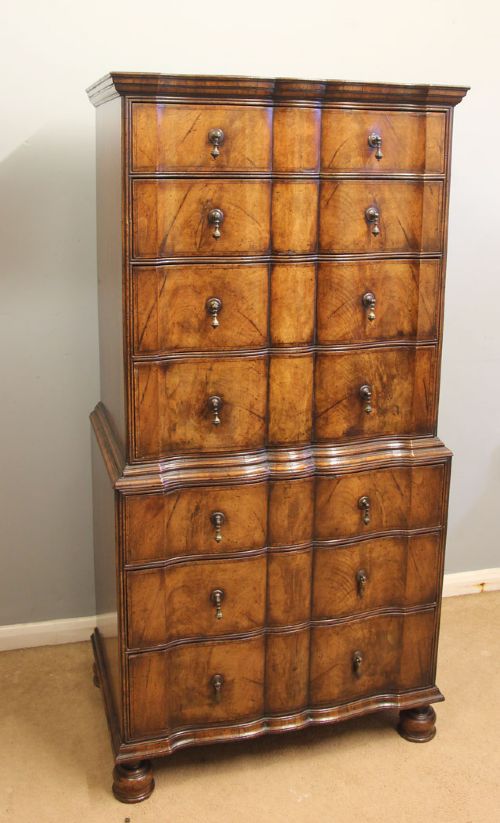

Georgian Walnut Highboy
A georgian walnut highboy brings rich grain and towering storage to a room, uniting the upper chest and lower stand with undeniable presence.
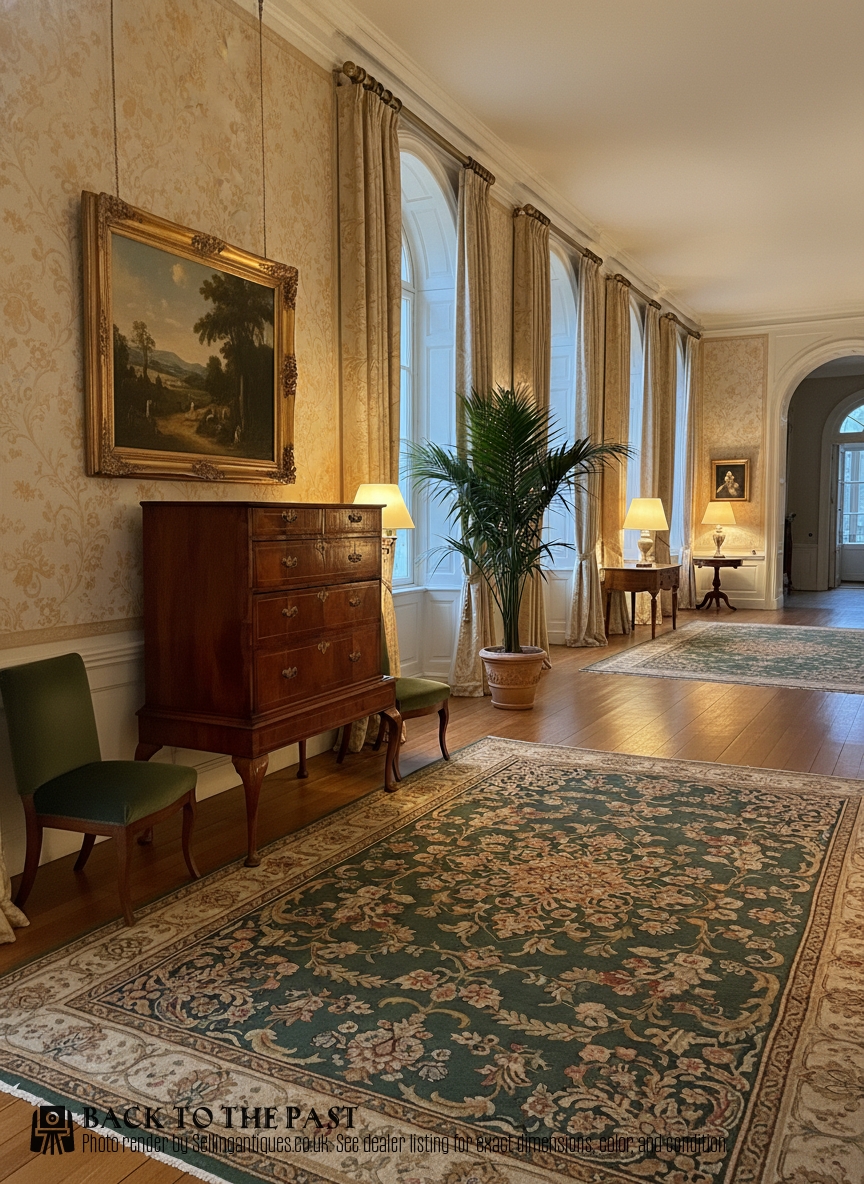
Georgian Walnut Highboy
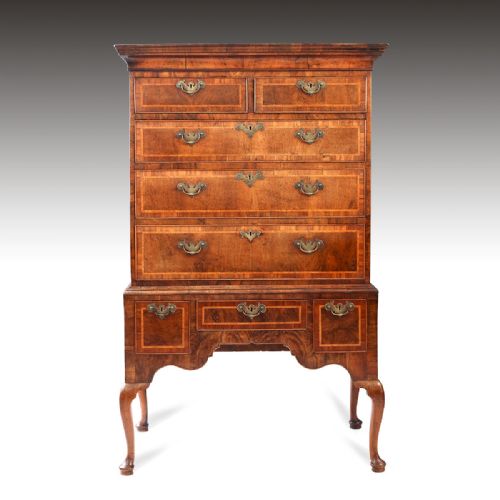
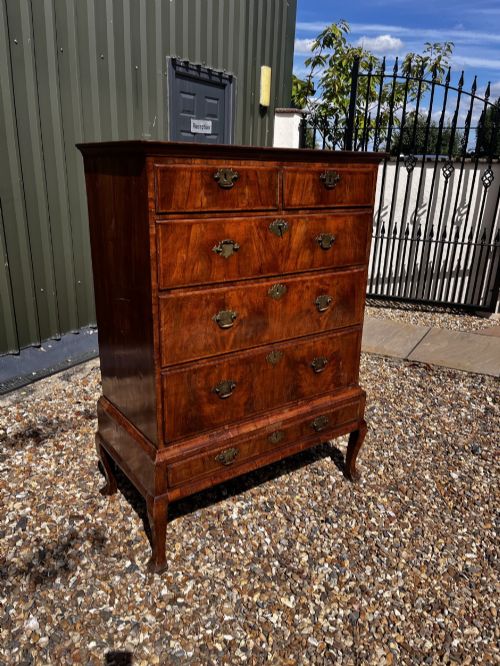
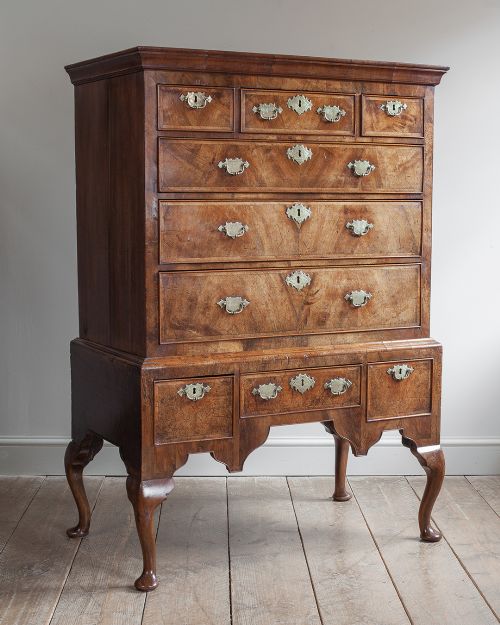
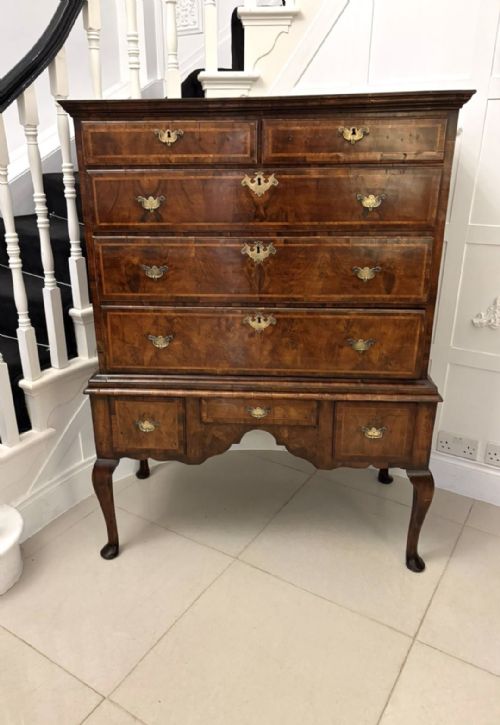
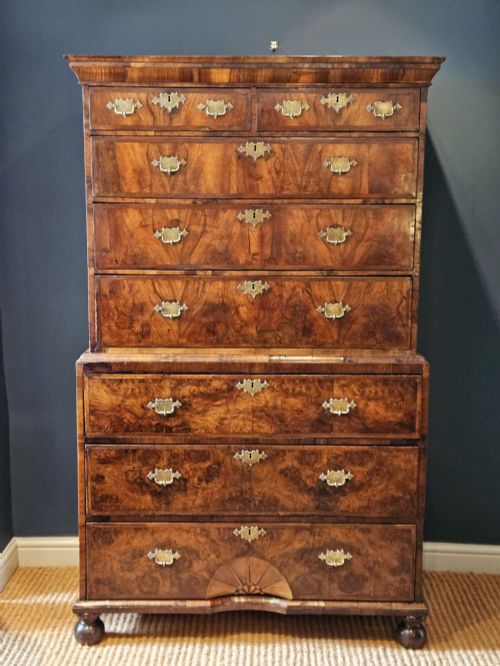
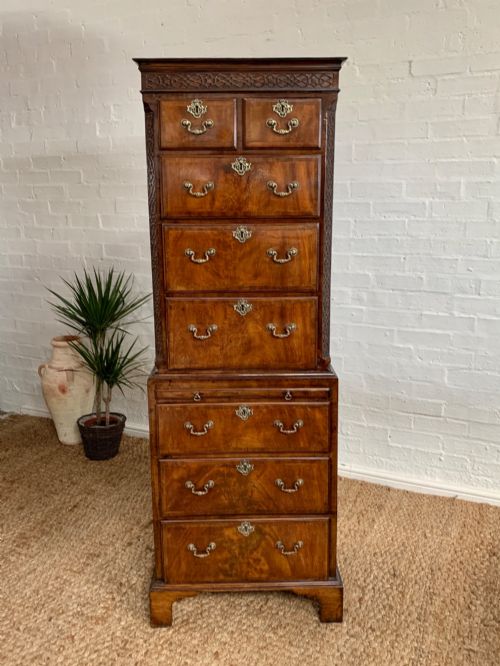
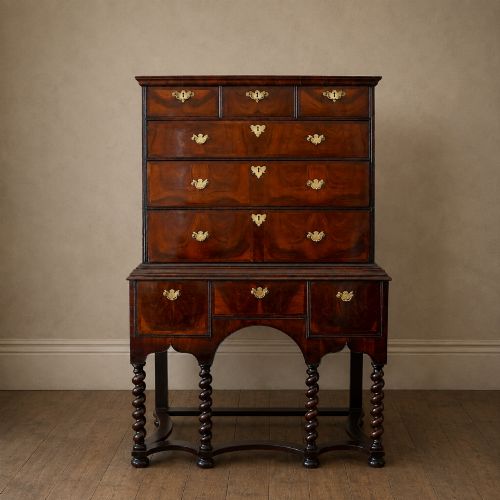
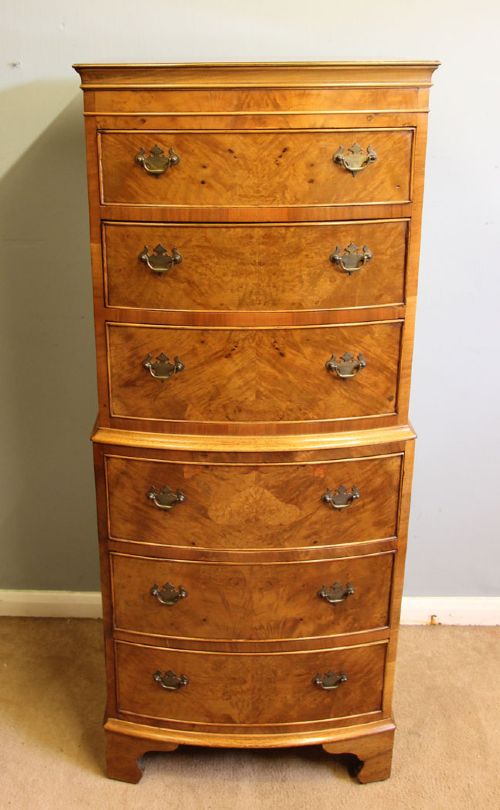
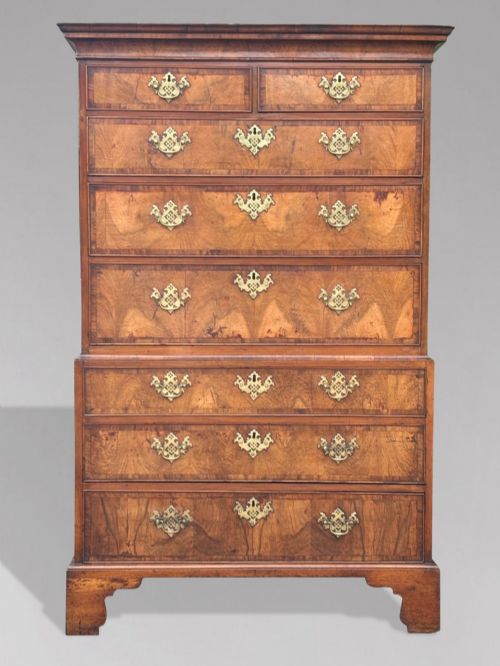
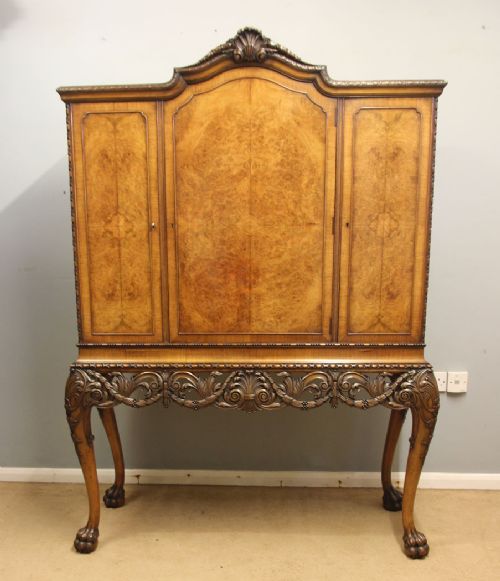
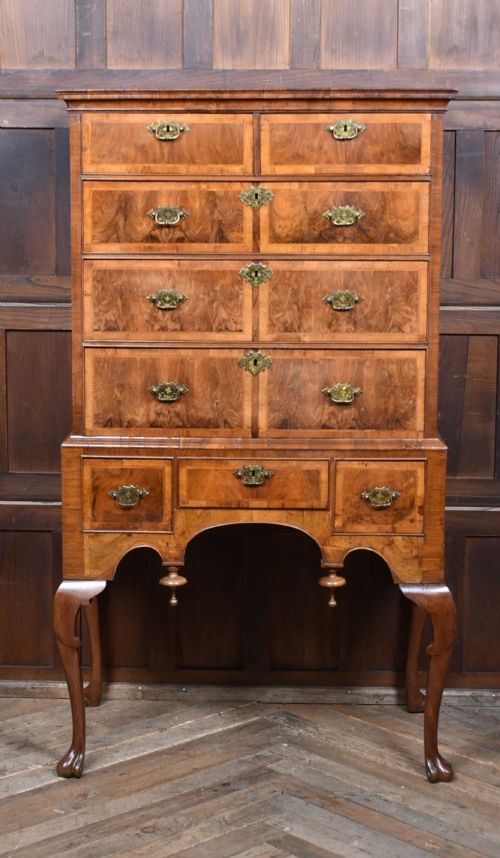
When you search for a georgian walnut highboy, you find stacked storage furniture spanning chests on stands, chests on chests, and tallboys. The pieces on this page originate primarily from the eighteenth century, including the reigns of George I, George II, and George III, alongside later nineteenth-century revivals and twentieth-century interpretations.
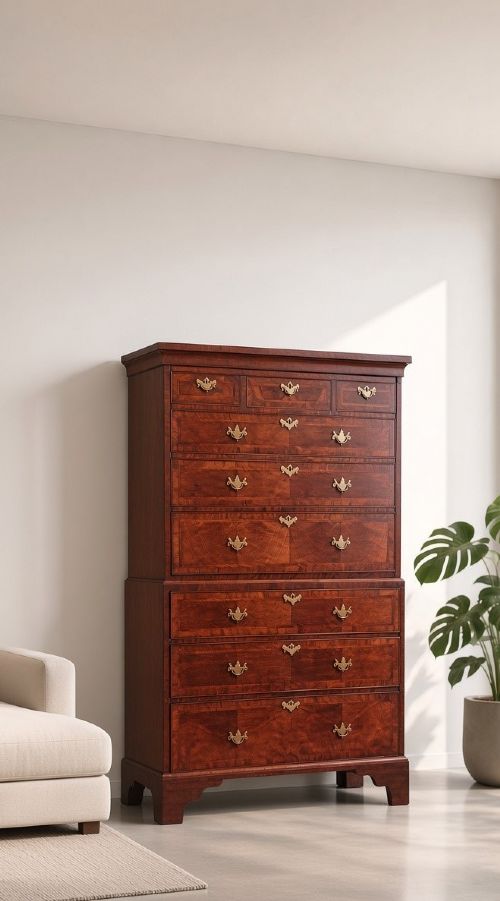
Forms vary between the two-part chest on stand with slender legs and the taller, more imposing chest on chest or tallboy arrangement. Walnut veneer, burr walnut, and figured walnut dominate the structural forms, occasionally combined with oak and brass hardware.
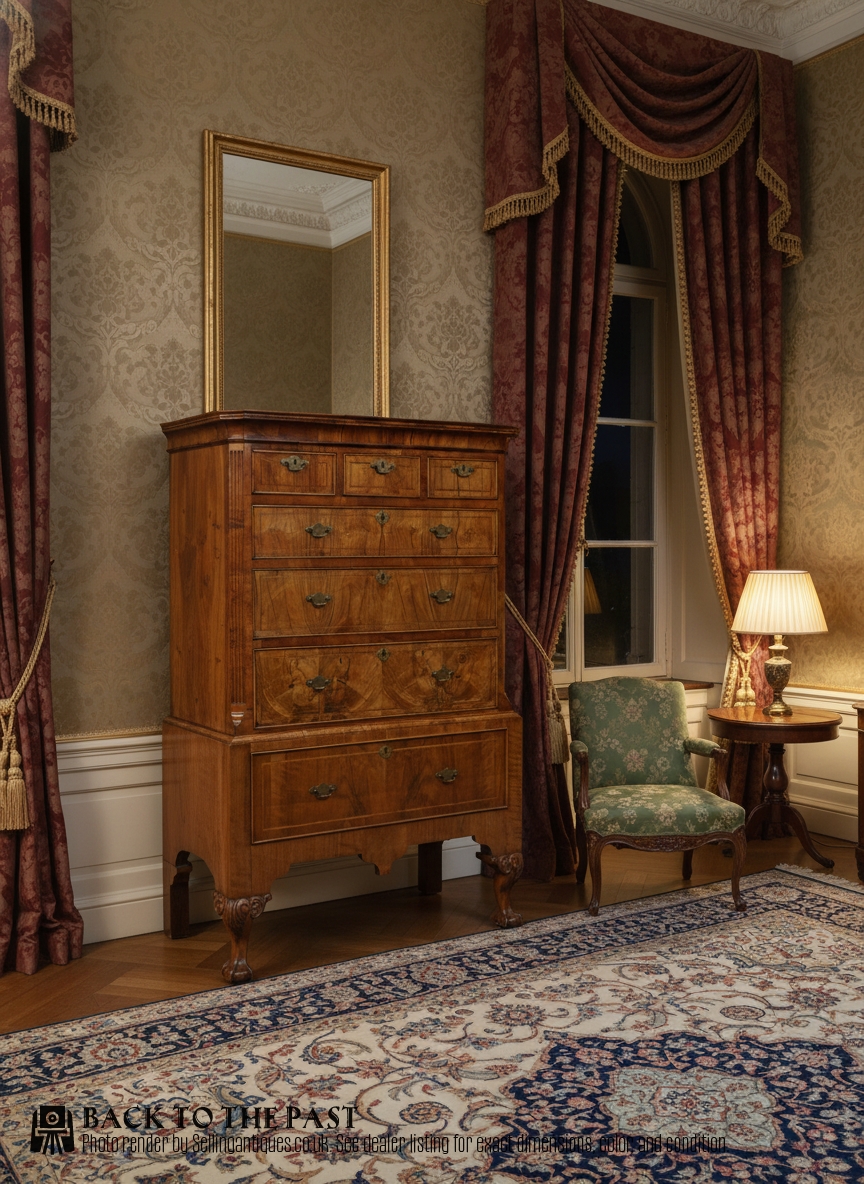
How they were made
Cabinet makers utilised solid oak for interior carcases and drawer linings while applying decorative veneers to the exterior surfaces. Walnut veneer, burr walnut, and figured walnut were skillfully cut and laid to create striking symmetrical patterns across the drawer fronts.
Brass handles and escutcheons punctuate the polished timber surfaces, while specialised details such as boxwood stringing, oyster veneering, and carved sunburst inlays add textural depth to the facades.
Materials recorded across the selection include walnut, burr walnut, figured walnut, oak, brass, and boxwood.
What varies in quality
The sophistication of the timber veneer fundamentally separates examples, with complex burr walnut and figured grain patterns commanding greater visual depth than plain surfaces. The finesse of decorative elements such as dished sunburst inlays and oyster veneers further elevates the standing of an individual piece.
Proportion and structural coherence dictate the overall success of the design, distinguishing restrained early period forms from later revival interpretations.
The Georgian Walnut Highboy Glossary
- Chest on stand
- A two-part storage form featuring an upper chest section raised upon a lower frame with legs. This configuration provides elevated storage with a lighter visual footprint.
- Tallboy
- A tall chest of drawers, often constructed as a chest on chest or a single towering carcase. It maximises vertical capacity while maintaining a compact floor footprint.
- Burr walnut
- Timber harvested from walnut tree growths that produces intricate, swirling grain patterns. Cabinet makers prized this wood for its decorative visual impact.
- Oyster veneer
- Small cross-sections of branches sliced to resemble oyster shells and arranged in geometric patterns. This technique creates a distinctive repeating circular motif across the surface.
- Sunburst inlay
- A decorative radial motif set into the timber surface using contrasting woods like boxwood. It draws the eye toward the central drawer or frieze.
Georgian Walnut Highboy: Frequently Asked Questions
What is a georgian walnut highboy?
A georgian walnut highboy is a tall storage furniture piece comprising stacked sections, usually configured as a chest on stand or a chest on chest. These pieces combine vertical capacity with decorative wood veneers.
Originating largely in the eighteenth century, they utilise walnut, burr walnut, and oak construction with brass hardware and distinct regional styles.
How do I style a georgian walnut highboy?
Living with a georgian walnut highboy involves placing the towering structure against a sturdy wall where its warm timber tones can anchor the room. The ample drawer space makes it practical for clothing or linen storage.
Keep surrounding decor understated to let the figured grain and brass handles remain the focal point of the interior space.
How do I date a georgian walnut highboy?
Dating relies on examining the construction methods, timber types, and stylistic indicators such as Queen Anne or George I design details. Eighteenth-century examples feature period specific joinery and hardware.
Later nineteenth-century and twentieth-century revivals adopt similar walnut veneers but reveal distinct secondary woods and modern structural cues upon closer inspection.
What is the difference between a tallboy and a chest on stand?
A tallboy typically consists of a chest stacked directly upon a second, slightly larger chest, creating a continuous vertical block of drawers. A chest on stand places an upper chest upon a distinct open frame supported by legs.
Both forms provide elevated storage, but the chest on stand offers a more open, architectural silhouette beneath the main body.