


Georgian Walnut Floor Clock
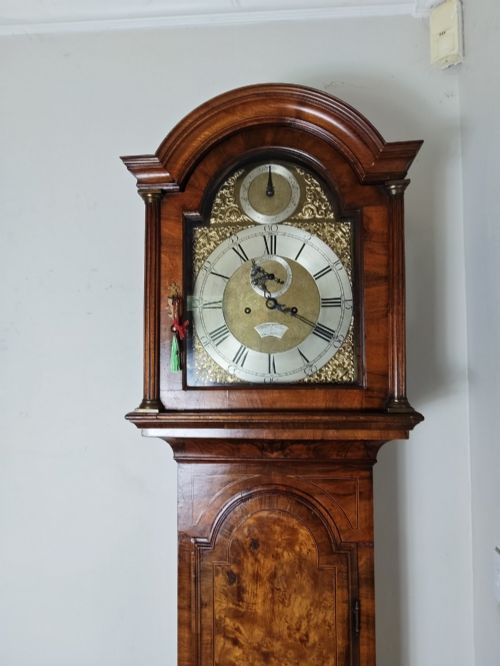
A georgian walnut floor clock brings rich timber grain and precise movement into a room, standing as a focal point of period craftsmanship.
Georgian Walnut Floor Clock
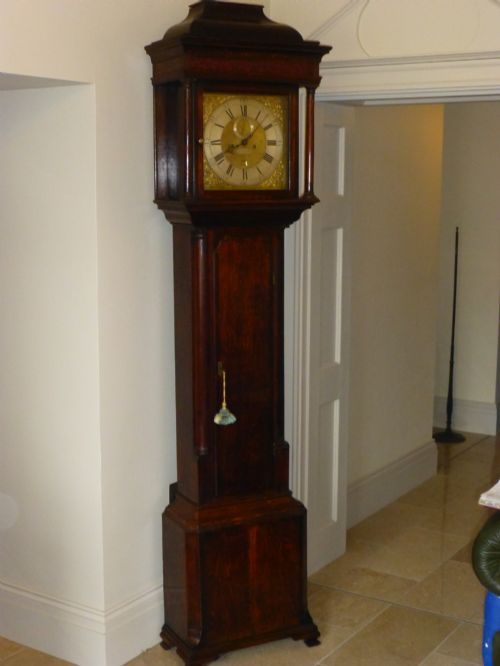
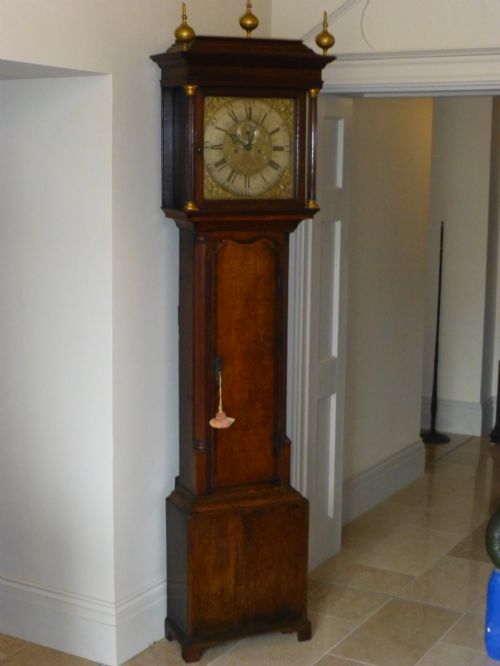
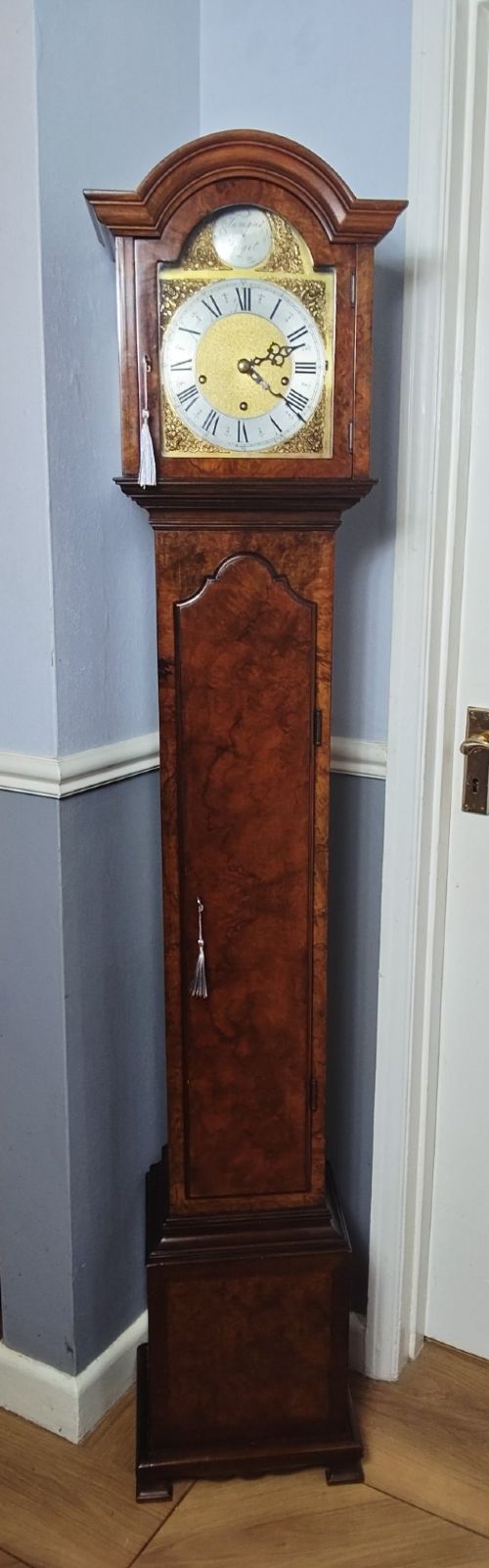
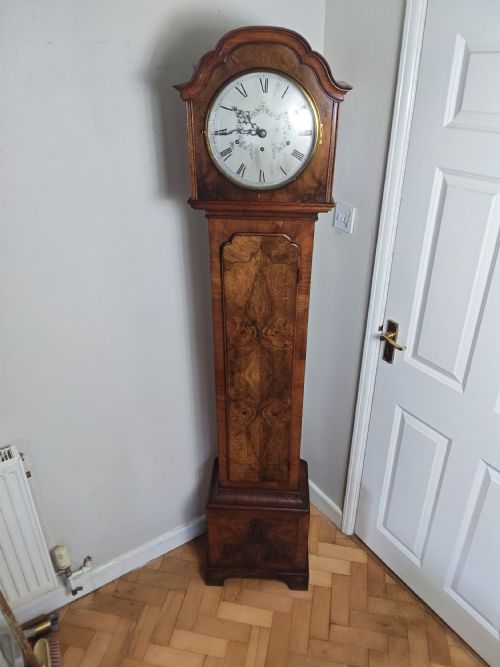
A georgian walnut floor clock combines tall timber housing with precision timekeeping, emerging primarily from the eighteenth century alongside later revival periods. These vertical timepieces appear in forms ranging from grand-scale grandfather clocks to more compact grandmother and granddaughter variants.
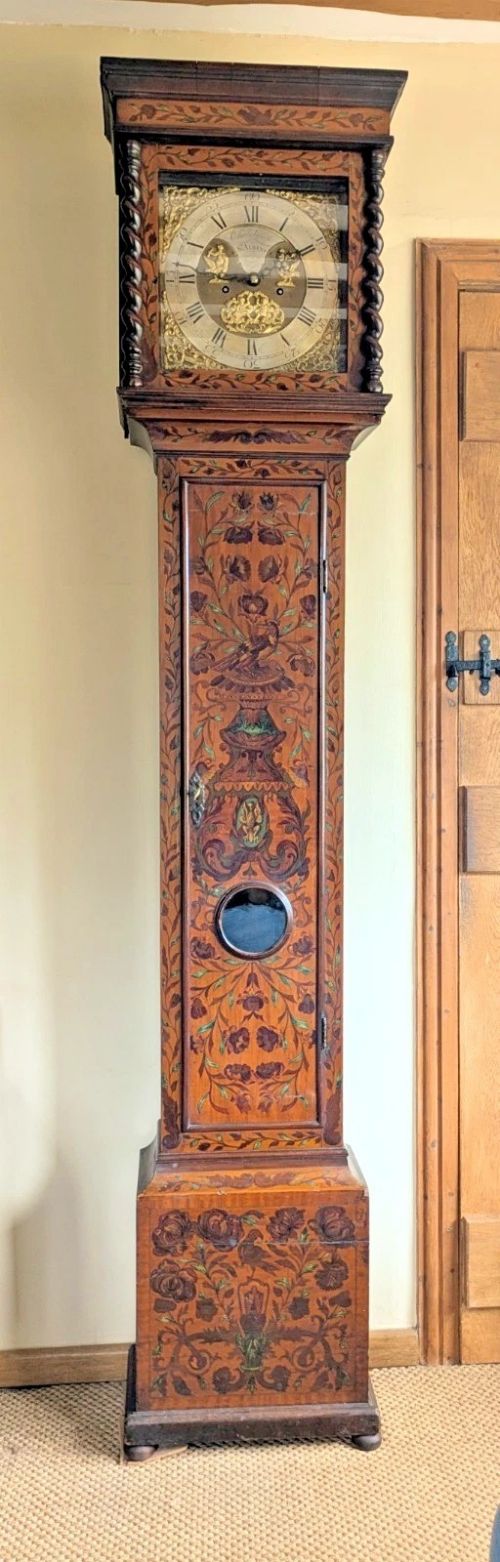
Makers housed these movements in cases constructed from walnut, burr walnut, and red walnut, frequently paired with secondary woods like oak. Dial configurations display brass faces, sometimes incorporating moonphase mechanisms or musical chiming capabilities.
Buyers encounter eighteenth-century originals alongside twentieth-century revival pieces modelled after Queen Anne and early Georgian styles. Regional English makers signed many of these dials, placing their names alongside London workshops.
Materials and construction
Cabinetmakers utilised figured timber veneers, selecting burr walnut and red walnut for striking grain patterns on the trunk door and base. Oak frequently served as a robust secondary carcass wood, providing structural stability behind the decorative walnut exterior.
Clockmakers fitted brass dials within the hood, engraving chapter rings and maker signatures into the metal surface. Movements incorporated steel components and weights, driving pendulum-regulated timekeeping across eight-day or quarter-chiming configurations.
Origin locations span London workshops as well as regional makers working in Chester, Nantwich, and Norwich.
Indicators of quality
Quality rests significantly in the choice of timber veneer, where rich figure and balanced matching across the case distinguish superior examples. The depth of colour in the walnut and the crispness of the brass dial engraving elevate an individual clock.
The precision of the maker's movement and the integration of the dial with the wooden case determine the overall standard. Signed dials from recorded regional or London watchmakers carry distinct weight compared to unsigned workshop output.
Richard Corless of Stockport·Charles Louch St. Albans·Thomas Vernon London·Langley Bradley·Edward Upjohn Exon·Samuel Young Nantwich·John Harrington London·Jonathan Marsh London·Joseph Oxley Norwich
The Georgian Walnut Floor Clock Glossary
- Longcase clock
- A tall pendulum clock enclosed in a wooden case, commonly known as a grandfather clock.
- Burr walnut
- A prized timber harvested from walnut tree growths, displaying intricate swirling grain patterns used in fine veneering.
- Moonphase
- A dial mechanism tracking the phases of the lunar cycle across a rotating disc.
- Grandmother clock
- A smaller, more slender version of the traditional longcase clock, often dating to the twentieth century.
- Marquetry
- The art of applying decorative veneer pieces in wood to form intricate patterns on a surface.
Georgian Walnut Floor Clock: Frequently Asked Questions
How do I wind an eight-day longcase clock?
Wind the weights carefully using the crank key provided, ensuring you do not over-wind the mechanism.
Take your time to support the weight slightly as it rises to avoid putting undue strain on the gut or wire lines.
What is the difference between a grandfather and a grandmother clock?
Grandfather clocks stand as the traditional full-size tall case clocks from the eighteenth century and earlier periods.
Grandmother clocks are significantly smaller and more slender proportions, frequently produced during revival periods in the twentieth century.
Where were these clocks originally made?
Makers constructed these timepieces across various English workshops, spanning both London and regional centres like Norwich, Exeter, and Stockport.
Regional clockmakers often signed the brass dials directly, recording their town alongside their name.
How do I care for a walnut clock case?
Keep the wood away from direct sunlight and sudden temperature shifts to protect the walnut veneer from drying or splitting.
Apply a light wax polish periodically to maintain the sheen and nourish the historic timber.