

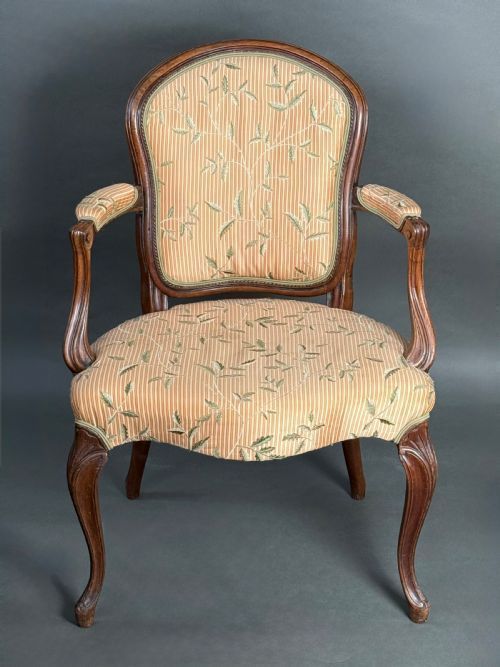
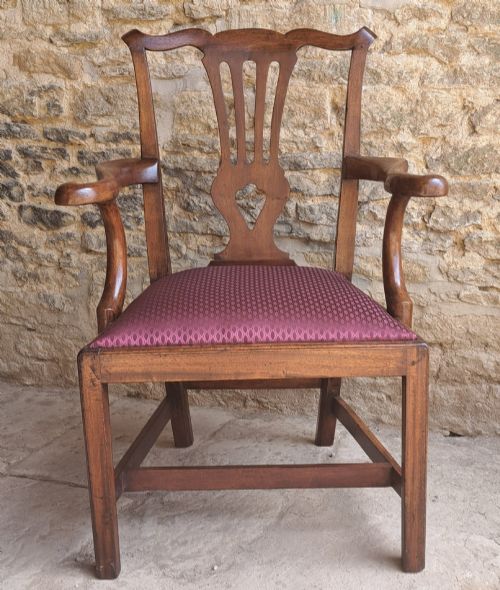
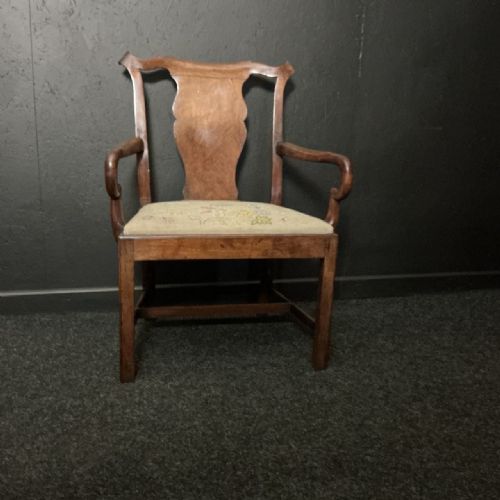


Georgian Walnut Elbow Chairs
Georgian walnut elbow chairs are robust seating pieces desired for their warm timber tones and generous proportions.
Georgian Walnut Elbow Chairs
When you search for georgian walnut elbow chairs, you encounter seating built primarily during the eighteenth century alongside later revivals from the nineteenth and twentieth centuries. These armchairs and carvers combine sturdy timber construction with upholstered seats and backs designed for studies, libraries, and drawing rooms.
The versions most frequently met on this page include eighteenth-century English and Irish examples alongside later George II period revivals and Georgian style interpretations. These pieces showcase varied arm designs and open structures suited to domestic comfort and formal use.
How they were made
The primary material underpinning these pieces is walnut timber, frequently paired with textiles such as silk, velvet, tapestry, and modern upholstery fabric. Makers utilised brass for structural or decorative details where appropriate.
Joinery techniques focus on creating stable frames for open armchairs and elbow chairs, accommodating various upholstery weights and textile types from period tapestries to contemporary silks.
Georgian Walnut Elbow Chairs Retail Price Guide 2026
Typical asking prices for georgian walnut elbow chairs among the pieces listed under this phrase on Sellingantiques today, from the lower quarter to the upper quarter. They describe what is for sale here now, not the wider market.
Barley twist turnings occasionally appear, adding a tactile spiral detail to the timber framework.
What varies in quality
Quality differences stem from the selection of timber grain and the precision of the frame joinery, distinguishing straightforward utility seating from finer library and study armchairs. Period execution and the harmony of revival proportions also define the upper tier of these pieces.
The integrity of the structural frame and the appropriateness of the chosen textile, whether period tapestry or silk, separate standard examples from those exhibiting superior craftsmanship and finish.
The Georgian Walnut Elbow Chairs Glossary
- Elbow chair
- An armchair featuring supportive rests for the arms, often utilised as a desk or carver chair. These pieces provide additional structure compared to standard side chairs.
- Carver armchair
- A term frequently applied to dining armchairs that match a set of single chairs, designed to sit at the head of a table. They share stylistic traits with broader elbow chairs.
- George II revival
- A later style period drawing inspiration from the design motifs of the George II era. These pieces reinterpret eighteenth-century proportions using timber and upholstery.
- Tapestry
- A heavy woven textile often used historically to upholster seating frames. It adds decorative pictorial or geometric elements to the chair back and seat.
Georgian Walnut Elbow Chairs: Frequently Asked Questions
What is a walnut elbow chair?
A walnut elbow chair is a seated furniture piece featuring supportive armrests and a timber frame constructed from walnut.
These chairs serve as functional seating in libraries, studies, and drawing rooms, combining structural timber with upholstered elements.
How do I identify Georgian walnut armchairs?
Identification involves examining the timber grain, frame construction, and stylistic markers associated with eighteenth-century design or later revivals.
Comparing the proportions and arm shapes against known period examples helps clarify the date and origin of the piece.
Where were these chairs used?
These chairs were historically placed in formal reception rooms, studies, and private libraries for reading or desk work.
Their robust construction and upholstered seats provided comfort during extended periods of sitting.
How do I care for walnut furniture?
Walnut furniture benefits from stable indoor humidity levels and protection from direct sunlight to preserve the timber colour.
Regular gentle dusting maintains the finish without introducing harsh cleaning agents that might harm the wood or fabric.