


Georgian Walnut Bureau Bookcase
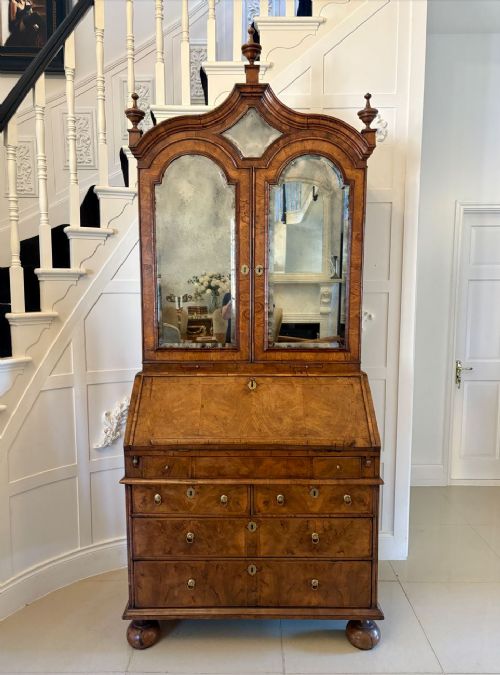
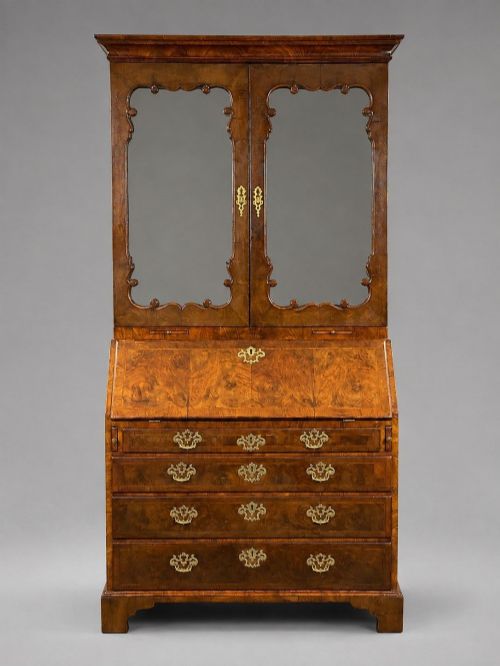
A georgian walnut bureau bookcase combines a writing slope, a fitted interior and upper shelving behind glazed or panelled doors.
Georgian Walnut Bureau Bookcase
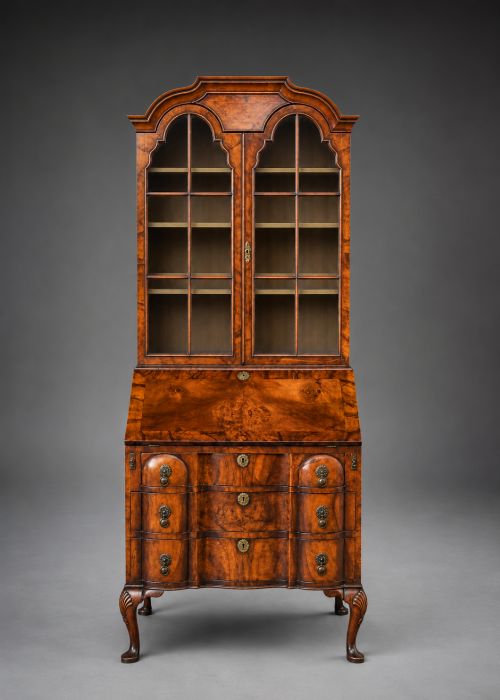
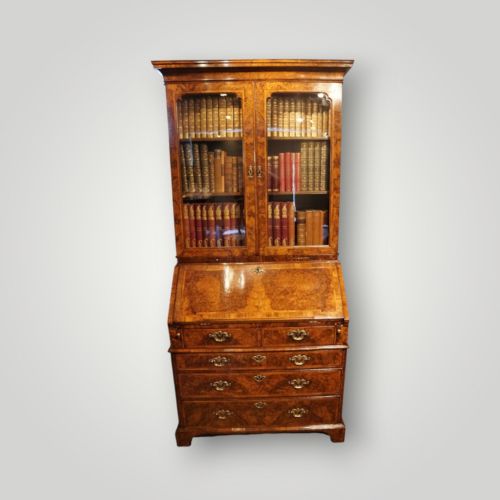
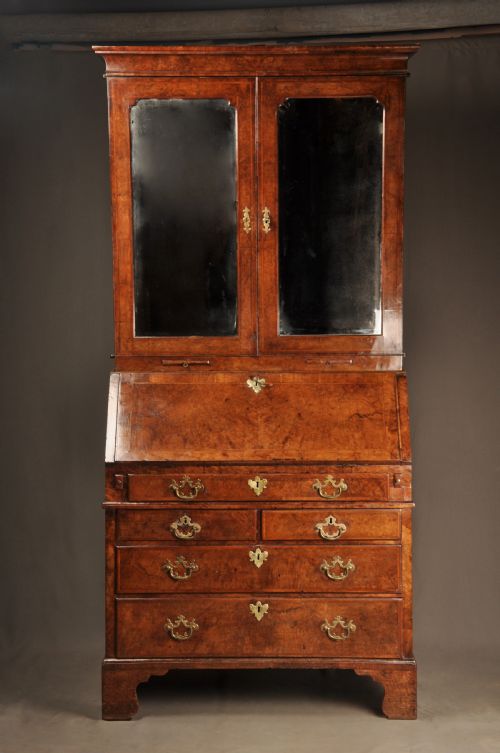
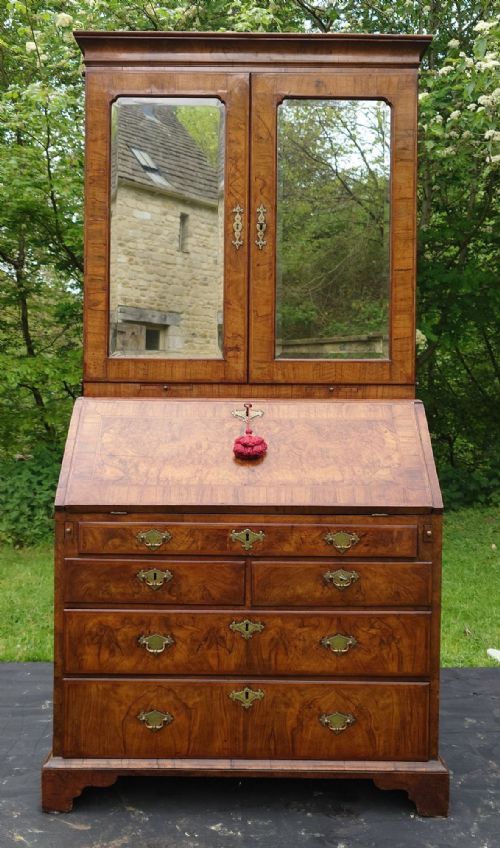
A georgian walnut bureau bookcase is a substantial two-part cabinet designed for both writing and storage. Most examples encountered on this page belong to the eighteenth century, spanning the reigns from Queen Anne through George III, with occasional Edwardian revivals.
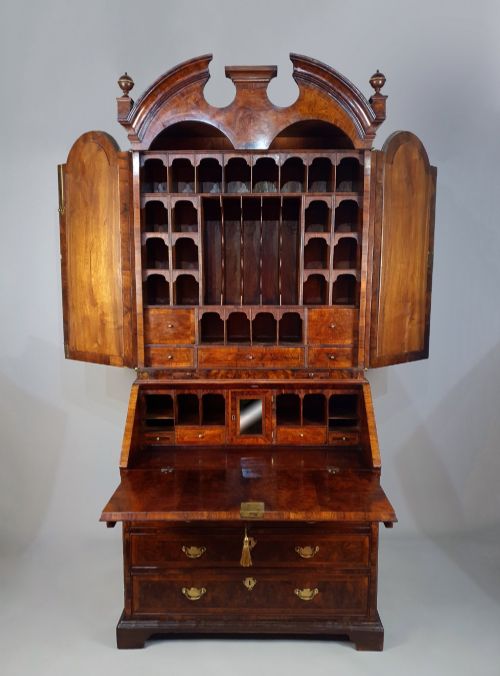
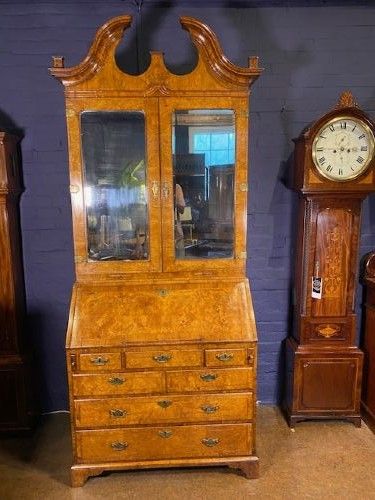
The form typically divides into a lower bureau section containing a drop-front writing desk and drawers, paired with an upper bookcase or display cabinet enclosed by double doors. These pieces reflect the cabinet-making standards of the seventeen-hundreds, utilising figured timbers and fitted internal compartments.
What varies in quality
The distinction between tiers rests upon the choice of timber and the complexity of the internal arrangement. Figured burr walnut veneers and well-matched grain patterns separate standard examples from finer commissions.
Proportion and scale also dictate standing, with smaller dimensions and double-domed tops commanding greater attention among collectors. The integrity of the fitted interior and the presence of original brasses further define the grade of each cabinet.
Some early eighteenth-century editions conceal hidden compartments inside the bureau well, designed for secret correspondence.
The Georgian Walnut Bureau Bookcase Glossary
- Bureau bookcase
- A dual-purpose furniture form combining a sloping writing desk below a shelved upper cabinet. These pieces served both administrative and display functions in eighteenth-century interiors.
- Burr walnut
- Timber taken from a tree growth that produces intricate, swirling grain patterns. Cabinet-makers sliced this wood into thin veneers for decorative drawer fronts and panel surrounds.
- Candle slide
- A pull-out wooden board mounted beneath the upper doors to hold a candle for illumination. They provided light directly over the writing surface before the adoption of gas and electric lighting.
- Secretaire cabinet
- A related storage form featuring a dedicated writing drawer that pulls out and folds down. These units often duplicate the upper bookcase configuration found on standard bureaux.
- Featherbanding
- A decorative inlay technique using veneer strips laid in a herringbone pattern around panel edges. This detail distinguishes finer cabinet work of the early georgian period.
Georgian Walnut Bureau Bookcase: Frequently Asked Questions
How do I date a walnut bureau bookcase?
Dating relies upon structural characteristics, hardware fixings, and timber choice. Pieces from the early eighteenth century often feature candle slides and internal well compartments.
Later examples transition toward simpler bracket feet and modified cornice mouldings. Comparing the internal drawer construction helps confirm the period.
What is the difference between walnut and burr walnut?
Standard walnut displays a straight, rich grain pattern derived from the trunk of the tree. Burr walnut comes from a specialised growth that yields dense, swirling figures.
Cabinet-makers used burr veneers selectively on prominent surfaces like fall-fronts and door panels. Solid walnut was reserved for structural framing and secondary timbers like oak.
Are these cabinets made in sections?
Most traditional examples separate into two or three distinct parts for transport. The upper bookcase lifts away from the lower bureau desk.
Some larger configurations divide vertically or feature a separate base moulding. This modular construction was essential for moving heavy furniture within historic homes.
How should I care for an 18th-century walnut surface?
Historic timber requires stable environmental conditions away from direct sunlight and heat sources. Maintaining consistent room humidity prevents veneer from lifting.
Applying microcrystalline wax periodically helps preserve the original patina and protects the wood grain. Avoid modern silicone polishes that can degrade aged finishes.