
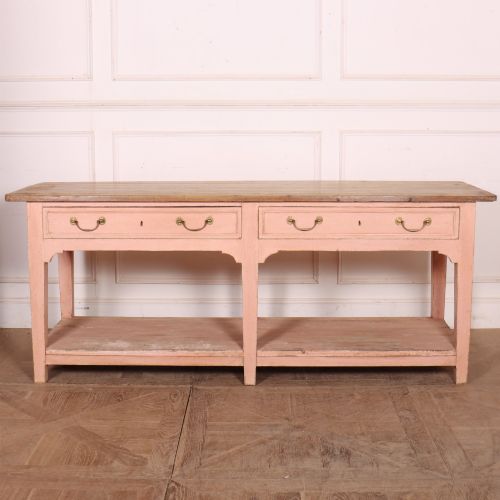
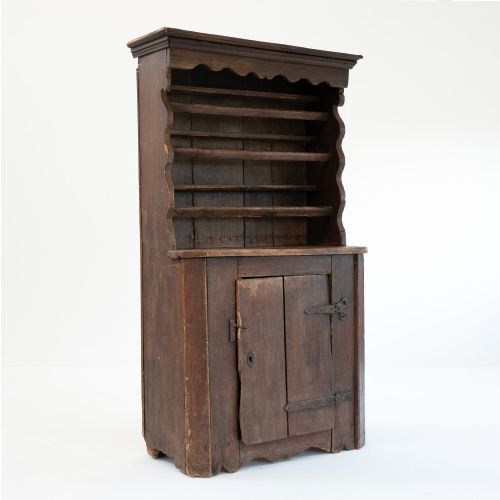
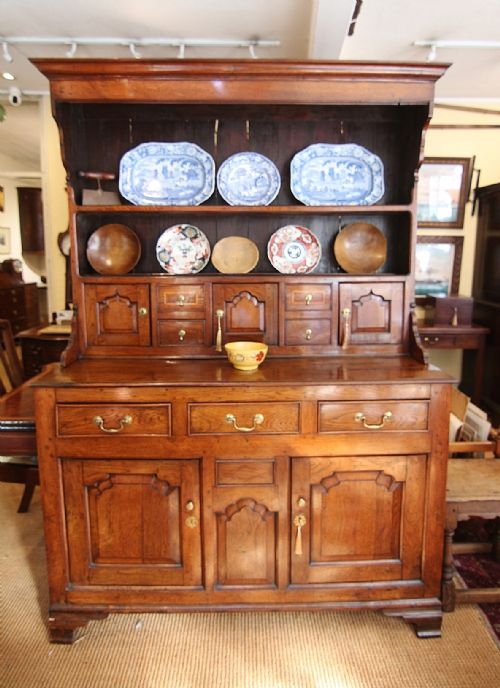


Georgian Vernacular Dresser
A georgian vernacular dresser brings robust country character into a home, offering practical storage through time-worn timber and honest regional craftsmanship.
Georgian Vernacular Dresser
A georgian vernacular dresser encompasses practical utilitarian furniture created for rural homes, primarily emerging from regional traditions in Wales, Ireland, Scotland, and England. These sturdy kitchen dressers, bases, and cupboards served essential domestic storage roles for households over generations.
The pieces appearing on this page span the eighteenth and nineteenth centuries, taking forms such as open-rack dressers, dresser bases, potboard bases, and multi-tiered cupboards like the tridarn and deuddarn. Oak forms the primary structural timber, complemented by elm, pine, and painted surfaces.
Regional variations define the character of these items, from Snowdonia and Talwrn styles to Irish country pieces and Scottish farmhouse examples. Buyers encounter open plate racks paired with enclosed lower cupboards, drawers, and potboards designed for everyday utility.
Materials and construction
Makers relied on native timbers suited to local availability, utilising sturdy oak for primary frameworks alongside elm, pine, and occasional fruitwood accents. Metal elements typically consist of hand-forged wrought iron hinges and brass pulls or handles.
Joinery methods prioritized durability for daily agricultural and domestic use, incorporating pegged mortise and tenon joints and hand-planed panels. Surfaces range from naturally aged timber patinas to historic painted finishes on pine and softwood structures.
Some Welsh dressers feature plate racks built slightly out of square, proving the local joiner measured by eye after a long morning.
Assessing quality
Quality in a georgian vernacular dresser rests upon the integrity of its timber, the survival of its original surface patination, and the proportion of its architectural form. Pieces retaining their original upper plate racks, backboards, and hardware command greater architectural presence.
Regional distinctiveness and uncompromised structural joinery separate standard utility items from exceptional examples of vernacular cabinetmaking. The depth of wear on potboards and drawer edges tells a story of long domestic service without detracting from the piece.
The Georgian Vernacular Dresser Glossary
- Deuddarn
- A traditional Welsh two-part cupboard featuring enclosed upper and lower sections with panelled doors. It provides substantial regional storage typical of rural houses.
- Potboard
- An open slatted lower shelf integrated into a dresser base designed to hold pots and pans. This feature defines many country kitchen pieces.
- Court cupboard
- An antique enclosed cupboard used for storing food and utensils, often featuring decorative panelling and sturdy framing. These heavy timber items date back centuries.
- Talwrn dresser
- A specific regional style of Welsh dresser originating from designated local woodworking traditions. These pieces reflect distinct geographical building traits.
Georgian Vernacular Dresser: Frequently Asked Questions
How do I date an old dresser?
Dating relies on examining construction methods, timber types, and hardware styles. Hand-cut peg joints, wrought iron hinges, and distinct regional forms point toward the eighteenth and nineteenth centuries.
Surface patination and tool marks left by hand planes further help establish the age and origin of the timber used.
Where were these dressers made?
These items originated across rural regions of the British Isles, with strong representation from Welsh valleys, Irish country districts, and Scottish farmhouses. Local makers adapted designs to suit regional domestic habits.
Particular styles such as the Snowdonia or Talwrn dresser indicate specific geographic workshops and local timber availability.
How should I care for antique oak?
Preserving antique oak involves maintaining stable indoor humidity and avoiding direct heat sources that dry out the timber. Regular dusting with a soft cloth protects the historic patina.
Applying occasional appropriate wax feeds the wood without building up heavy chemical residues that obscure the natural grain.