
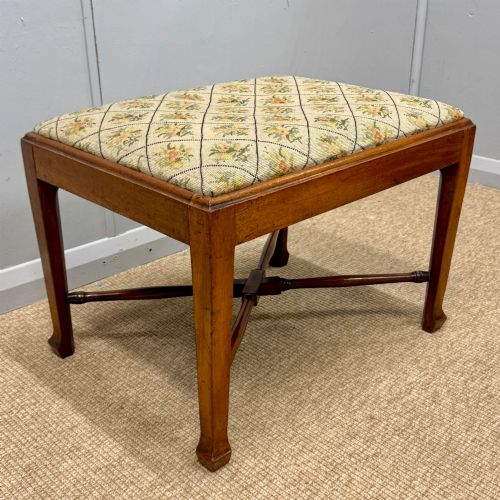
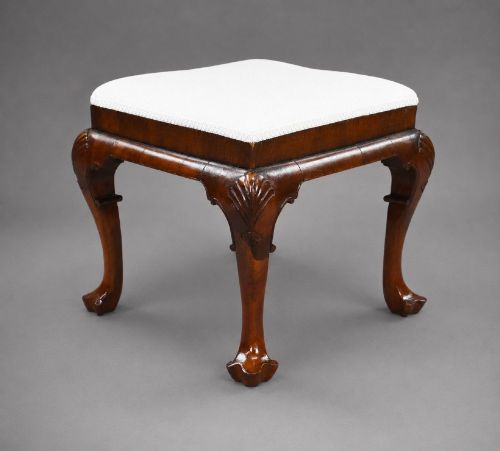
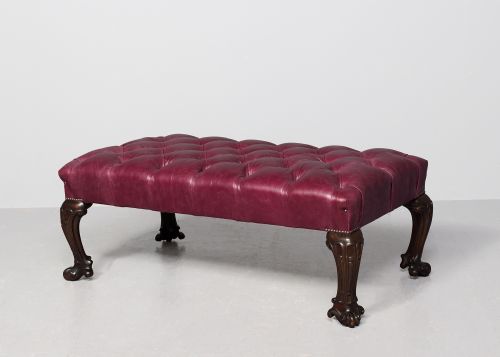
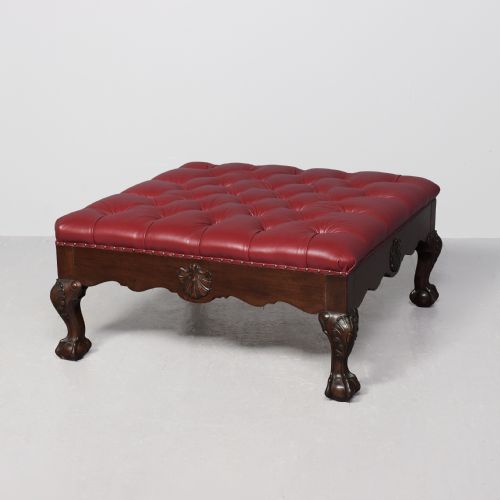
Georgian Upholstered Stool
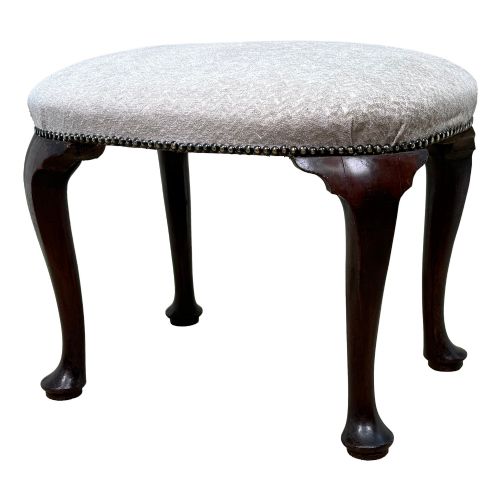
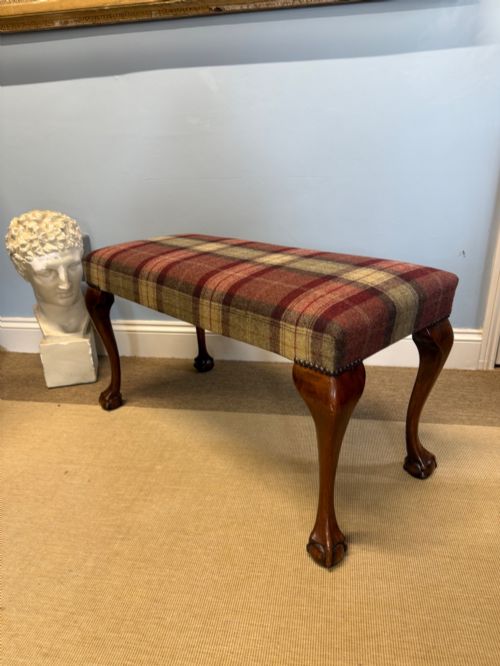
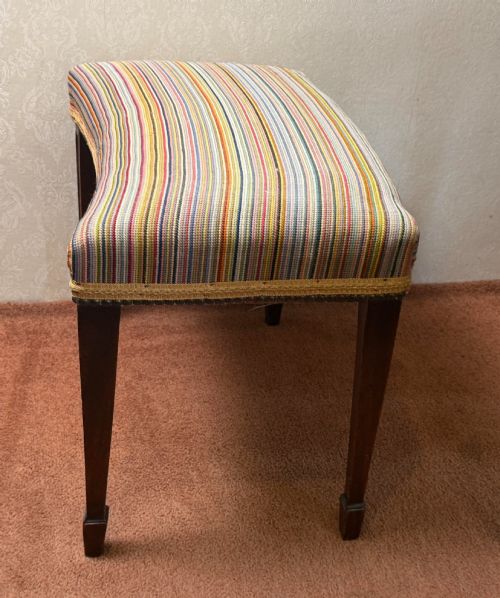
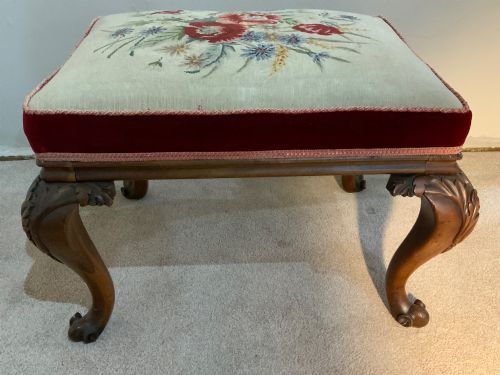
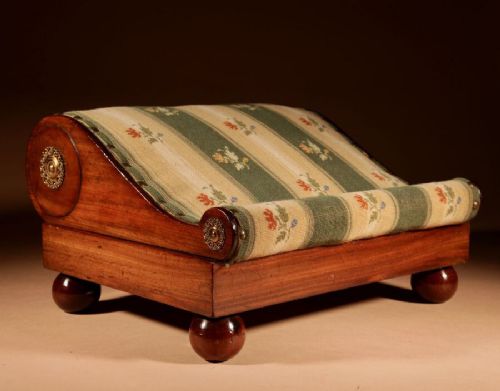
A georgian upholstered stool brings traditional timber frames and tactile textiles together, offering low seating or foot support for period rooms.
Georgian Upholstered Stool
A georgian upholstered stool encompasses footstools, dressing table seats, window benches, and piano stools produced during the eighteenth century and subsequent revival periods.
The pieces appearing most frequently combine sturdy timber frames with fabric, leather, or needlework covers, spanning compact foot rests to large dressing table benches.
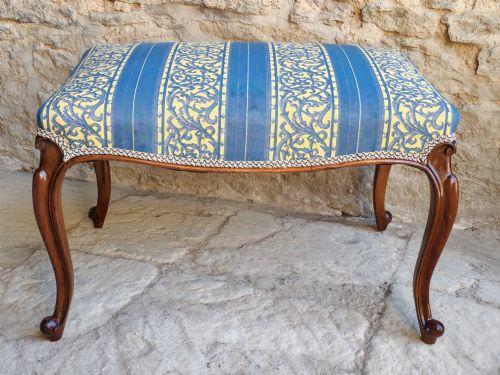
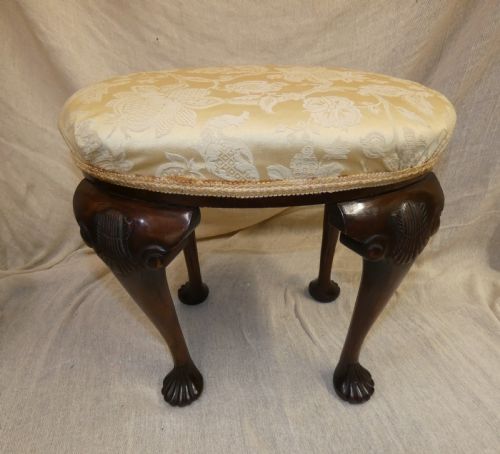
Makers drew on styles ranging from plain square legs to elaborate cabriole supports, incorporating wool, tapestry, velvet, and hide over wooden carcases.
How they were made
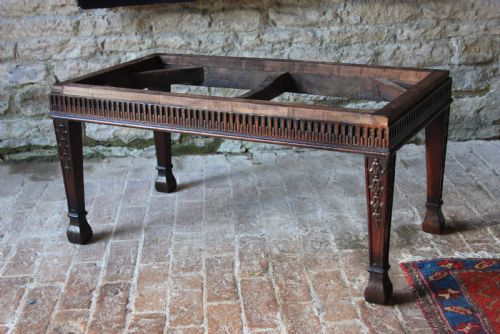
Frames rely predominantly on timber construction, utilising solid mahogany, walnut, rosewood, and elm shaped with mortise and tenon joints.
Upholstery techniques deploy supportive webbing and stuffing covered in textiles, wool, velvet, tapestry, and buttoned red or burgundy hide secured with brass studs.
Georgian Upholstered Stool Retail Price Guide 2026
Typical asking prices for georgian upholstered stool among the pieces listed under this phrase on Sellingantiques today, from the lower quarter to the upper quarter. They describe what is for sale here now, not the wider market.
Some industrious Victorian music makers found themselves pivoting on revolving stools while reaching high piano notes.
What varies in quality
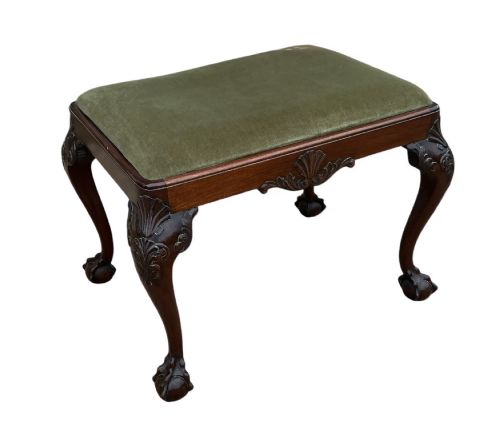
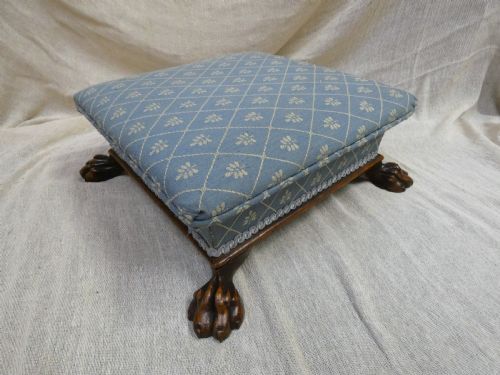
The refinement of the timber carving separates standard production from exceptional examples, seen particularly in shell motifs, claw and ball feet, and serpentine rails.
The choice of covering material and the precision of the upholstery work, including buttoning and stud placement, dictate the visual distinction of individual pieces.
Miles & Edwards
The Georgian Upholstered Stool Glossary
- Cabriole leg
- A furniture leg that curves outward at the knee and tapers inward to an ankle, frequently terminating in a pad or claw foot. This form appeared widely on eighteenth-century seating.
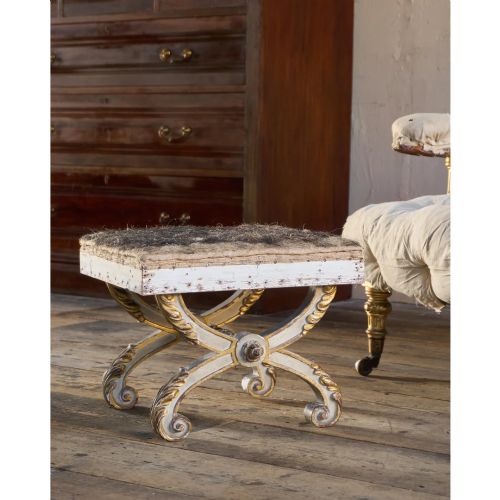
- Curule stool
- An ancient Roman magistrate's chair shape adapted into an X-frame stool design during later periods. These pieces feature crossed legs supporting a central seat.
- Cross stretcher
- Horizontal wooden bracing connecting the legs of a stool near the floor to add structural rigidity. They often intersect at the centre in an X shape.
- Needlework
- Hand-stitched textile covering worked in wool or silk on a canvas mesh ground. Such covers are typical of period footstools and dressing seats.
- Kilim
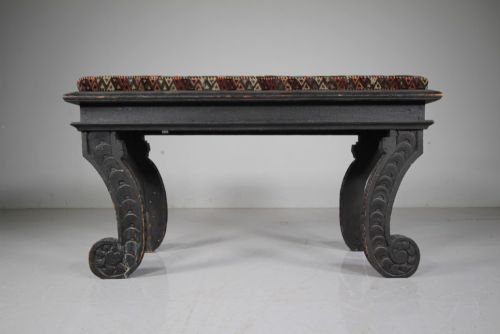
- A flatwoven textile originating from the Middle East or Eastern Europe. These durable carpets and rugs were frequently repurposed to cover nineteenth-century footstools.
Georgian Upholstered Stool: Frequently Asked Questions
What is a georgian upholstered stool used for?
These pieces served multiple domestic purposes, acting as foot rests before fires, seating at dressing tables, or piano benches for musicians.
Larger variants functioned as window seats or long benches within formal rooms and bedchambers.
How do I date a georgian upholstered stool?
Dating relies on identifying timber species, leg profiles, and structural joinery characteristic of specific decades.
Revival pieces from later centuries often imitate earlier eighteenth-century designs through standardised timber milling and secondary woods.
Are these stools comfortable for daily use?
Period seating relies on firm traditional stuffing and webbing rather than modern foam cushioning.
Many survive with their historic padding intact, while others have received later reupholstery to suit domestic seating needs.
How should I care for antique wood and fabric?
Timber frames benefit from gentle dusting and occasional wax application to nourish the dry wood grain.
Upholstery requires protection from direct sunlight to prevent textile fading and regular light vacuuming to remove surface dust.