


Georgian Turned Brass Candlesticks
Georgian turned brass candlesticks bring genuine period candlelight and heavy metal craftsmanship straight into a modern room.
Georgian Turned Brass Candlesticks
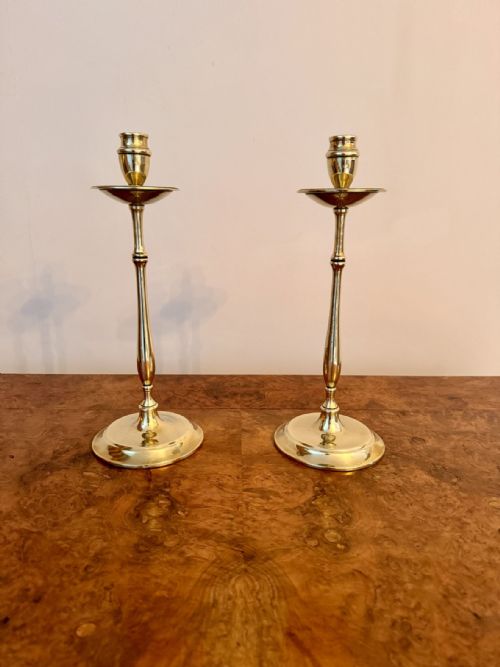
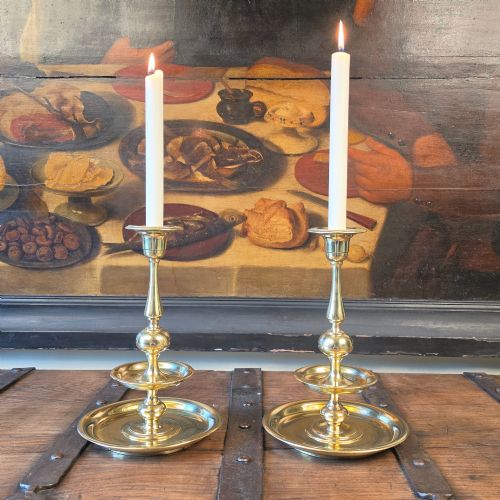
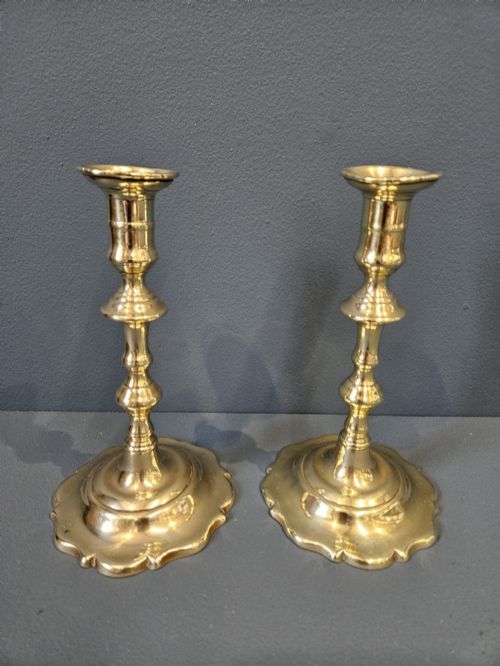
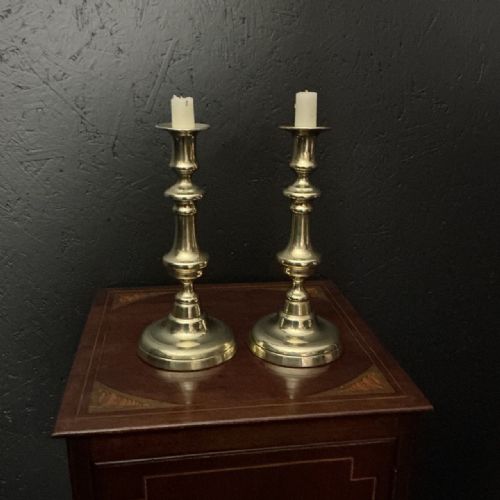
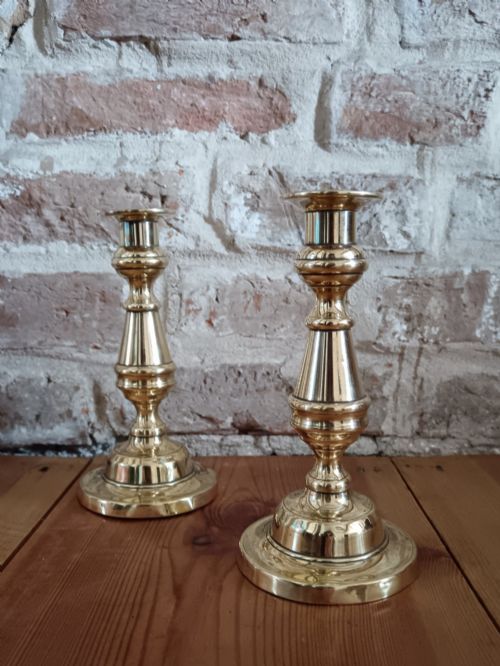
Georgian turned brass candlesticks are lighting items shaped on a lathe from durable metal, often appearing as matched pairs with weighted bases. When searching for georgian turned brass candlesticks, buyers encounter examples originating from the eighteenth and nineteenth centuries, alongside later stylistic revivals. The forms span simple column designs to elaborate vase shapes and petal bases.
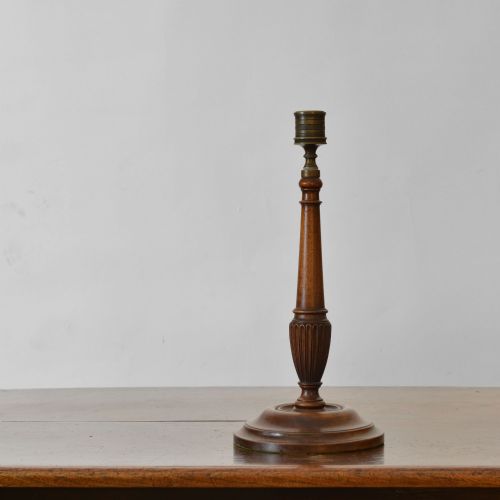
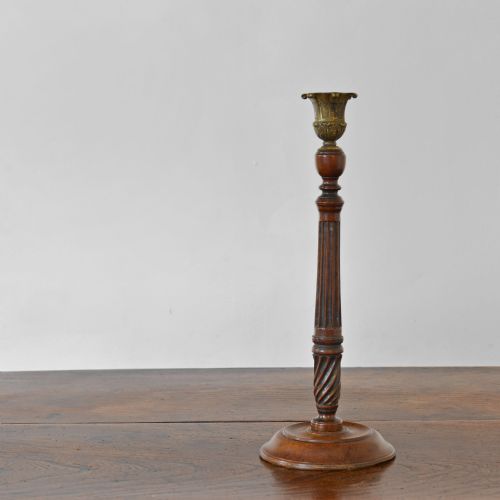
Most pieces on display date from the Georgian era through to the Victorian period, frequently incorporating mahogany elements or brass collars. Makers from the Low Countries and Britain produced these items for domestic illumination, adapting styles through the George III and Regency periods. Table lamps and traditional candlesticks both feature in this selection.
How they were made
These items rely heavily on solid brass construction, shaped through turning and casting techniques to achieve distinct column profiles. Workshops utilised heavy metal alloys to ensure stability, occasionally integrating turned mahogany into the shafts or bases of the candlesticks.
Details such as tear drop columns and vase-shaped sections demonstrate skilled lathe work by period metalworkers. Sconces and collars were cast separately before being fitted to the main stems, creating robust structures designed for daily use.
Some nineteenth-century brass columns sport hidden ejector mechanisms, essentially turning a candle stub into a miniature projectile when operated.
What varies in quality
The distinction between standard examples and superior pieces rests on the crispness of the turning and the weight of the brass. Heavier pairs generally indicate better metal content and greater stability, whilst finer lathe work creates sharper definition in vase shapes and petal bases.
Proportion and symmetry also dictate the grade of a piece, especially in matched pairs where balance is essential. Integration of secondary materials like mahogany shows careful construction choices by the maker.
The Georgian Turned Brass Candlesticks Glossary
- Ejector
- A mechanism inside the stem that pushes the candle stub upwards for easy removal. This innovation appears on later Georgian and Regency designs.
- Petal base
- A foot shaped like overlapping flower petals, commonly found on eighteenth-century candlesticks. This design adds both weight to the base and decorative appeal.
- Sconce
- The metal cup at the top of the candlestick that catches melting wax. It protects the main column from drips.
- Hexagonal
- A six-sided geometric form used in early candlestick bases. This shape provides stability on uneven surfaces.
Georgian Turned Brass Candlesticks: Frequently Asked Questions
How do I clean antique brass candlesticks?
Polishing should be done sparingly to preserve the aged patina that accumulates over centuries of handling.
A soft dry cloth removes dust effectively without stripping the darker areas that highlight the turned details.
Were these candlesticks originally used with mahogany?
Some period designs combined turned mahogany shafts with brass sconces and bases to create striking visual contrast.
Craftsmen utilised both materials depending on regional preferences and the desired weight of the finished item.
How can I tell a Georgian piece from a Victorian one?
Earlier eighteenth-century examples often feature heavier cast bases and simpler hexagonal or petal footprints.
Later Victorian interpretations tend to introduce more ornate column shapes and varying manufacturing marks.
Are these items safe to use with modern candles?
Standard taper candles fit securely into the brass sconces designed for historical domestic lighting.
Care should be taken to extinguish flames before the wax reaches the metal collar.