





Georgian Tripod Tier Stand
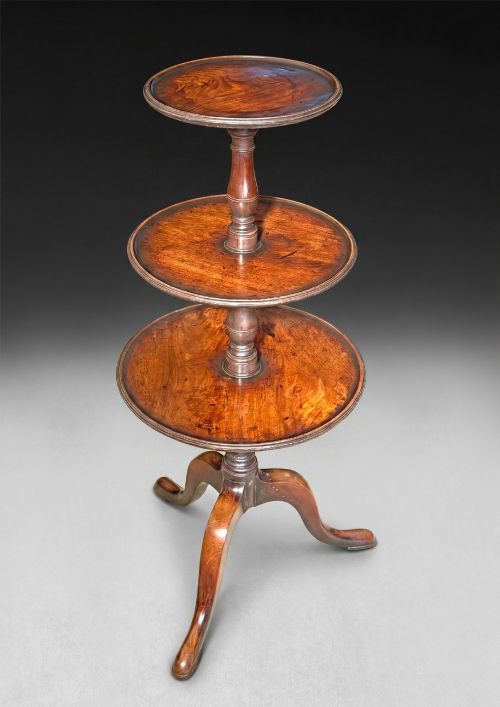
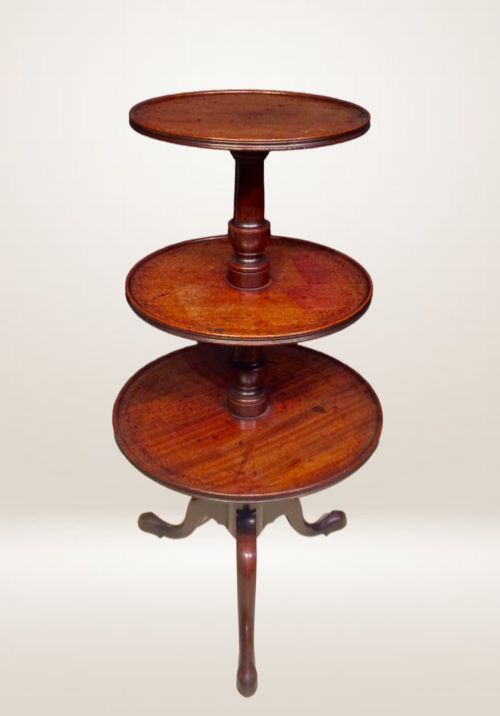
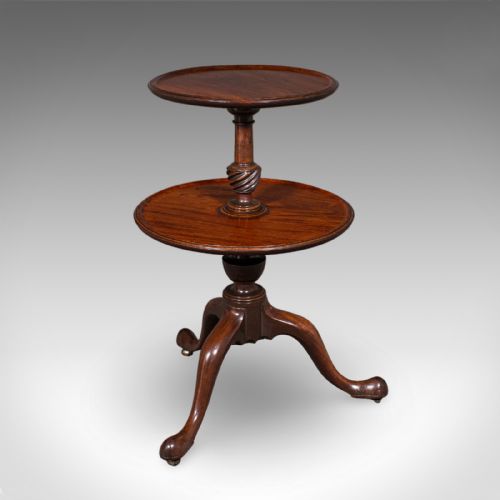
A georgian tripod tier stand serves dining rooms with graduated circular tiers supported on a central pillar.
Georgian Tripod Tier Stand
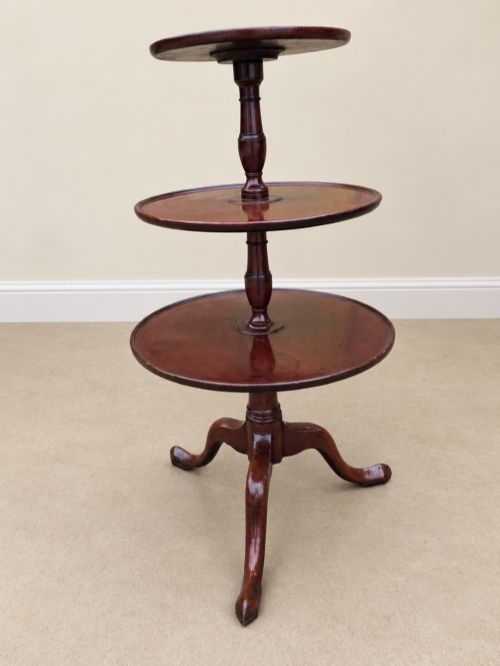
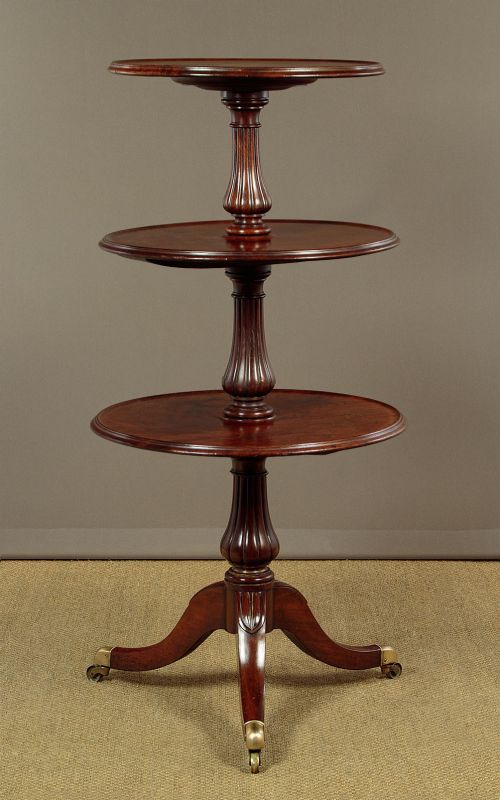
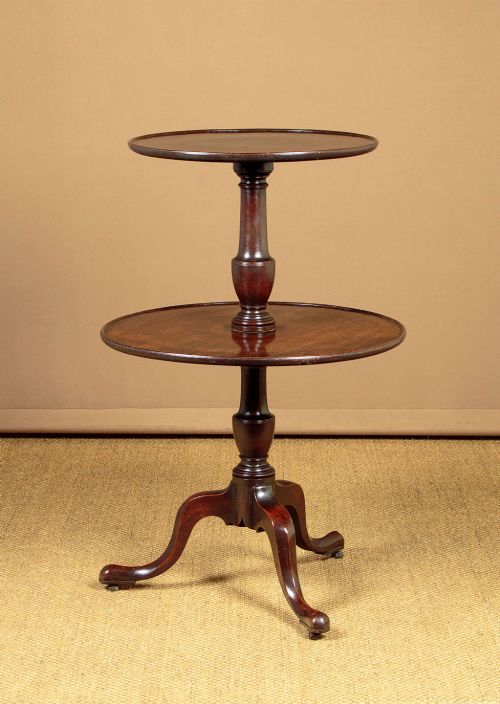
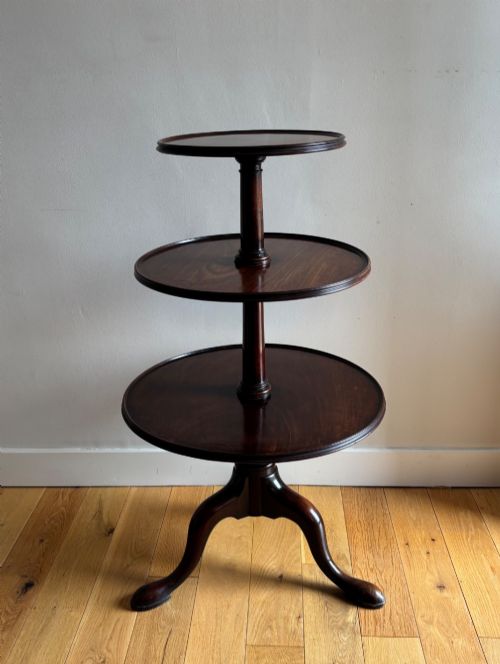
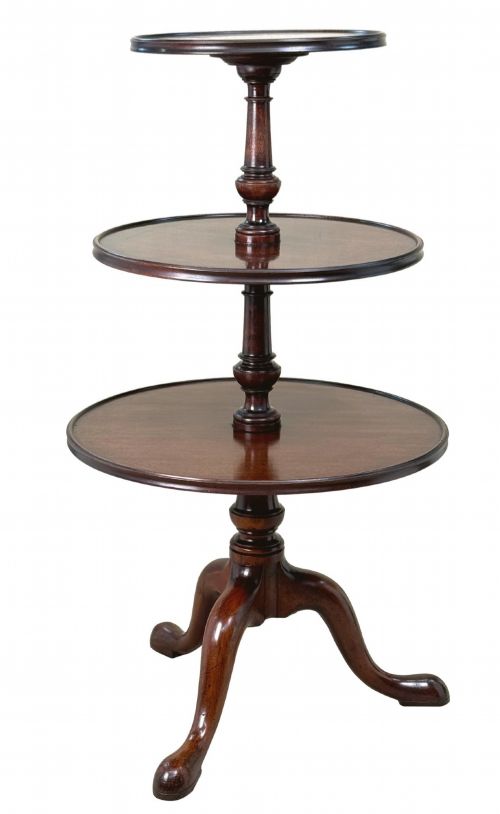
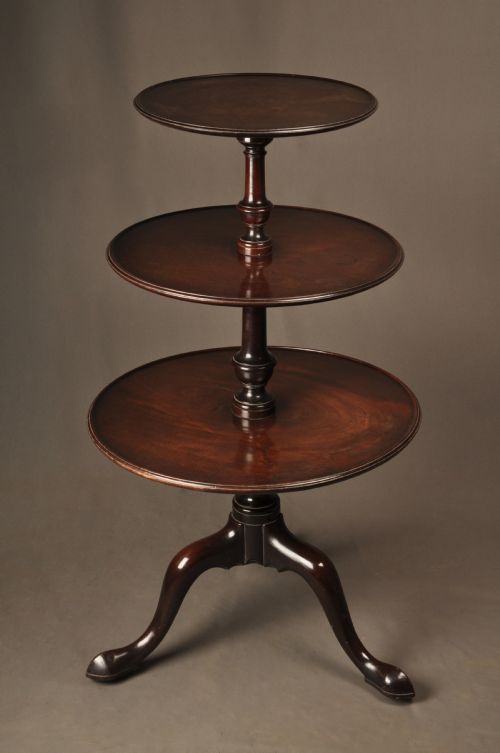
A georgian tripod tier stand, commonly known as a dumb waiter or tiered table, brings multiple graduating circular surfaces to a single central pedestal. Most examples encountered here date from the eighteenth century through the regency period, taking the form of freestanding serving stands with two or three descending tiers.
Makers designed these pieces for dining rooms to hold dishes, wine, or afternoon tea without requiring constant attendance by servants. The proportions rely on a stout tripod base and central column to balance the stacked surfaces securely.
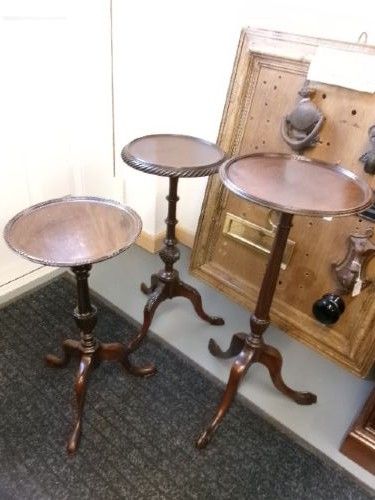
While many retain fixed round shelves, variations include rectangular drop-leaf designs or revolving tiers. The arrangement provides compact vertical display space suitable for contemporary corners or beside seating.
Materials and construction
Cabinet makers relied predominantly on mahogany, including dense Cuban varieties, valued for its strength in slender pillars and turned supports. Timber selection governed the stability of the central shaft and the flat boards turned for each tier.
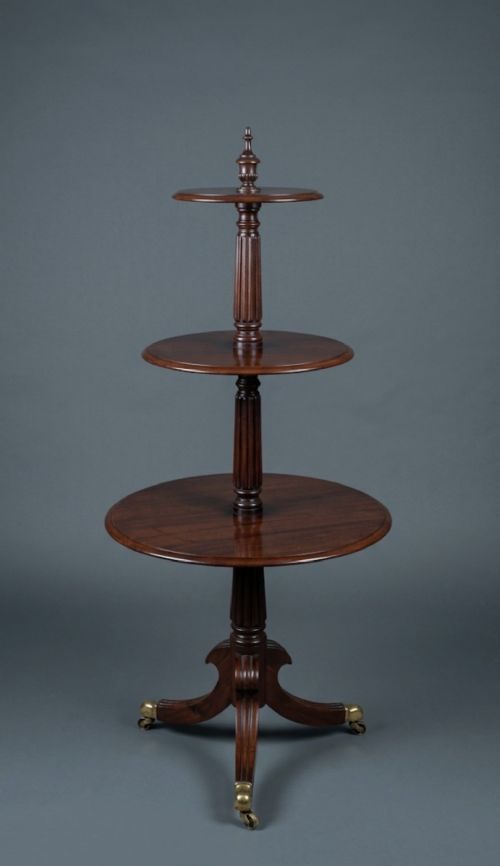
Construction involved joining turned columns to tripod legs, often incorporating brass castors and pivoting mechanisms for revolving shelves. Surface finishing depended on traditional polishing methods that enhanced the natural grain of the wood without heavy pigments.
Georgian Tripod Tier Stand Retail Price Guide 2026
Typical asking prices for georgian tripod tier stand among the pieces listed under this phrase on Sellingantiques today, from the lower quarter to the upper quarter. They describe what is for sale here now, not the wider market.
Some nineteenth-century examples bear later decorative paint, showing how Victorian owners updated earlier dining furniture to suit changing tastes.
Judging execution and finish
The distinction between standard workshop production and superior cabinet work rests on the turning of the central column and the choice of timber figure. Higher quality tiers exhibit well-matched mahogany grains across each graduating shelf and crisp edge moulding.
Structural integrity depends upon the tight jointing of the tripod legs into the central pillar to prevent wobbling under weight. Subtle details, such as brass fittings and original revolving pivots, separate standard utility pieces from finer examples.
Gillows
The Georgian Tripod Tier Stand Glossary
- Dumb waiter
- A tiered serving stand designed to hold food or drink during meals. This form stands on a central pillar with tripod feet.
- Tripod base
- A three-legged support structure providing stability for upright furniture. These legs often terminate in pad feet or brass castors.
- Cuban mahogany
- A dense, dark timber harvested in the Caribbean and prized for eighteenth-century cabinet work. It takes a deep, lustrous polish.
- Drop-leaf
- A table top configuration featuring hinged flaps that lower when not in use. This mechanism allowed stands to fold away against a wall.
- Tiered table
- Furniture built with multiple horizontal surfaces arranged vertically. Each level typically diminishes in diameter toward the top.
Georgian Tripod Tier Stand: Frequently Asked Questions
What were dumb waiters used for?
These stands held extra dishes, cutlery, and wine bottles within reach of diners during meals.
Servants placed courses on the graduating tiers so guests could help themselves without interruption.
How do you style a tier stand today?
Place a georgian tripod tier stand in a corner or beside a seating area to display books and ceramics.
The graduating shelves naturally accommodate smaller decorative objects on top and heavier items below.
How do I spot an eighteenth-century piece?
Examine the timber selection, construction joints, and the turning style of the central column.
Eighteenth-century examples typically feature solid mahogany construction with hand-turned pillars and pegged joints.
Do all tiers revolve?
Many examples feature revolving mechanisms that allow users to access items from any seating position.
Fixed shelves also appear frequently across both eighteenth-century and nineteenth-century variants.