
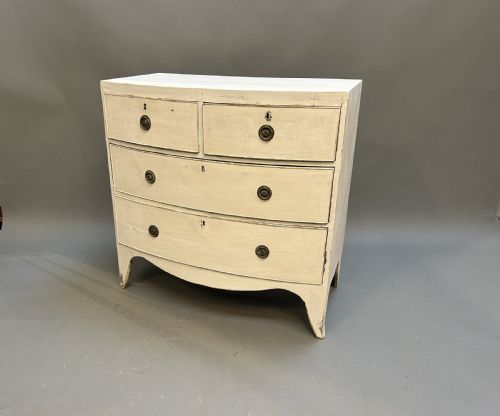
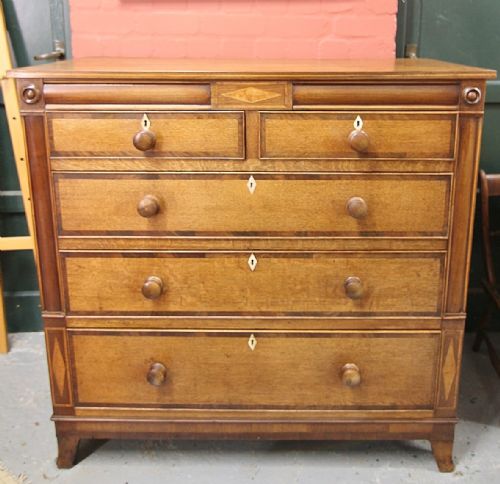
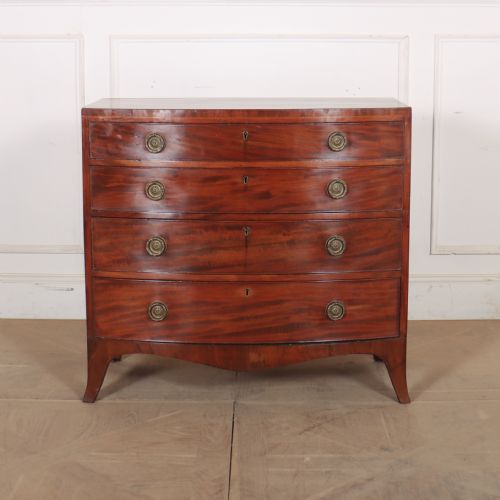


Georgian Timber Storage Chest
A georgian timber storage chest brings robust utility and timeless architectural presence into a room, serving as a practical container built to endure.

Georgian Timber Storage Chest
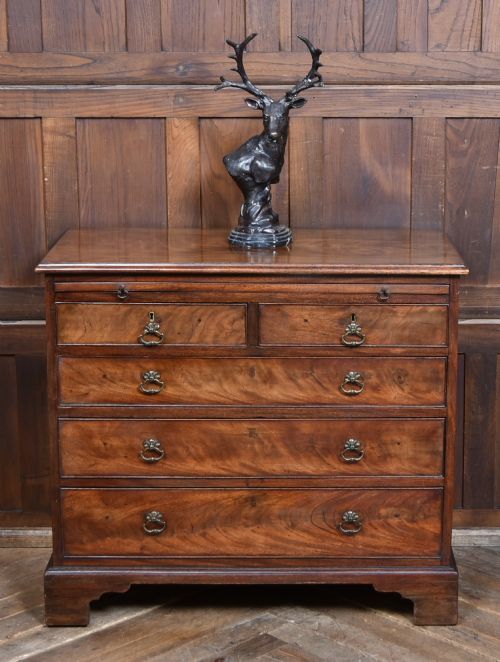
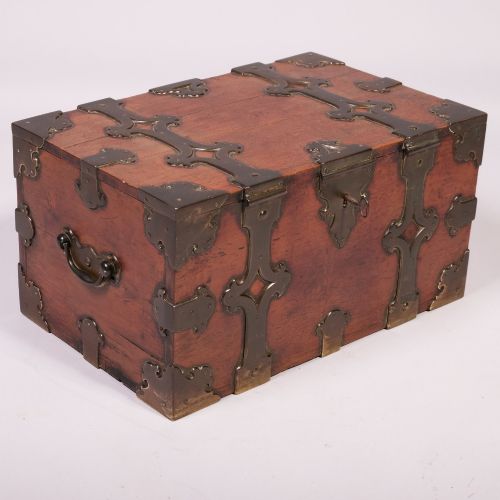
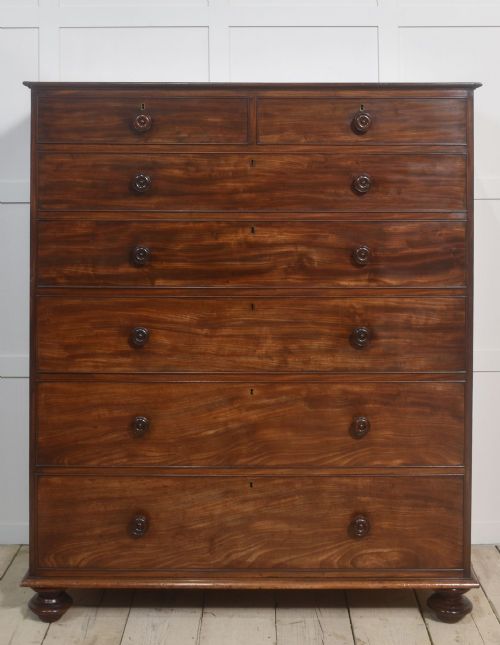
A georgian timber storage chest encompasses various utilitarian forms designed for containment and display, spanning sturdy oak coffers, painted pine mule chests, and formal mahogany chests of drawers.
Buyers browsing this selection encounter domestic storage solutions originating primarily from the Georgian period alongside related 18th-century and 19th-century examples.
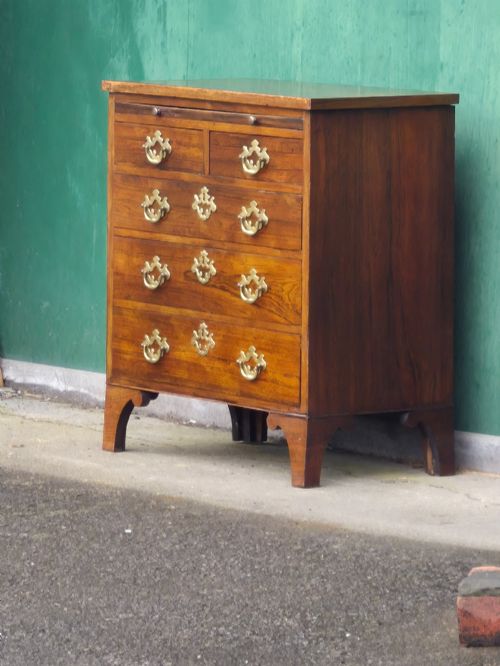
The most prevalent forms are chests of drawers featuring brass handles and timber construction, though smaller caskets, blanket boxes, and cabinets also appear.
How they were made
Carpenters utilised native and exotic timbers including mahogany, oak, walnut, pine, and elm, often applying veneer or specialised inlays like satinwood and shell motifs.
Hardware such as brass handles, hinges, and escutcheons provided functional reinforcement, while surface treatments ranged from clear polish to painted finishes and scumble.
Listings feature periods from the 1700s through the Edwardian era, constructed in oak, mahogany, walnut, and pine.
What varies in quality
The standard of a georgian timber storage chest rests upon the selection of timber figures, such as flame mahogany or burr yew, and the precision of its dovetail joints.
Proportion and decorative restraint dictate distinction, separating utilitarian workshop pieces from finely carved or serpentine-fronted examples designed for formal interiors.
C. Hindley·William Gomm·Gillows of Lancaster and London
The Georgian Timber Storage Chest Glossary
- Coffer
- A large heavy box for storing valuables, typically constructed from solid oak during earlier centuries.
- Mule chest
- A storage chest fitted with one or more drawers at the base, bridging the transition between a traditional coffer and a chest of drawers.
- Dovetail
- A joint formed by interlocking wedge-shaped fingers, utilised extensively in drawer construction for structural strength.
- Escutcheon
- A protective plate surrounding a keyhole, frequently cast from brass to complement the hardware of the piece.
- Serpentine front
- A furniture facade curving outward in the centre and inward at the sides, demanding high carpentry skill.
Georgian Timber Storage Chest: Frequently Asked Questions
How do I date a timber chest?
Examination of construction methods, timber species, and secondary woods reveals the period of manufacture. Hand-cut dovetails and native oak point towards earlier decades, whilst machine-sawn elements suggest later production.
Hardware styles and locking mechanisms also provide reliable chronological indicators, as brass handles and drawer configurations evolved noticeably between the reigns of George III and Victoria.
Where were these chests used?
These pieces served practical storage functions across various domestic settings, from principal bedrooms to grand entrance halls. Large coffers and mule chests kept household linens and blankets dry, whilst smaller caskets secured tea or personal valuables.
Chest of drawers variants provided essential clothing storage in private chambers, adapting easily to the changing layouts of period homes.
How do I care for antique timber?
Maintaining antique surfaces requires stable indoor humidity and protection from direct sunlight to prevent timber shrinkage and veneer lifting. Regular application of suitable wax feeds the wood and preserves the natural lustre of the finish.
Avoid placing wooden storage items near direct heat sources such as radiators, which dry out the historic fibres and weaken structural joints.
What is a mule chest?
A mule chest combines a traditional lift-top storage compartment with one or more functional drawers positioned beneath. This hybrid form emerged to offer easier access to stored garments without requiring users to lift items from the top well.
Cabinetmakers constructed these predominantly in pine and oak, frequently adding painted finishes or brass handles for domestic use.