



Georgian Timber Box
A georgian timber box holds the small treasures of an earlier age, combining honest utility with cabinet-making flair.
Georgian Timber Box
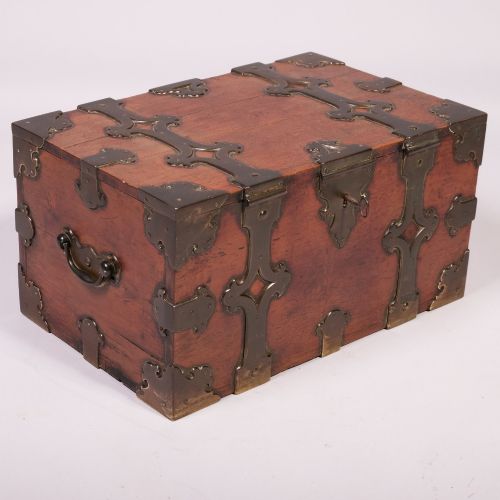
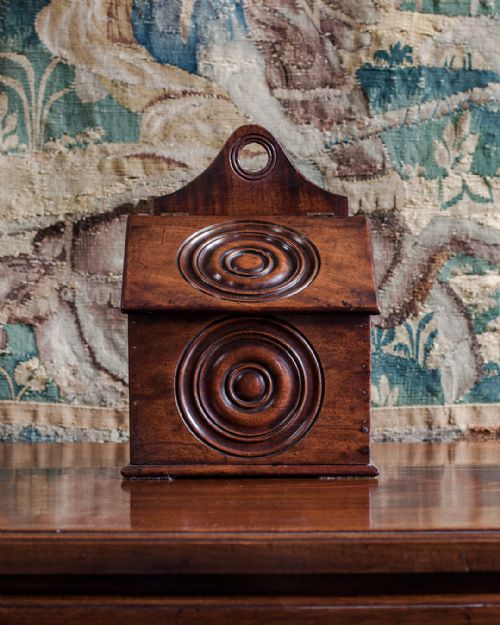
When you search for a georgian timber box, you encounter items designed to contain tea, salt, spices, stationery or personal keepsakes during the eighteenth and nineteenth centuries.
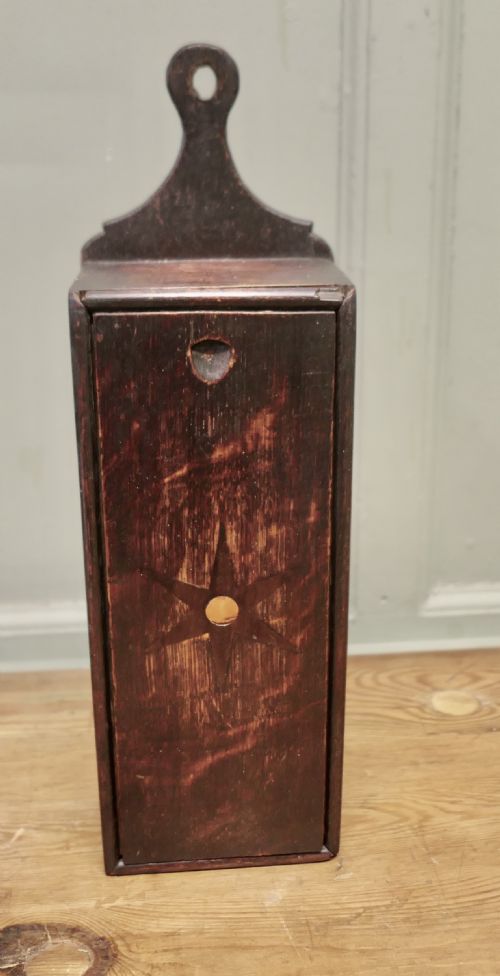
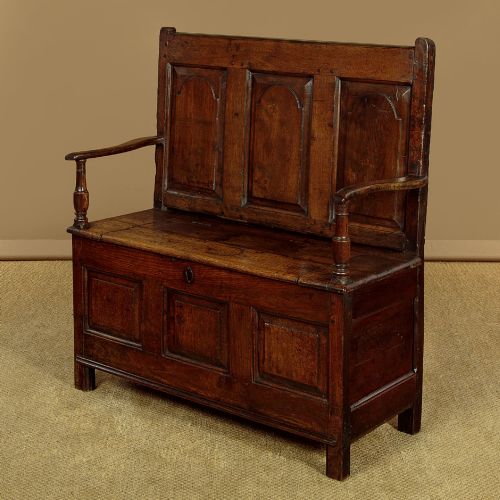
The selection ranges from country house oak candle boxes and wall-hanging pieces to refined satinwood and partridge wood caddies fitted with internal compartments.
How they were made
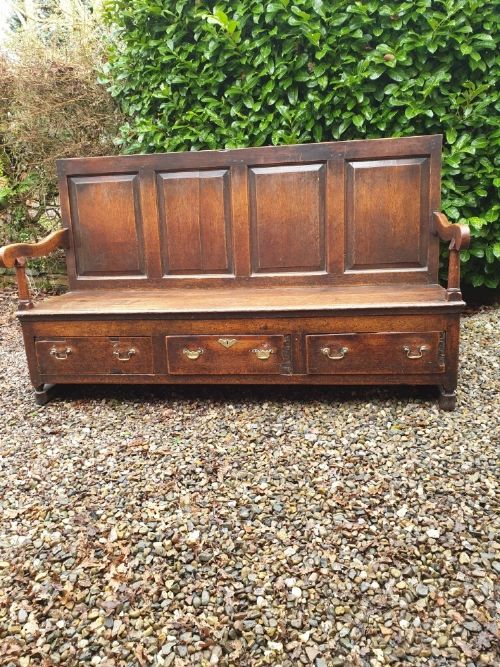
Cabinet makers used solid native timbers such as oak and elm for provincial pieces, while employing dense tropical hardwoods like mahogany and coromandel for finer items.
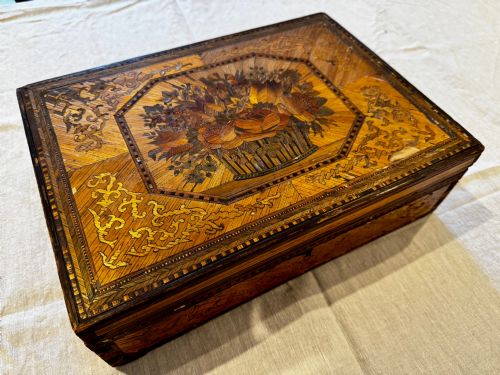
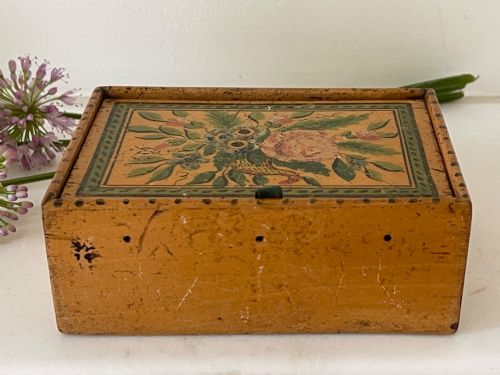
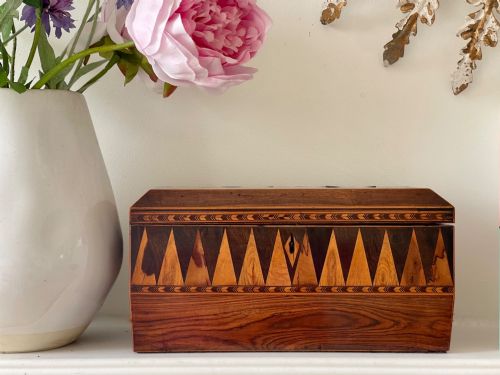
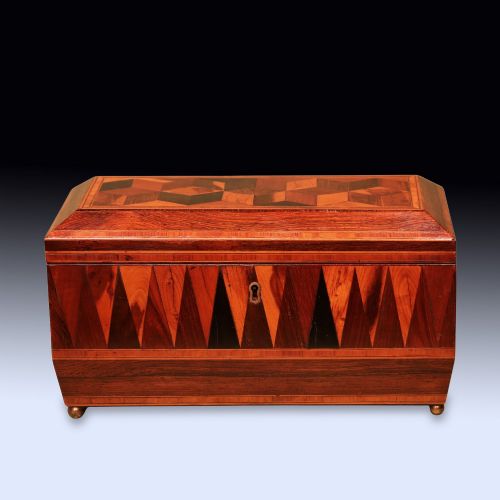
Surfaces were frequently enhanced with bone, boxwood or contrasting veneers arranged in parquetry, penwork and shell inlays, secured with brass hinges and locks.
Listings span the eighteenth and nineteenth centuries, featuring brass, bone and varied woods including mahogany, oak, satinwood and partridge wood.
What varies in quality
The standard of a georgian timber box depends upon the selection of the grain, the precision of the veneer work and the preservation of its fitted interior.
Mastery is evident in how well the lid closes flush against the body, the delicacy of any inlay, and the depth of the natural patina built up over centuries of handling.
Gillows of Lancaster and London
The Georgian Timber Box Glossary
- Tea caddy
- A box designed specifically to store dry tea leaves, often featuring internal lidded canisters and a lock to protect an expensive commodity.
- Parquetry
- A geometric mosaic of wood pieces used for decorative veneer on box lids and panels.
- Tunbridge Ware
- Small wooden objects decorated with characteristic mosaic patterns made from many tiny pieces of naturally coloured woods.
- Cellarette
- A large timber box or cooler designed to hold wine bottles near the dining table, sometimes fitted with lead linings.
- Treen
- Small handmade wooden household objects and tableware valued for their tactile form and age.
Georgian Timber Box: Frequently Asked Questions
What were tea caddies used for?
Tea was an expensive luxury in the eighteenth century, so leaves were kept locked inside a dedicated box to control consumption and prevent theft by servants.
Many examples feature two internal compartments for green and black teas, sometimes with a central mixing bowl.
How do I care for antique wood?
Keep wooden boxes away from direct sunlight and radiators to prevent the timber from drying out and the veneers from lifting.
Apply a light microcrystalline wax occasionally to protect the surface without building up sticky residue.
How can I tell the period?
Construction methods offer the clearest clues, such as hand-cut dovetails, timber choices like oak for earlier pieces and mahogany for later ones, and the style of the brass hardware.
Inlays and decorative techniques also shift from simple geometric banding to elaborate Tunbridge work as the nineteenth century progresses.
What is parquetry?
Parquetry is a technique where small geometric blocks of different coloured woods are fitted together to create a decorative mosaic pattern.
Cabinet makers used this to embellish the lids of caddies and decorative boxes.