
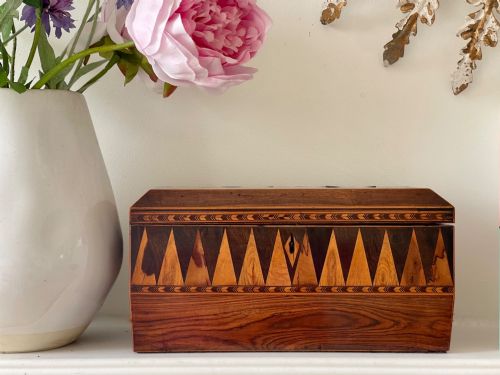


Brown Timber Tea Box
These brown timber tea box pieces are handsome containers designed to secure precious dry leaves, offering warmth and tactile history for any room.
Brown Timber Tea Box
You are most likely to meet mahogany, rosewood, and partridge wood specimens across these listings, alongside examples featuring boxwood, brass, and bone details. The forms span rectangular boxes, octagonal shapes, and sarcophagus silhouettes originating from the eighteenth and nineteenth centuries.
How they were made
Cabinet makers built these boxes using solid timbers and decorative veneers such as mahogany, rosewood, amboyna, burr yew, and partridge wood over a sturdy wood carcass. They applied precise boxwood stringing and brass mounts to accentuate the rich grain of the timber.
Interiors often incorporated fitted compartments to separate different leaves, sometimes lined with bone details or intricate Tunbridge ware decoration. Makers selected dense woods and fitted robust lids to protect the aromatic contents from moisture and air.
Listings feature woods such as mahogany, rosewood, partridge wood, boxwood, and burr yew across eighteenth and nineteenth-century periods.
What varies in quality
The distinction between standard examples and superior pieces rests on the choice of timber veneer and the precision of the cabinet work. Richly figured grains like burr yew or amboyna, paired with complex inlay, signal a higher grade of manufacture.
Design complexity also sets specimens apart, moving from simple rectangular forms to octagonal geometries and sarcophagus shapes with coordinated brass hardware. The presence of intact fitted interiors elevates the character of an individual box.
The Brown Timber Tea Box Glossary
- Tea Caddy
- A container designed originally to store loose tea leaves safely under lock and key. These boxes often feature internal compartments for different blends.
- Sarcophagus-Shaped
- A distinctive style of box featuring a sloping, pedestal-like profile popular during the Regency and William IV periods. This form gives the timber a monumental presence on a surface.
- Tunbridge Ware
- A type of decorative woodwork characterised by intricate mosaic patterns made from tiny wood blocks of various natural colours. It frequently adorns nineteenth-century items.
- Veneer
- A thin layer of highly figured wood applied over a secondary timber base to create a decorative surface without structural excess. Amboyna and mahogany are common examples.
Brown Timber Tea Box: Frequently Asked Questions
What is a brown timber tea box?
A brown timber tea box is a historic lidded container designed to store and preserve expensive dry tea leaves in domestic settings.
These pieces utilise various woods like mahogany, rosewood, and partridge wood to combine utility with refined decorative appeal.
How were tea caddies used?
Tea caddies were kept locked in the parlour or dining room to protect valuable tea from servants and guests.
Owners dispensed daily portions themselves, often using internal compartments to blend different varieties of leaves.
How do I date a timber tea box?
Dating relies on observing the prevailing style, construction methods, and timber choices recorded across different historical periods.
Georgian and George III examples often show simpler rectangular or octagonal lines, while later William IV and Victorian pieces adopt sarcophagus silhouettes.
Where should I place a tea box?
These boxes suit placement on sideboards, desks, or living room tables where their timber grain and brass details remain visible.
Keep them away from direct sunlight and extreme temperature fluctuations to protect the wood and veneer.