




Georgian Timber Accent Table
These georgian timber accent table examples span centuries of domestic utility, offering genuine period charm and practical surfaces for modern rooms.
Georgian Timber Accent Table
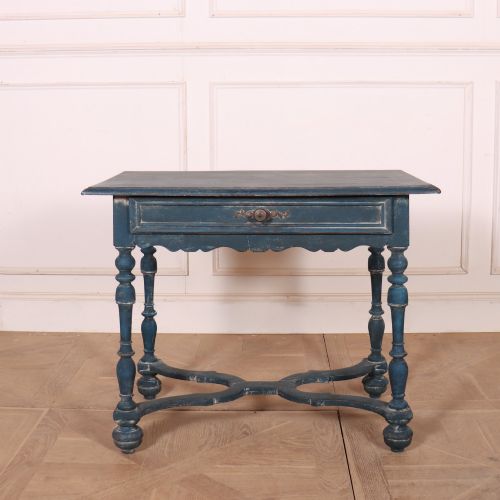
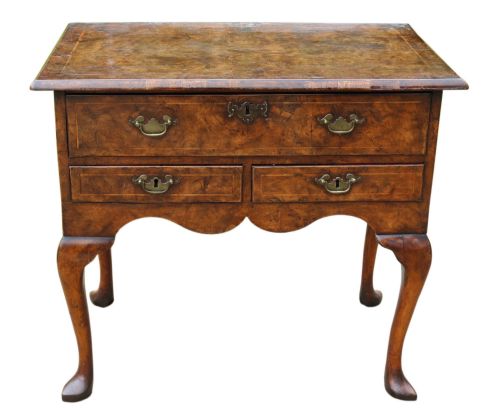
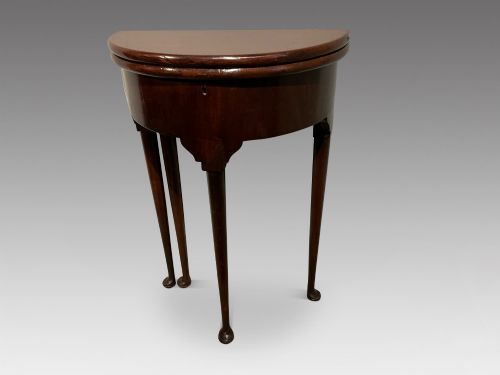
A georgian timber accent table covers a diverse group of smaller domestic surfaces designed for portability and specific household tasks. The selections on this page lean heavily toward side tables, occasional pieces, tripod lamp tables, and lowboys.
The periods represented stretch from early Georgian and George II origins through to later Victorian interpretations and twentieth-century reproductions. Mahogany and oak dominate the offerings, often appearing alongside elm, walnut, and painted wood.
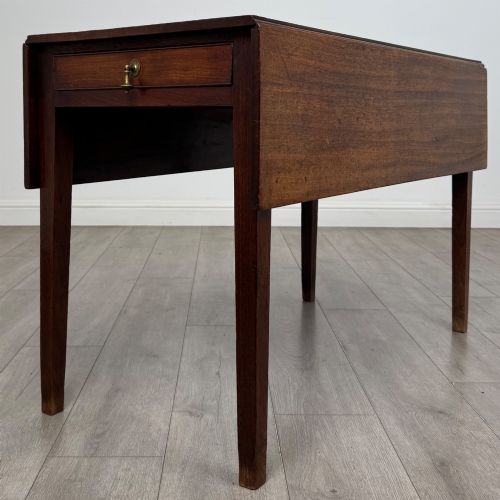
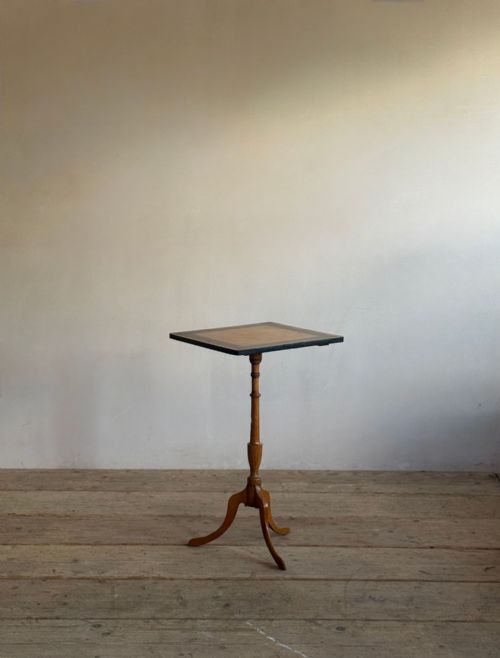
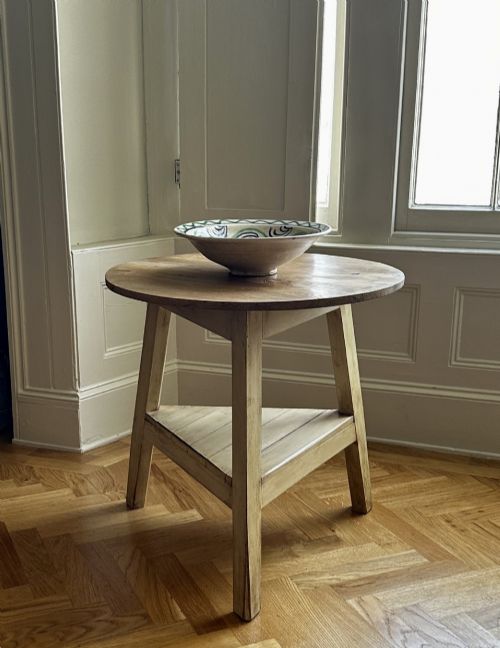
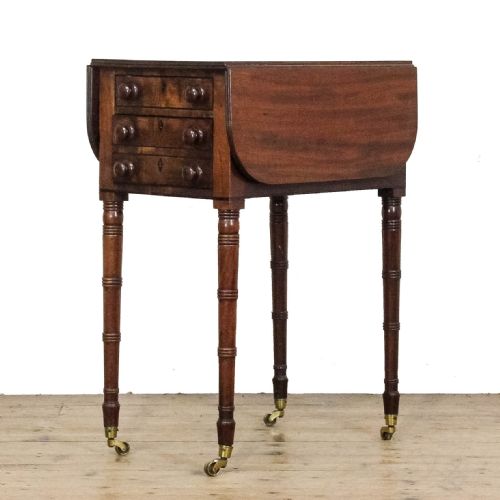
Buyers will encounter various formats including drop-leaf pembroke tables, tilt-top tripod designs, and rustic cricket tables. These forms served specific functions in period interiors, from holding tea apparatus to providing bedside or corner utility.
Materials and construction
Construction relies heavily on native and imported timbers, with solid mahogany, oak, and burr elm forming the structural core of most pieces. Joinery techniques reflect traditional cabinet-making methods appropriate to each respective century, prioritising stability in smaller portable formats.
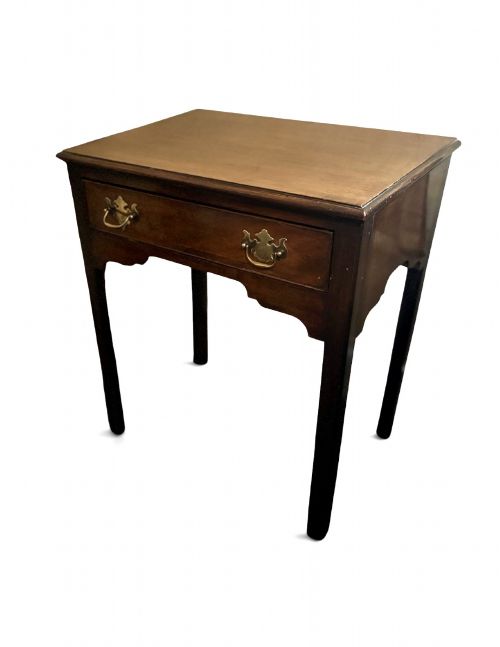
Surface decoration varies from penwork and sunburst marquetry veneers to simple painted finishes. Hardware such as brass fittings appears on drawer-equipped lowboys and Pembroke tables, while turned pillars support the common tripod lamp table configurations.
Early cricket tables reportedly earned their name because their three-legged stance resembled the traditional wooden cricket stools used by milkers.
Judging quality
Quality in a georgian timber accent table rests upon the selection of timber figure, such as burr elm or figured walnut, and the integrity of the original construction. Superior examples maintain crisp carving details, well-proportioned turned stems, and minimal structural alteration over time.
The distinction between standard utility items and finer examples often lies in the sophistication of secondary woods, the execution of edge mouldings, and the preservation of original patination on the timber surfaces.
The Georgian Timber Accent Table Glossary
- Lowboy
- A small dressing table or side table featuring drawers beneath the work surface, commonly elevated on four slender legs. These functional pieces gained popularity during the early eighteenth century.
- Tripod Table
- A small occasional table supported by a central pillar above three spreading legs. Many examples feature a tilt-top mechanism for convenient storage against a wall.
- Cricket Table
- A small round table with three splayed legs and typically a triangular underframe for stability on uneven floors. This robust vernacular form often utilises oak and elm.
- Pembroke Table
- A rectangular drop-leaf table with hinged flaps on either side designed to expand surface area. They frequently include a single end drawer and tapered or turned legs.
- Pie Crust Table
- A small occasional table with a raised, carved or moulded edge shaped in undulating curves resembling pastry work. This decorative top treatment appears on fine wine and lamp tables.
Georgian Timber Accent Table: Frequently Asked Questions
What is a lowboy used for?
A lowboy served historically as a compact dressing table or a general-purpose side table for domestic storage. Their modest proportions allowed them to fit easily into smaller chambers and reception rooms.
Today, buyers frequently utilise these tables as hallway surfaces or compact desks in modern interiors.
Are cricket tables sturdy?
Cricket tables derive their stability from a three-legged design that prevents rocking on uneven historical flooring. The splayed leg configuration distributes weight evenly across the triangular framework.
These rustic pieces were built for everyday domestic labour, resulting in robust construction despite their relatively light appearance.
Where should I place an accent table?
Accent tables function effectively beside seating arrangements, in hallways, or as lamp surfaces in corners of a room. Their compact dimensions make them adaptable for filling awkward spaces that larger furniture cannot accommodate.
Pairing a tripod lamp table with adequate ambient lighting highlights the grain of timbers like mahogany or burr elm.
How do I identify George II furniture?
George II furniture typically exhibits sturdy proportions, carved cabriole legs, and the prominent use of dense mahogany or oak. Stylistic markers include pad feet or ball-and-claw feet supporting substantial structural frames.
Comparing construction methods and secondary woods helps differentiate mid-eighteenth-century pieces from later Victorian revivals.