
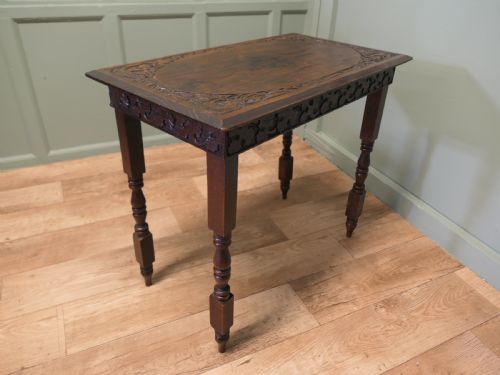
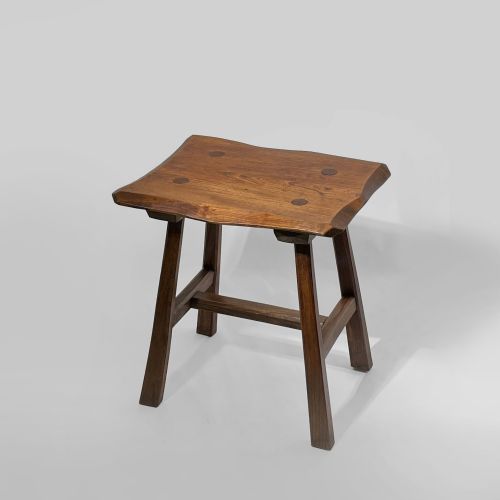
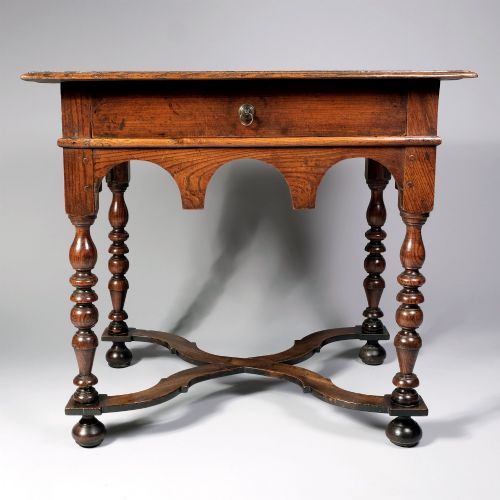
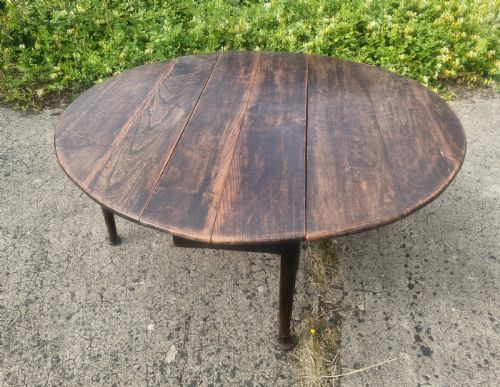


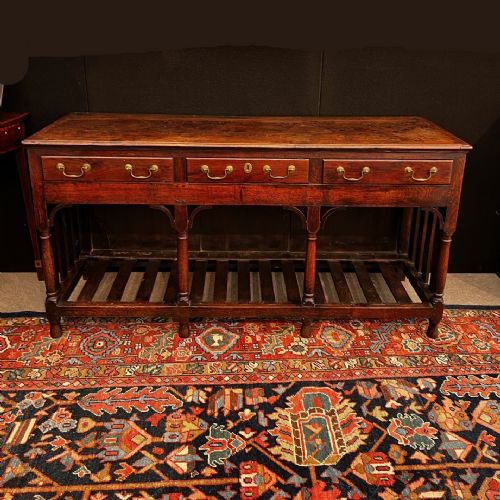


Dark Brown Elm Table
A dark brown elm table brings rich grain and honest utility into a room, whether you choose an English farmhouse piece or a Chinese scholar's table.
Dark Brown Elm Table
A dark brown elm table encompasses a wide variety of utilitarian forms, ranging from substantial Georgian dining boards and tavern tables down to compact side pieces and occasional stands. When you search for a dark brown elm table, you encounter pieces that span multiple centuries, from seventeenth-century William and Mary designs through to Edwardian drop-leaf examples.
Materials and Construction
Makers utilised solid elm for its dense, interlocking grain which resists splitting, often pairing it with oak or ash for structural framework and supports. Burr elm also appears on select tripod tables, showing distinctive swirling patterns within the timber.
Joinery methods rely on traditional pegged joints, plank tops, and sturdy stretcher bases designed to bear heavy weight. Surfaces finished decades or centuries ago developed a deep patina through regular waxing and daily use.
Materials appearing across the inventory include solid elm, burr elm, oak, ash, and brass fittings.
Assessing Quality and Character
Quality rests in the depth of the timber's grain and the integrity of the original construction rather than decorative carvings. Superior examples display undisturbed surface wear and a rich, warm tone across the plank top.
Proportion and stability dictate the standing of a piece, with well-balanced legs and minimal structural replacement marking the more desirable specimens from country workshops and urban cabinetmakers alike.
The Dark Brown Elm Table Glossary
- Elm
- A durable hardwood noted for its interlocking grain and resistance to splitting. It forms the primary surface material for many country dining boards and low tables.
- Burr elm
- A growth deformity in the elm tree that produces highly figured, swirling wood grain. Cabinetmakers utilised this timber for decorative table tops.
- Dresser base
- A low storage unit featuring drawers and cupboards beneath a sturdy wooden top. These pieces often incorporate elm alongside oak framing.
- Trestle table
- A table construction where the top rests on folding or fixed supports rather than four corner legs. This form appears in both English rustic and Chinese traditional designs.
Dark Brown Elm Table: Frequently Asked Questions
How do I clean a dark brown elm table?
Maintain the surface by dusting regularly with a soft, dry cloth and applying natural beeswax occasionally to nourish the timber. Avoid using harsh chemical sprays or placing the wood near direct heat sources.
Keeping the room humidity stable prevents the ancient wood from drying out or splitting along the natural grain lines. Gentle care preserves the historical patina built up over generations.
How can I tell English elm from Chinese elm?
English country pieces generally feature pegged plank construction, heavy oak supports, and vernacular styling associated with farmhouse interiors. Chinese examples often display distinct frame-and-panel tabletop joinery, upturned flanges, or scholarly altar table proportions.
Examining the underlying secondary woods like ash or local Asian hardwoods helps clarify the geographical origin of the workshop.
What causes the dark brown colour in these tables?
The deep colour develops naturally through decades of oxidation, exposure to light, and the application of traditional oils and waxes. Centuries of human touch also polish the high points of the timber grain.
Different soil conditions during the tree's growth can also influence the baseline hue of the raw elm before finishing.