

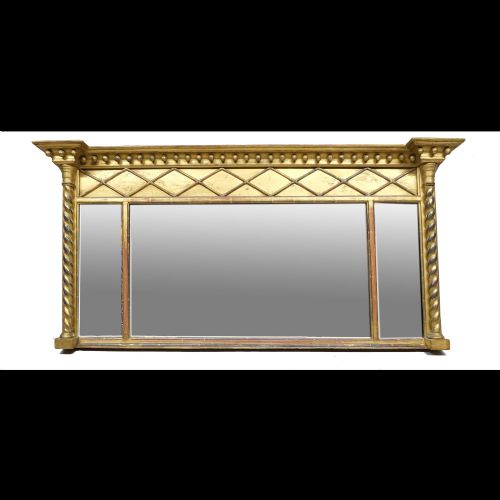


Georgian Three Plate Mirror
A georgian three plate mirror is a grand, divided looking glass designed to sit above a fireplace, bringing light and presence into a room.
Georgian Three Plate Mirror
A georgian three plate mirror is an impressive form of wall mirror or overmantel mirror designed to span wide chimney breasts.
The pieces seen on this page largely originate from the Georgian, Regency, and nineteenth century periods, carrying styles such as George II, Neoclassical, and Georgian Rococo.
These items primarily function as overmantel mirrors, offering horizontal expanses divided into distinct vertical sections by frame divisions or overlapping mouldings.
How they were made
The frames of a georgian three plate mirror are typically constructed from wood, giltwood, gesso, composition, or ebonised wood, often layered with parcel gilt details.
Makers utilised carved wooden structures alongside moulded composition ornaments to achieve intricate architectural details such as laurel wreaths and friezes.
Multiple mirror glass plates were set side by side within the single frame structure, a practical necessity of early glass production limitations.
Listings span multiple centuries, uniting 18th century George II designs with 19th century Regency overmantels and later Sheraton style interpretations.
What varies in quality
Quality rests in the crispness of the carved giltwood and the depth of the gesso work, separating hand-carved depth from simpler moulded decoration.
The integrity of the original mirror glass plates and the proportion of the dividing sections dictate the visual balance of the piece.
Subtle details such as parcel gilding, walnut grounds, or mahogany framing distinguish standard architectural mirrors from masterworks.
Ciceri And Co
The Georgian Three Plate Mirror Glossary
- Overmantel mirror
- A large mirror specifically designed to hang upon the wall directly above a fireplace mantelpiece. These pieces often feature wide horizontal proportions.
- Giltwood
- Timber that has been coated with a thin layer of gold leaf. This material defines the bright, reflective surfaces of formal period frames.
- Gesso
- A plaster-like mixture applied to wood frames to create a smooth surface for gilding or to be moulded into relief decoration. It allows for sharp sculptural detail.
- Tryptic
- A term describing an artwork or mirror divided into three panels or plates. In mirrors, this splits the reflection across distinct vertical sections.
- Trumeau
- A decorative wall mirror or panel situated between windows or above a fireplace. It often combines painted or carved decoration with the glass plate.
Georgian Three Plate Mirror: Frequently Asked Questions
Where should I hang a triple plate mirror?
These mirrors are traditionally scaled to sit horizontally above a fireplace mantelpiece, where their width balances the hearth below. They also anchor large expanses of wall in reception rooms.
Ensure the wall construction and fixings can support the substantial weight of a timber and glass frame before hanging.
How do I tell a Regency mirror from an 18th century one?
Eighteenth century examples often lean towards George II or Georgian Rococo styles with deep, intricate hand-carvings and architectural gravitas. Regency pieces frequently incorporate neoclassical motifs like laurel wreaths and clean architectural lines.
Examining the underlying construction materials, such as gesso application and wood type, helps clarify the period of manufacture.
Why are there three separate glass plates?
Historically, large sheets of flawless mirror glass were extremely difficult and expensive to manufacture. Dividing the reflection across three plates was a technical necessity of the period.
Over time, this division became a distinct aesthetic choice, creating a rhythmic, compartmentalised reflection.
How do I care for antique mirror glass and frames?
Dust giltwood and gesso frames gently with a soft, dry brush to protect the delicate gold leaf and moulded details. Avoid using liquid cleaners directly on the frame.
Clean the mirror plates sparingly with a slightly damp cloth, taking care not to let moisture seep behind the edges of the glass.