


Georgian Tapestry Screen
A georgian tapestry screen brings warmth and texture to a room, offering both decorative needlework and practical protection from hearth heat.
Georgian Tapestry Screen
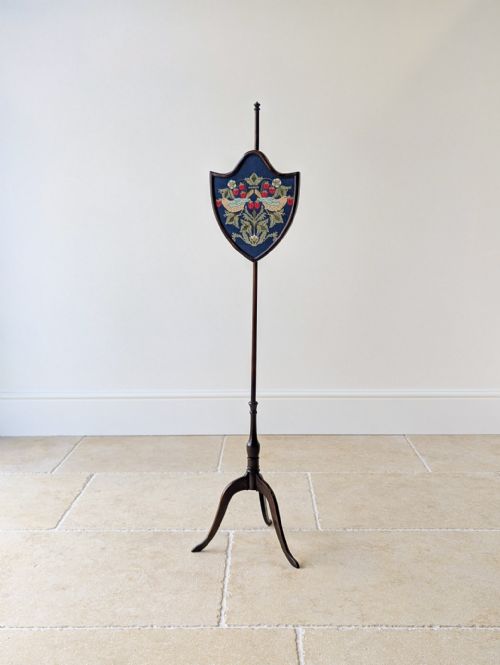
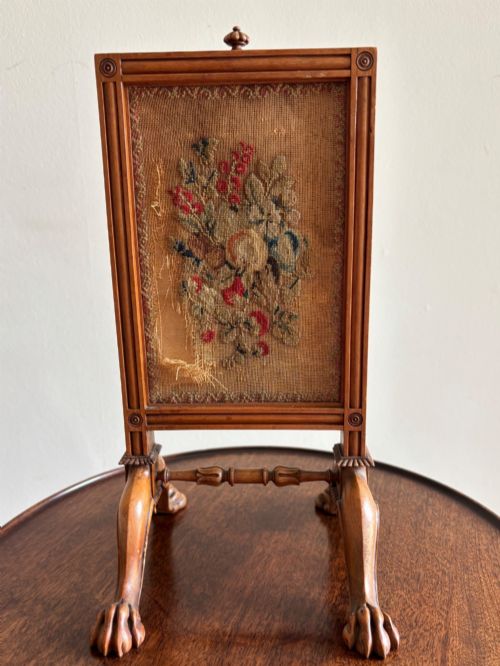
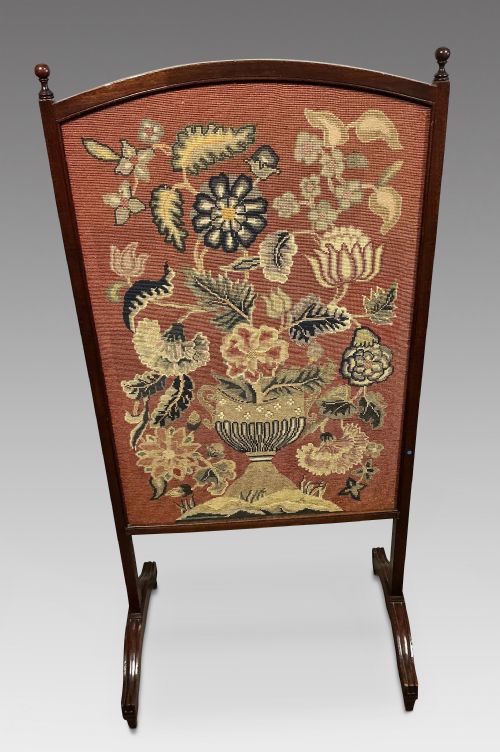
A georgian tapestry screen serves as a traditional piece of functional room furniture, designed primarily to shield occupants from the direct heat of an open fire. These items appear in various formats across this selection, including classic pole screens with adjustable panels and larger folding room dividers.
The objects span multiple historical periods from the eighteenth and nineteenth centuries, taking forms such as George III tripod stands, Regency folding panels, and William IV designs. Mahogany and rosewood frequently form the structural framework, while needlepoint, wool, and textile panels provide the decorative centrepiece.
Buyers encounter single standing poles alongside multi-panel screens, each utilising textile or needlework elements to display detailed imagery. These furnishings reflect the interior domestic habits of their era, combining utility with decorative hand-worked artistry.
Materials and construction
Makers utilised dense timbers such as mahogany and rosewood to construct the sturdy frames and bases required for stability, particularly on tripod pole screens. Giltwood also appears in select examples, adding a polished decorative finish to the carved woodwork.
The visual panels rely on textile arts, specifically wool needlepoint and tapestry work, mounted within the wooden structures. Adjustable brass mechanisms frequently allow the viewing height of pole screens to be raised or lowered according to need.
Some nineteenth-century makers evidently grew tired of burnt cheeks and insisted on intricate wool embroidery to keep the flames at bay.
Distinctions in quality
Quality rests upon the crispness of the timber carving and the complexity of the woodturned or tripod base. Superior pieces exhibit refined joinery and well-proportioned framing that supports the textile panel securely without wobble.
The execution of the needlepoint tapestry dictates the visual merit of the piece. Finer stitch work, balanced colour palettes, and well-preserved wool textiles distinguish the more accomplished examples from simpler domestic efforts.
The Georgian Tapestry Screen Glossary
- Pole screen
- A standing piece of furniture featuring a vertical wooden shaft and an adjustable sliding panel designed to block radiant fire heat. These items typically rest on a tripod base.
- Needlepoint
- A form of canvas work embroidery executed with wool yarn, creating the pictorial panels mounted within these screens. It provides both durability and rich colour.
- Tripod base
- A three-legged support structure commonly found beneath the upright shaft of pole screens, offering stable footing on uneven floors. It often terminates in carved feet.
- Giltwood
- Timber that has been coated with a thin layer of gold leaf or gilt paint, seen on more elaborate display pieces from the period.
- Room divider
- A multi-panel screen designed to partition interior spaces or create privacy, utilising hinged wooden frames inset with textiles.
Georgian Tapestry Screen: Frequently Asked Questions
What is a pole screen used for?
A pole screen was traditionally placed near a fireplace to shield a person's face from the intense radiant heat of an open fire.
The adjustable panel allowed the user to raise or lower the textile screen to block the warmth as needed while sitting in a room.
How do I tell an 18th-century screen from a 19th-century one?
Dating relies heavily on the timber species, the style of the woodturning, and the characteristics of the carved details on the base.
Earlier pieces often feature classical George III or Chippendale proportions, whereas later nineteenth-century examples display Regency or William IV design traits.
Are the needlework panels original to the screens?
Many screens retain period needlepoint or tapestry panels made of wool, though textile conservation and replacement over long lifespans do occur.
Examining the mounting method and the wear on the fabric helps indicate whether the textile matches the age of the wooden frame.
How should I place a screen in a modern room?
These pieces function well as decorative focal points against plain walls or positioned near seating areas to introduce texture.
Folding privacy screens can also divide open-plan spaces, while pole screens work effectively in corners or beside side tables.