


Brown Wooden Fire Screen
These brown wooden fire screen pieces block hearth draughts while bringing period warmth and needlework artistry to a room.
Brown Wooden Fire Screen
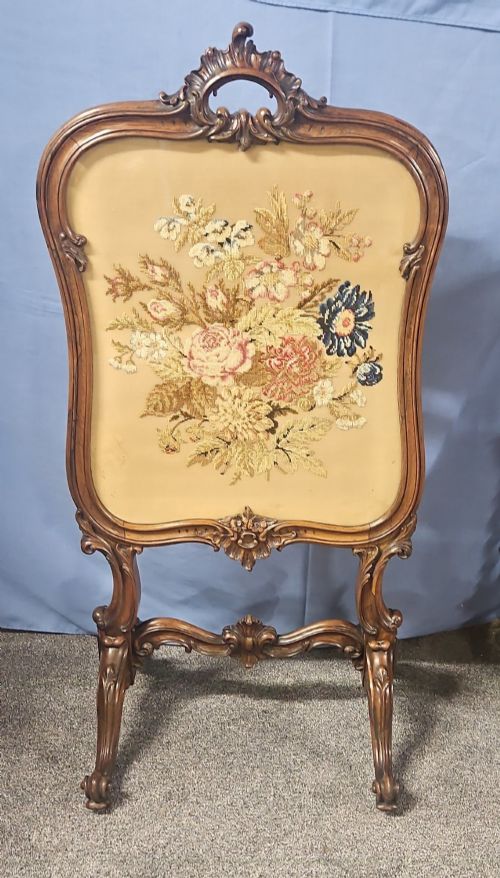
A brown wooden fire screen serves as a practical hearth accessory designed to shield people from excessive fireplace heat when seated nearby. These items span periods from the eighteenth century through the Edwardian era, encompassing distinct styles such as Georgian, Regency, and Victorian Rococo Revival.
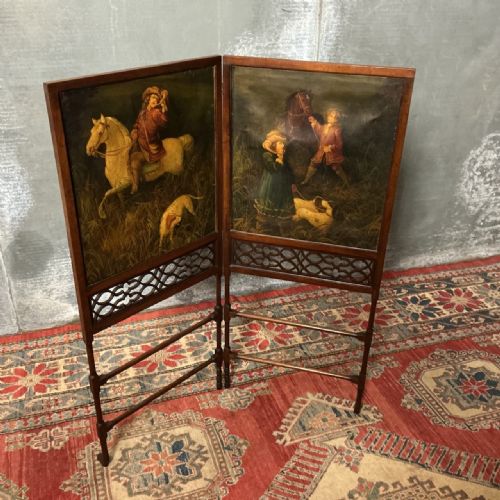
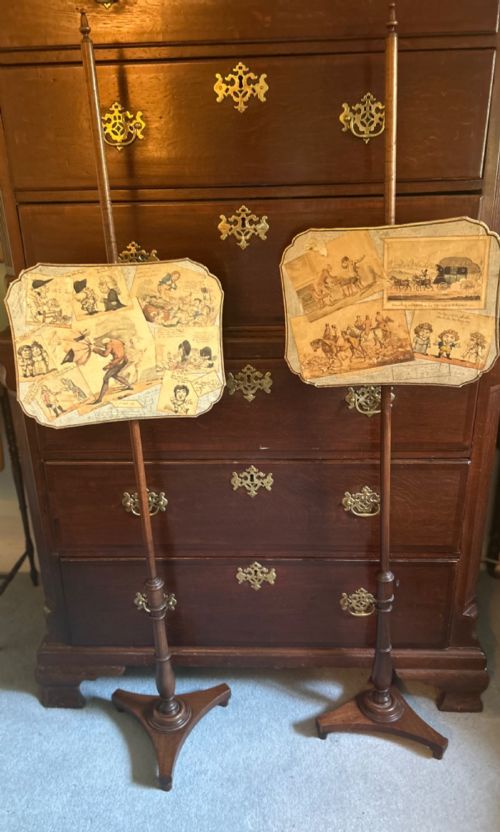
Most items encountered on this page take the form of standing frames or pole screens constructed from timber such as mahogany, walnut, or oak. The central panels frequently house decorative elements including needlework, tapestry, woolwork, embroidery, oil paintings, and satirical prints.
Makers utilised various formats, ranging from simple pull-out leaves to elaborate Black Forest carvings and lifesize dummy boards depicting figures. Side tables and specific fireplace accessories also appear alongside traditional firescreens to complete the domestic hearth.
How they were made
Woodworkers fashioned the main frames using durable timbers like mahogany, walnut, oak, and other native woods, employing traditional joinery and carved details. Frames often feature turned supports, scrollwork, or baronial motifs characteristic of the nineteenth century and earlier eras.
The inset panels display textile techniques including hand-woven tapestry, needlepoint, sampler stitching, and woolwork executed on canvas. Alternative examples incorporate framed oil paintings, printed satirical paper, or glass elements secured within the wooden structure.
A gentleman and a monkey share space on an eighteenth-century lifesize dummy board.
What varies in quality
Superior examples separate themselves through the crispness of the timber carving and the sophistication of the internal panel. Finely worked needlepoint or hand-painted oil compositions on the screen elevate the piece above plain textile insertions.
Proportion and structural balance dictate the finer pieces, particularly where complex mechanical elements like pull-out leaves or adjustable pole screens operate smoothly. The choice of rich walnut or figured mahogany also denotes a higher grade of craftsmanship.
The Brown Wooden Fire Screen Glossary
- Pole screen
- A vertical wooden stand holding an adjustable sliding panel designed to block radiant heat from the fire. The screen moves up and down on a central shaft.
- Dummy board
- A lifesize painted wooden figure cut out to create a decorative trompe l'oeil effect in a room. These figures often depict humans or animals.
- Tapestry
- A form of textile art woven by hand on a loom or worked with needlepoint stitches on canvas. These panels frequently portray pastoral or historical scenes.
- Needlepoint
- A type of canvas work embroidery stitched with yarn using various counts. This technique decorates the central panel of many hearth screens.
- Baronial
- A heavy, ornate architectural style featuring deep carving and dark woods. This aesthetic appears frequently in nineteenth-century furnishings.
Brown Wooden Fire Screen: Frequently Asked Questions
What is a brown wooden fire screen used for?
These screens functioned primarily to shield people from the intense radiant heat of open coal or wood fires when sitting close to the hearth. They also served to protect delicate facial complexions from excessive warmth and blocked draughts.
Beyond utility, they provided a decorative canvas for displaying domestic needlework, paintings, and prints when the fireplace was unlit during warmer months.
What materials are used in these screens?
The structural frames consist predominantly of hardwoods such as mahogany, walnut, and oak. Some examples incorporate brass fittings or glass.
The inserted panels display a wide variety of decorative media, including woolwork, canvas tapestry, embroidered samplers, oil paintings, and paper prints.
How do you style a fire screen today?
These pieces find natural placement near decorative or working fireplaces to add historic texture and colour to a room. Their slim profiles also allow them to stand against empty walls as decorative art panels.
The tactile quality of the antique needlework or carved wood complements both traditional and contemporary interiors.
How can you tell the period of a screen?
Stylistic clues such as Regency curves, Victorian Rococo Revival carving, or Georgian proportions help assign items to specific eras. The framing techniques and wood species also provide guidance.
Needlework subjects and printing methods offer further chronological indicators, linking the textile or artwork to prevailing tastes of the eighteenth and nineteenth centuries.