

Georgian Tabletop Vanity Mirror
A georgian tabletop vanity mirror offers a practical glass for the dressing chest, combining timber frames with swing mechanisms.
Georgian Tabletop Vanity Mirror
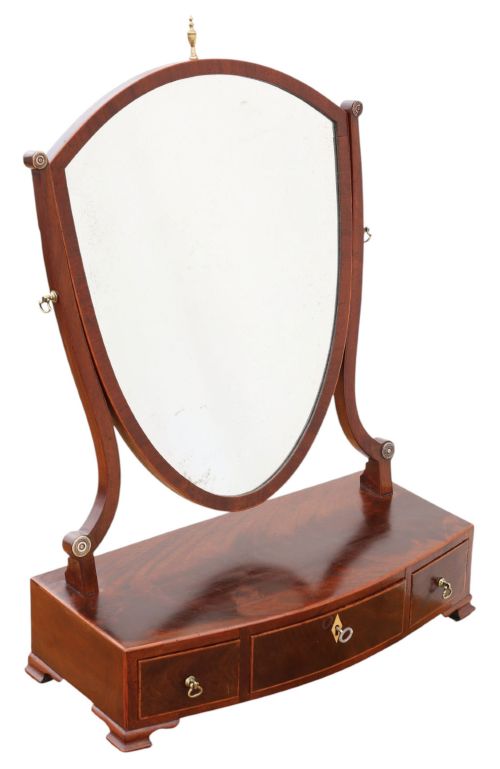
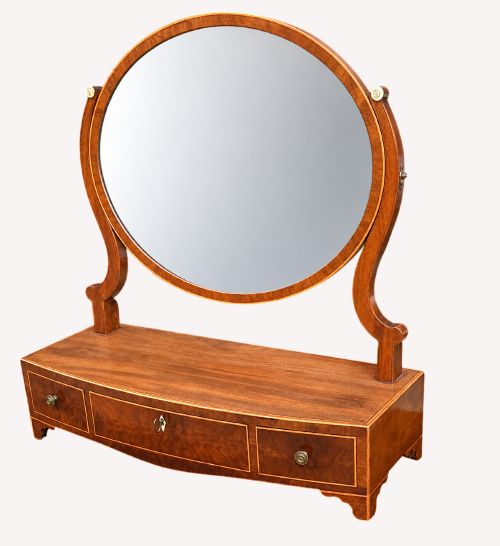
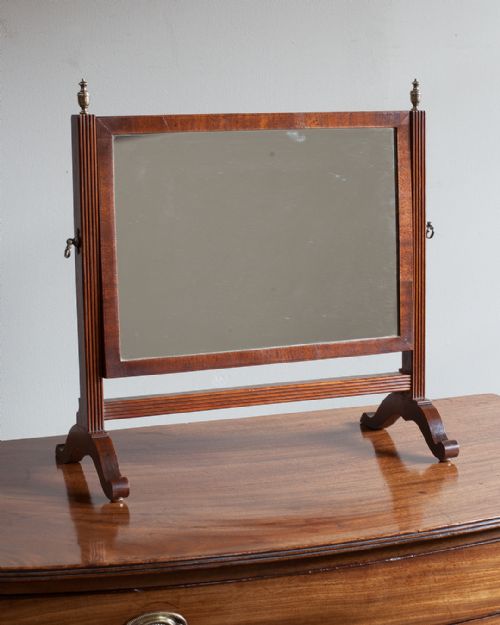
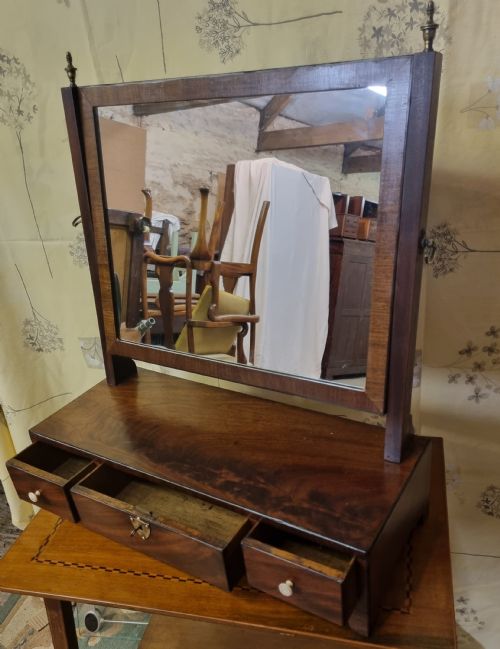
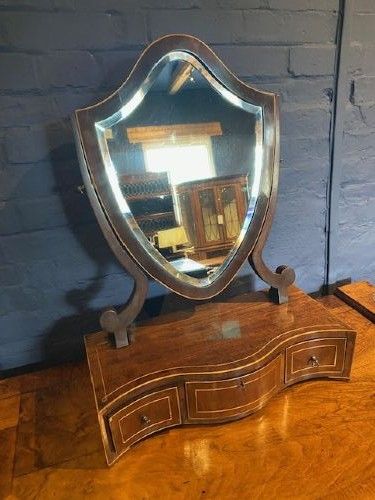
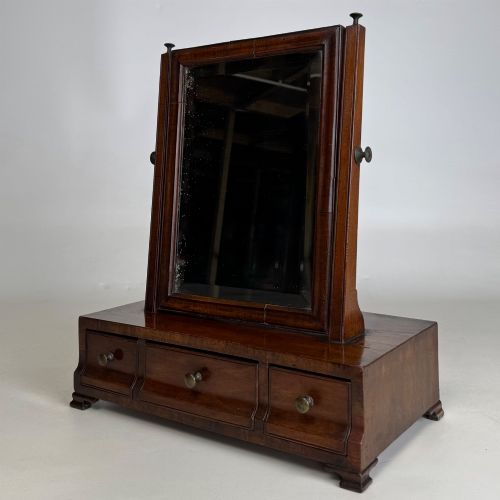
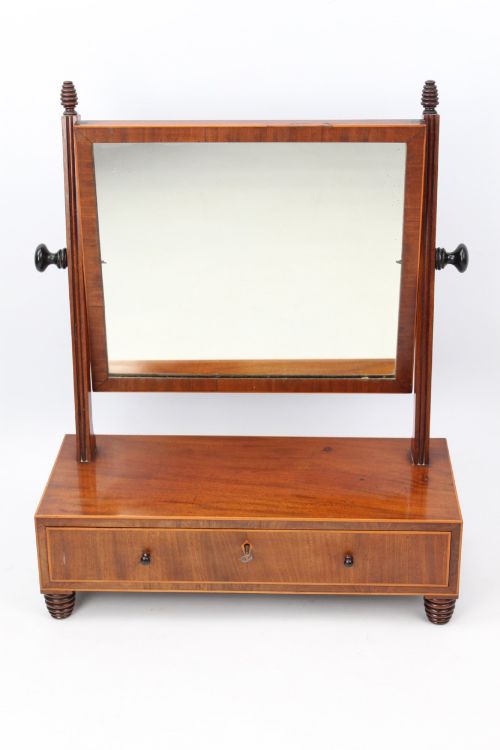
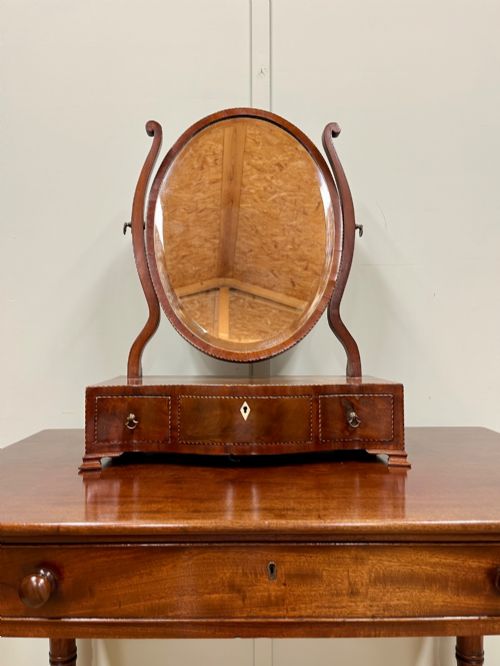
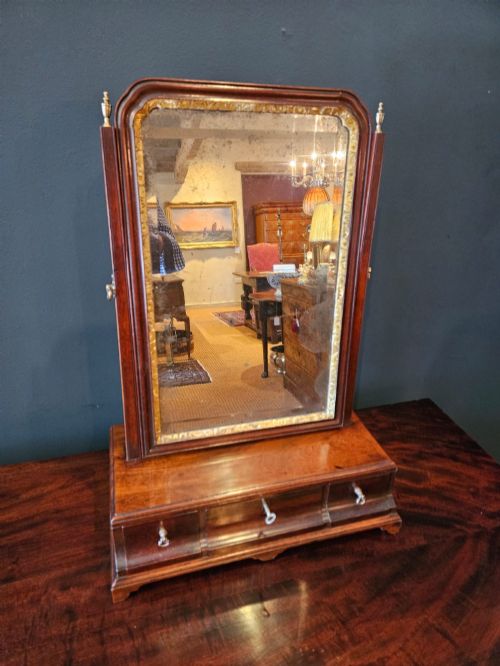
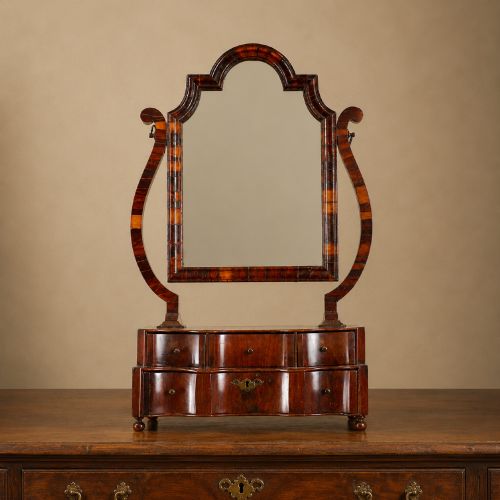
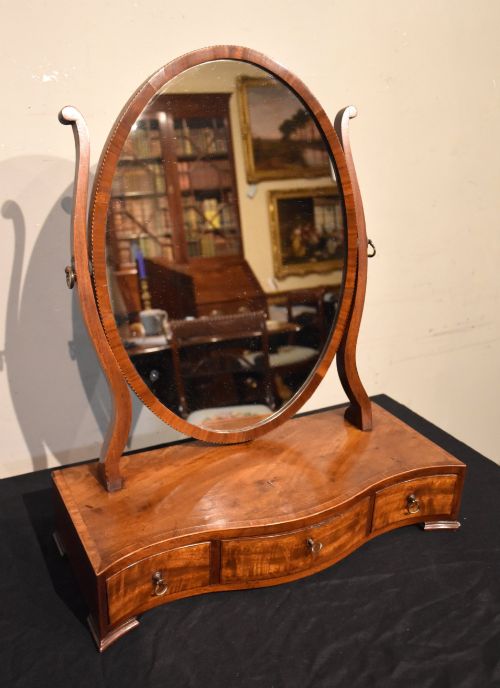
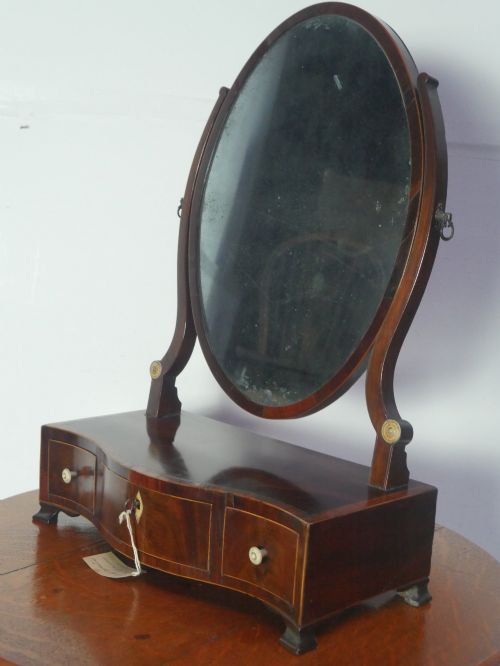
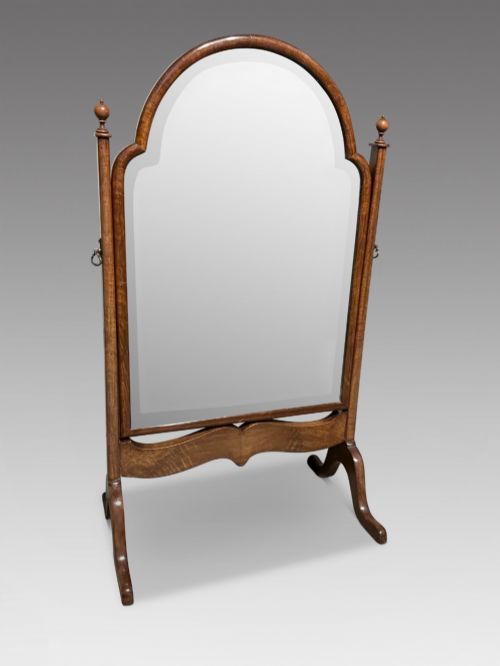
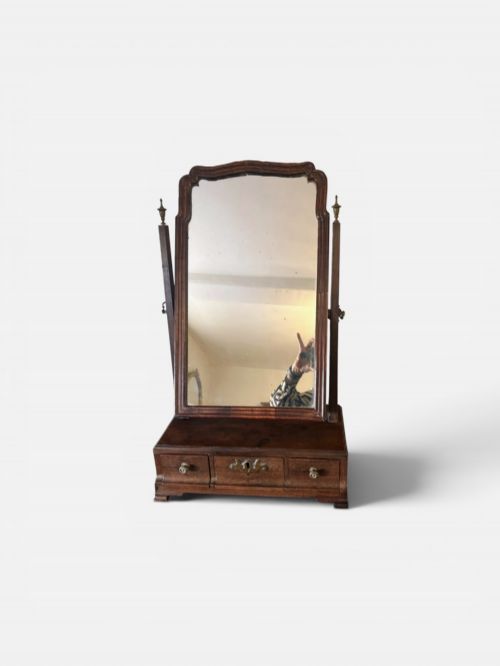
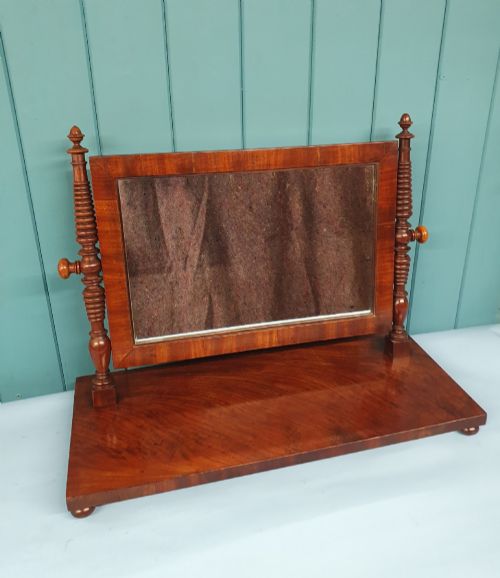
A georgian tabletop vanity mirror is a portable looking glass designed to sit upon a chest of drawers or dressing table. These pieces function as personal grooming glasses, allowing users to adjust the angle of reflection via a pivoting swing frame.
The selections span the eighteenth century, the regency era, and the nineteenth century, including later reproductions built in the georgian style. Mahogany forms the predominant timber framework, accompanied by walnut, satinwood, and giltwood variations.
Buyers commonly encounter rectangular, shield, or oval glass plates mounted between upright supports. These supports frequently stand atop a small box base fitted with drawers for small items.
How They Were Made
Cabinetmakers constructed these frames primarily using solid mahogany and walnut timbers, often applying crossbanding or marquetry inlay for decorative contrast. Mirror plates utilised glass held within rebated wooden frames, secured by thin backing boards.
Brass fittings, including pivot screws, arm plates, and small drawer knobs, provided the mechanical linkage for the swing action. Bone escutcheons and stringing details occasionally supplemented the timber surfaces.
The base structures incorporated traditional joinery such as dovetail joints for the small storage drawers located beneath the main mirror frame.
Listings demonstrate materials including mahogany, walnut, satinwood, brass, bone, and giltwood across eighteenth and nineteenth-century periods.
What Varies in Quality
The standard of timber selection heavily influences the overall character of the piece, with figured flame mahogany and richly grained walnut commanding attention. Finer examples display meticulous crossbanding and delicate stringing that demonstrate superior craftsmanship.
Proportion and scale dictate the visual balance between the mirror plate and the supporting box base. Pieces featuring serpentine or bow-fronted drawer sections require advanced joinery skills compared to plain rectangular boxes.
The Georgian Tabletop Vanity Mirror Glossary
- Toilet mirror
- A small dressing glass designed for tabletop use during personal grooming. These units typically incorporate storage drawers in the base.
- Swing mirror
- A looking glass hung on pivots between two upright posts to allow tilting. This mechanism lets the user adjust the angle of reflection.
- Crossbanding
- A border of veneer laid with the grain running perpendicular to the main panel. This technique frames the primary timber surface.
- Serpentine
- A curved line of furniture fronts featuring a convex centre flanked by concave sides. This shape adds fluid movement to the base drawers.
- Marquetry
- Inlaid patterns formed by fitting various decorative woods into a prepared ground. Dutch examples often utilise floral motifs.
Georgian Tabletop Vanity Mirror: Frequently Asked Questions
Where should I place a tabletop mirror?
These mirrors sit comfortably upon any sturdy chest of drawers or dressing surface within a bedroom.
Their portable nature allows easy relocation to capture optimal natural daylight from nearby windows.
How do the swing pivots function?
Metal screw pins pass through the upright support posts and thread into brass plates on the mirror frame.
Tightening these brass fixtures holds the glass at the desired tilting angle.
What stores in the base drawers?
The small compartment boxes traditionally held personal trinkets, coins, and small grooming accessories.
Users today utilise these shallow drawers for similar small everyday items.
How do I identify a shield shaped plate?
The glass plate narrows towards the top into a pointed curve resembling a heraldic shield.
This specific silhouette gained popularity during the eighteenth century.