



Georgian Desktop Mirror
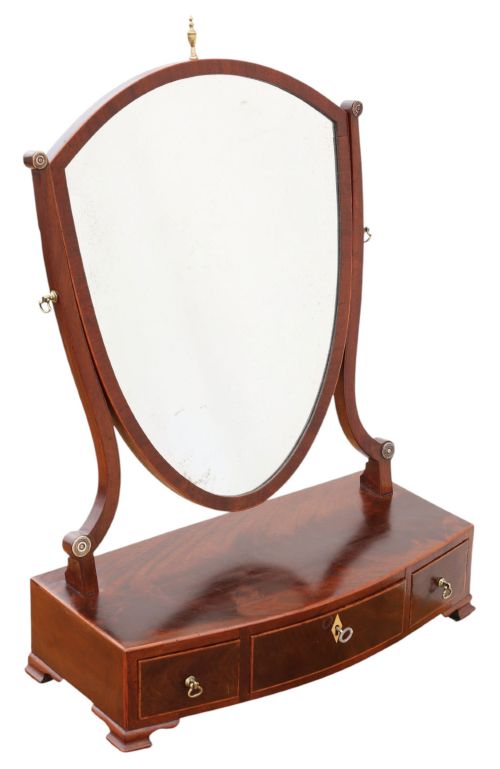
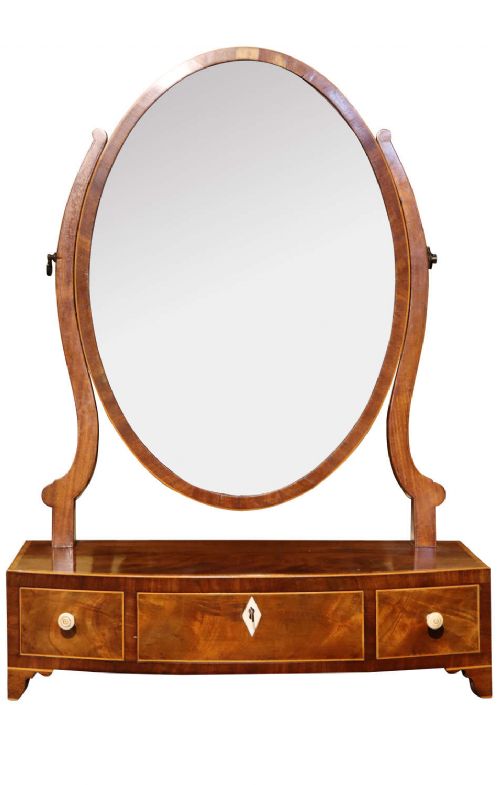
These Georgian desktop mirror examples are timber-framed swing glasses built for the dressing table, offering a portable surface for grooming and styling.
Georgian Desktop Mirror
A georgian desktop mirror sits upon a table or chest, providing a movable glass supported by upright arms and a stable base. Most pieces on this page take the form of dressing table mirrors or toilet mirrors, designed for everyday personal use in the bedroom or dressing room.
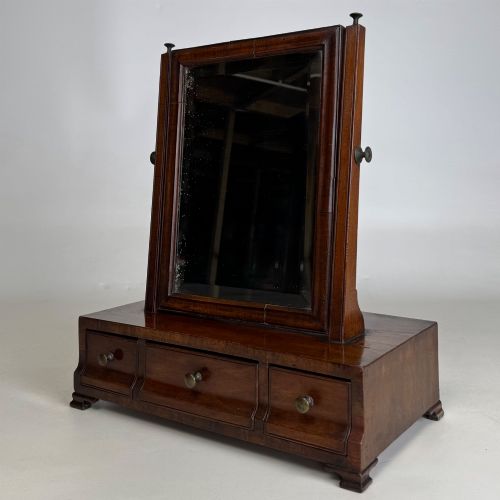
The physical evidence spans the eighteenth and nineteenth centuries, including specific periods like the Regency era and the year eighteen hundred. Makers constructed these mirrors in various silhouettes, ranging from shield and oval glasses to rectangular plates above small wooden boxes.
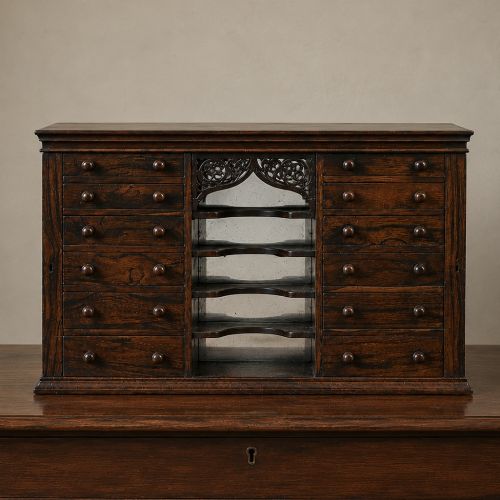
Examples appear in distinct regional and stylistic variations, including Dutch marquetry, Dutch neo-classical, Queen Anne, Chippendale, and George the Third designs. Alongside standard dressing mirrors, occasional related forms such as collectors cabinets and mirrored Wellington chests appear in the selection.
Materials and construction
Cabinet makers built the frames and base boxes primarily from dense hardwoods like mahogany, walnut, and rosewood, frequently employing crossbanding and intricate marquetry inlay. Some pieces incorporate secondary materials such as brass fittings and bone details to accent the woodwork.
The supporting framework relies on upright side arms attached to small drawer bases, allowing the mirror plate to tilt back and forth on pivot screws. Traditional silvered mirror glass is held securely within moulded wooden surrounds.
Georgian Desktop Mirror Retail Price Guide 2026
Typical asking prices for georgian desktop mirror among the pieces listed under this phrase on Sellingantiques today, from the lower quarter to the upper quarter. They describe what is for sale here now, not the wider market.
Listings feature eighteenth and nineteenth century periods, including the Regency era and the year eighteen hundred.
Distinctions in quality
Superior execution shows in the selection of richly figured timber veneers and precise cabinet joinery around the base drawers. The refinement of the shaped woodwork, such as serpentine fronts and delicate shield outlines, separates finer workshop production from standard utility items.
Proportion and the preservation of original brass hardware and silvered mirror glass influence the integrity of each piece. Finer examples maintain crisp marquetry inlay and well-balanced frames that support the weight of the glass without sagging.
The Georgian Desktop Mirror Glossary
- Swing mirror
- A glass plate hung on pivots between two upright posts so it can tilt to different angles. This mechanism allows the user to adjust the reflection during grooming.
- Toilet mirror
- A small mirror designed to sit on a dressing table or washstand. The term derives from the French word toilette, referring to the morning routine of dressing.
- Crossbanding
- A narrow strip of veneer laid across the grain of the primary wood around the border of a panel or drawer front. This technique creates a neat framing effect on cabinet work.
- Serpentine
- A curved line that bends outward in the centre and inward at the sides, forming a wavy edge. Makers often applied this shape to the base boxes of dressing mirrors.
- Marquetry
- Inlaid woodwork arranged in decorative patterns using various coloured veneers. Dutch examples often display floral or pictorial designs across the entire surface.
Georgian Desktop Mirror: Frequently Asked Questions
What is a georgian desktop mirror?
A georgian desktop mirror is a small, movable looking glass mounted on a wooden stand, designed to sit on top of a table or chest of drawers. These pieces provide a personal reflection surface for grooming.
Craftsmen built them in various timber frames, often incorporating small storage drawers in the base box to hold personal items and trinkets.
How were these mirrors used?
People placed them on dressing tables or chests to assist with personal grooming, hair styling, and applying cosmetics. The pivoting frame allowed the user to adjust the angle of the glass.
The small drawers in the base served as a convenient place to store jewellery, pins, and daily accessories close at hand.
How do you date a georgian mirror?
Dating relies on observing the timber species, construction methods, hardware styles, and the overall outline of the frame and base. Eighteenth-century pieces often feature walnut or early mahogany, while later nineteenth-century versions show different veneer habits.
Examining the bevel of the glass, the cut of the wood screws, and the dovetail joints inside the base drawers provides further clues to the period of manufacture.
What woods were used for frames?
Cabinet makers primarily utilised dense hardwoods such as mahogany and walnut for their strength and rich grain patterns. Rosewood also appears on later Regency examples.
Secondary woods were used for internal drawer construction, while decorative details sometimes featured bone or contrasting veneer inlays like crossbanding.