

Georgian Swing Dressing Glass
A georgian swing dressing glass sits on the chest or table to catch the morning light, offering a clear reflection backed by centuries of cabinet-making skill.
Georgian Swing Dressing Glass
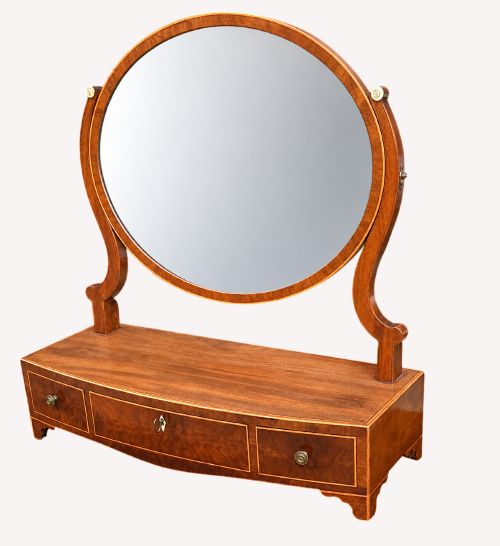
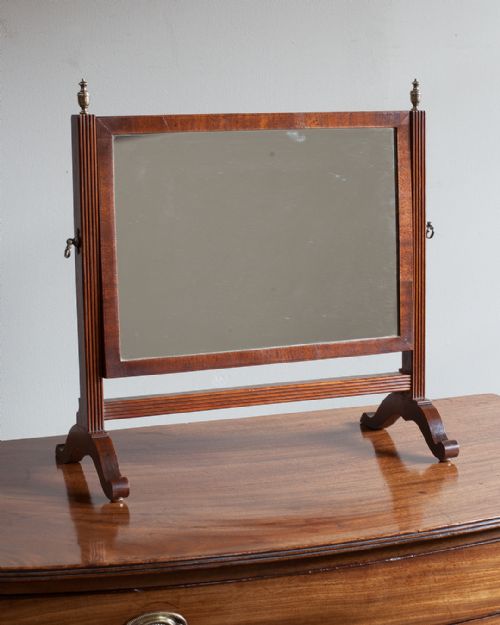
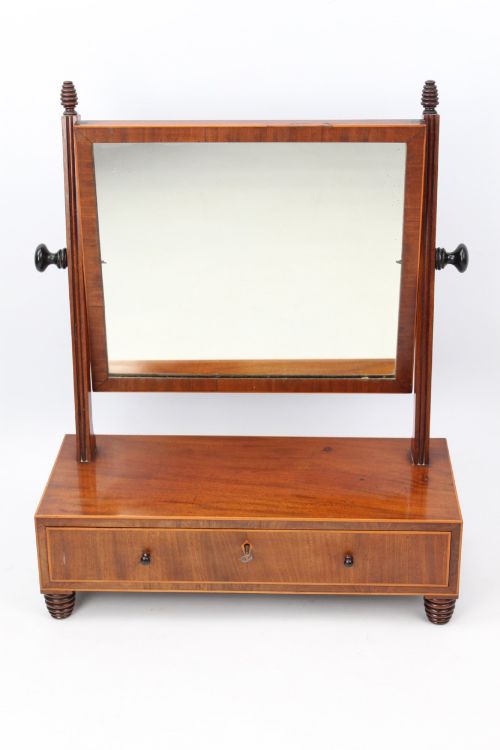
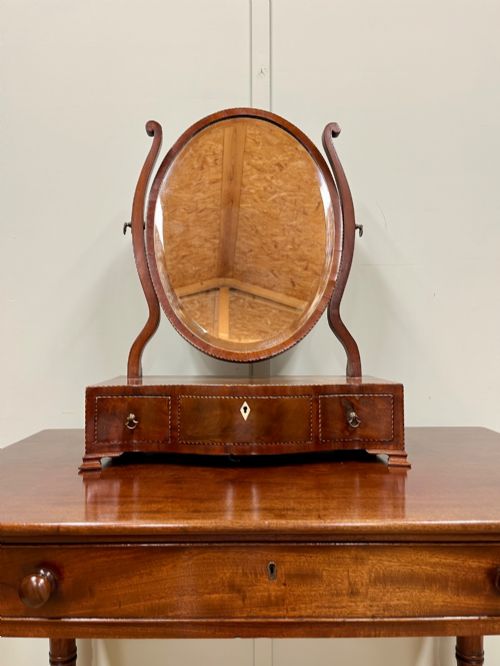
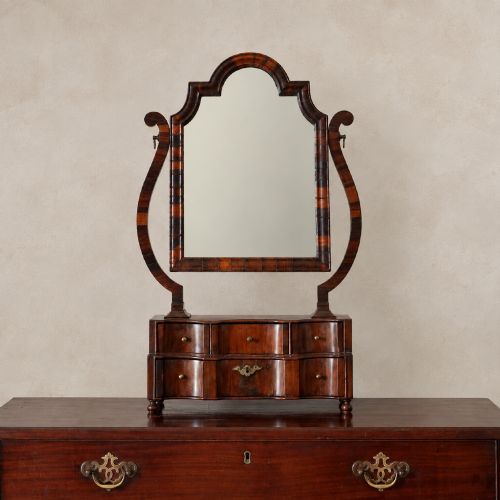
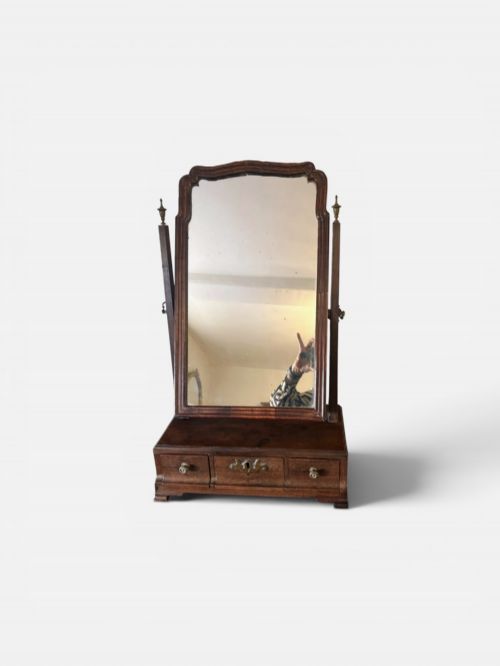
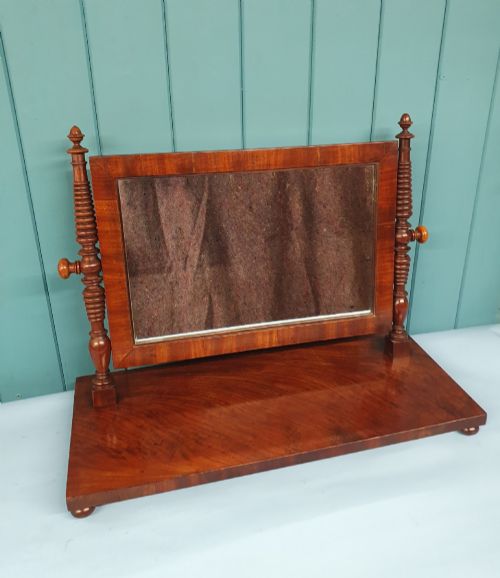
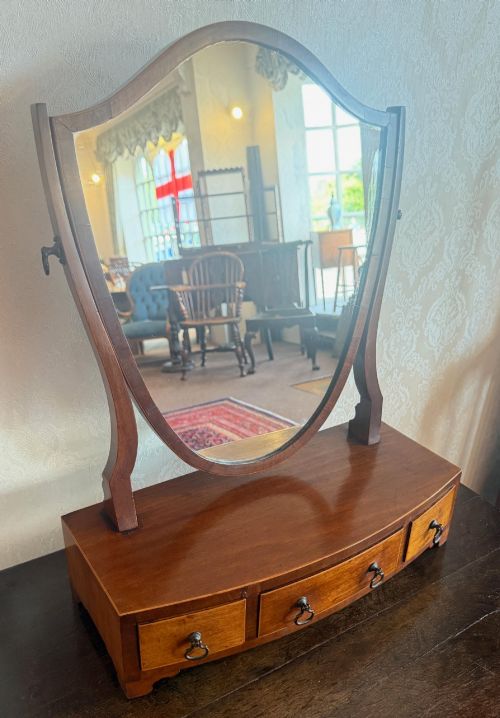
A georgian swing dressing glass is a tabletop looking glass mounted on upright pivots between two upright posts, allowing the mirror plate to tilt back and forth.
Most examples found here date from the eighteenth and nineteenth centuries, spanning the Georgian, Regency, and Victorian periods.
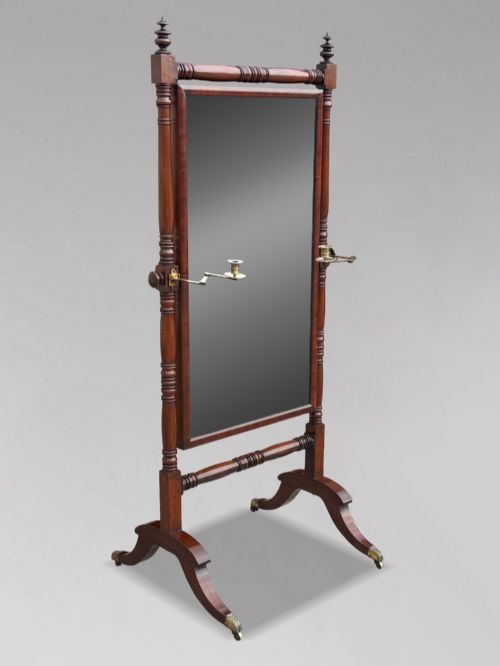
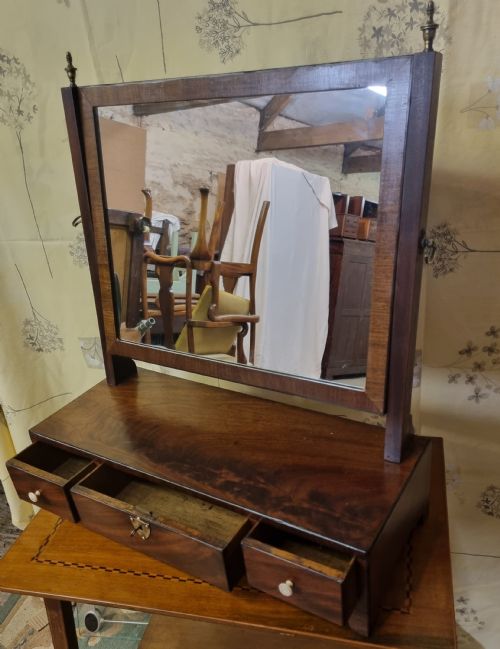
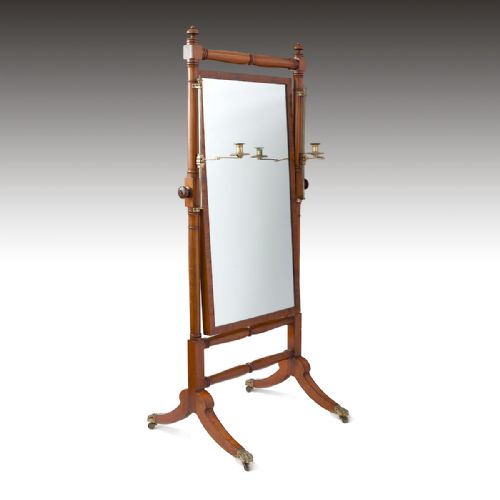
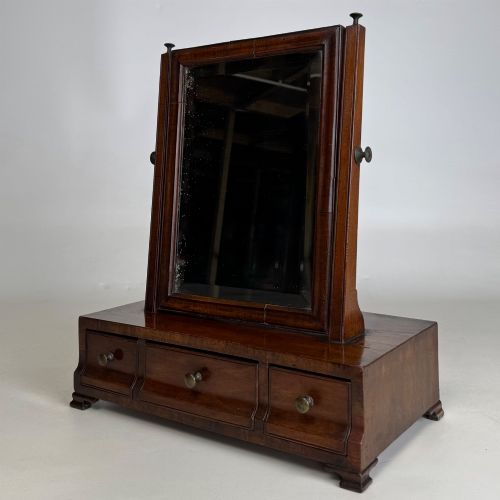
The primary forms include compact toilet mirrors with box bases containing small drawers, alongside taller cheval mirrors that stand directly upon the floor.
How they were made
Cabinet-makers constructed the frames and stands from dense timbers such as mahogany, walnut, and satinwood, frequently accentuating the grain with boxwood inlay or crossbanding.
Brass fittings secure the swing mechanism at the sides, while the mirrored glass itself sits within rebated frames above small oak-lined or walnut drawer boxes.
Listings feature mahogany, walnut, satinwood, and harewood, alongside brass fittings and boxwood inlay across Georgian and Victorian periods.
What varies in quality
The refinement of a dressing glass rests upon the selection of figured timber veneers and the crispness of inlaid details like boxwood or marquetry.
Proportion dictates the elegance of the piece, where slender upright supports balance the weight of the mirror plate and the base drawers align with tight, clean joints.
Gillow
The Georgian Swing Dressing Glass Glossary
- Swing mirror
- A looking glass hung on pivots between two upright posts to adjust the viewing angle. This tilting mechanism is the defining mechanical feature of the form.
- Toilet mirror
- A smaller dressing glass designed to sit upon a table or chest of drawers. These often incorporate a box base fitted with small drawers for cosmetics.
- Cheval mirror
- A large, freestanding swing glass tall enough to reflect the full length of a person. They appear in Regency and later nineteenth-century rooms.
- Crossbanding
- A narrow strip of veneer applied to the border of a panel with the grain running at right angles to the centre. It provides a neat contrasting frame.
- Serpentine front
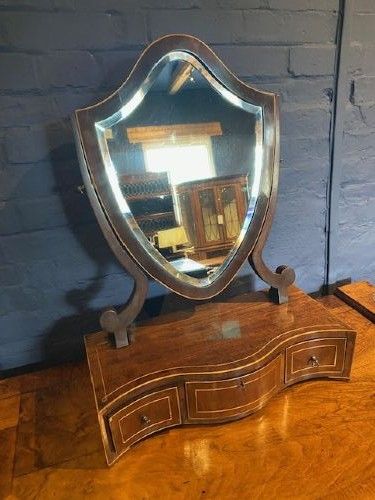
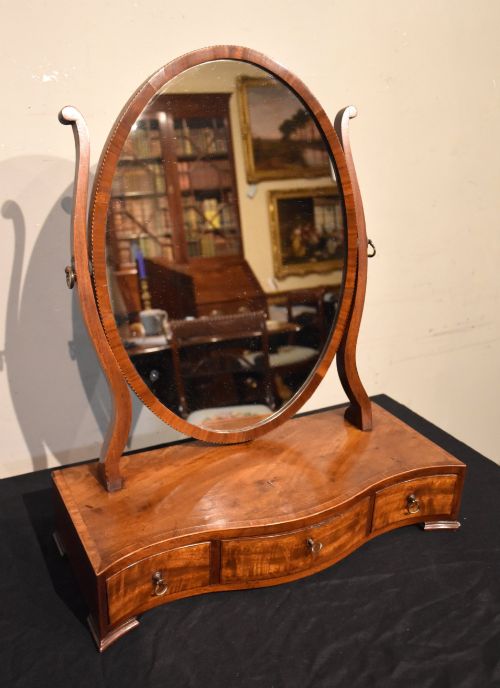
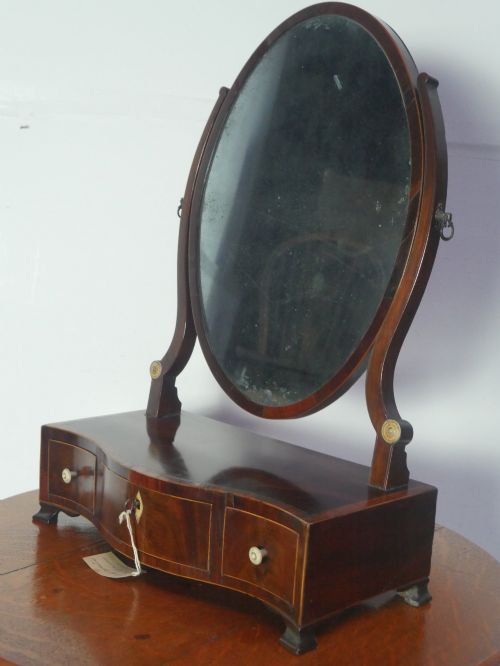
- A piece of furniture featuring a curved front with a convex centre flanked by two concave sweeps. This shape appears on several dressing mirror drawer boxes.
Georgian Swing Dressing Glass: Frequently Asked Questions
Where did people place these mirrors?
These mirrors rested on top of dressing chests, low tables, or specially made stands in bedrooms and dressing rooms. Their elevated position allowed users to check their appearance while seated.
They occupied a central place in the morning routine before full-length wardrobes and cheval glasses became common in domestic interiors.
How do I spot a George III mirror?
George III pieces often display rich mahogany timbers, sometimes enhanced with boxwood stringing, delicate crossbanding, or serpentine drawer fronts beneath the glass plate.
The proportions tend to remain slender and restrained, reflecting the neoclassical tastes prevalent during the later eighteenth century.
What is the difference between walnut and mahogany examples?
Walnut frames typically point towards earlier eighteenth-century periods, such as the reigns of Queen Anne and George II, showcasing rich, figured grain patterns.
Mahogany became the dominant timber by the middle of the eighteenth century and remained popular through the Regency and Victorian eras due to its strength and dark red hue.
Are the mirror plates original?
Many older dressing glasses retain their original mercury glass plates, which often show slight foxing, light speckling, or soft distortion at the edges.
Replacement mirror plates appear frequently because glass is fragile, though surviving original plates add significant character and age to the piece.
How do the side pivots work?
Threaded brass screws or pins pass through the upright support posts into the sides of the mirror frame, holding the glass at the desired angle.
Tightening or loosening these side fixtures allows the user to tilt the glass smoothly without it slipping out of position.