





Georgian Style Vitrine
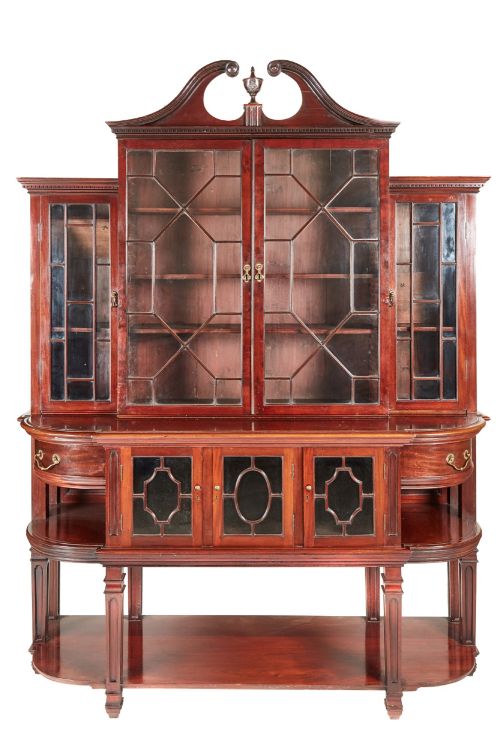
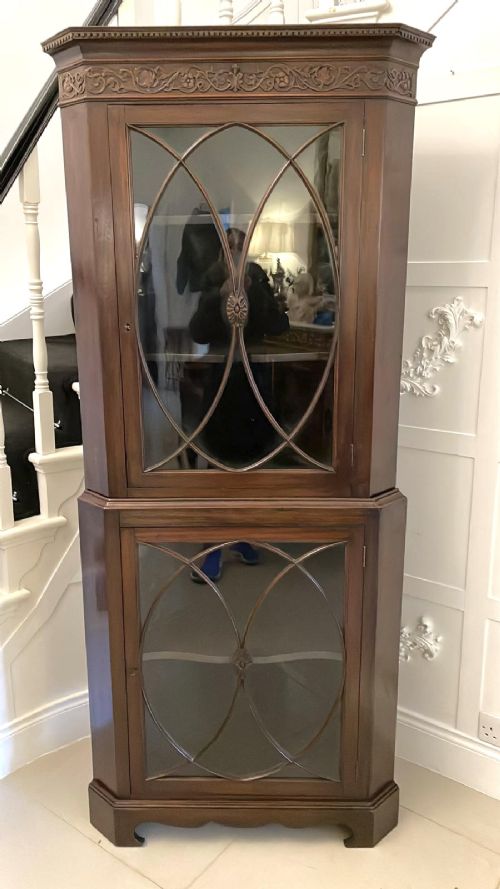
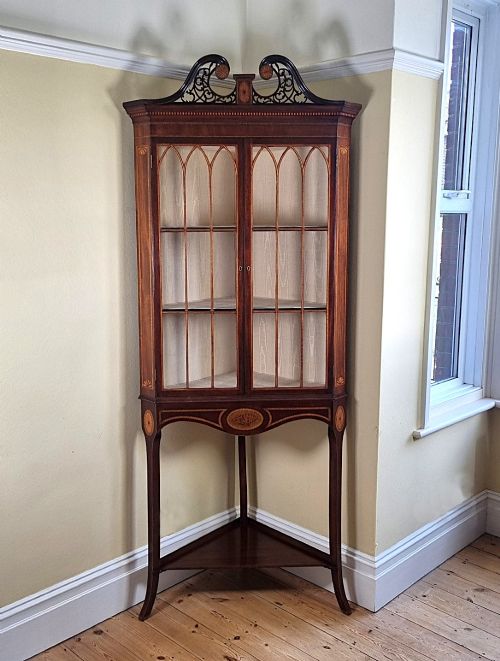
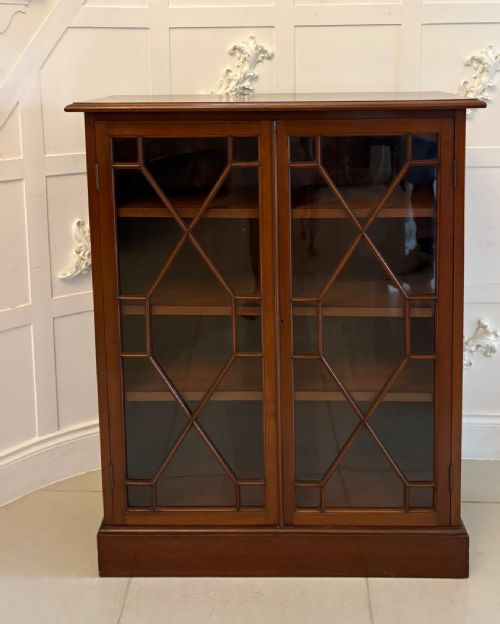
These mahogany and satinwood georgian style vitrine display cabinets bring classical proportions and glazed panels to domestic spaces.

Georgian Style Vitrine
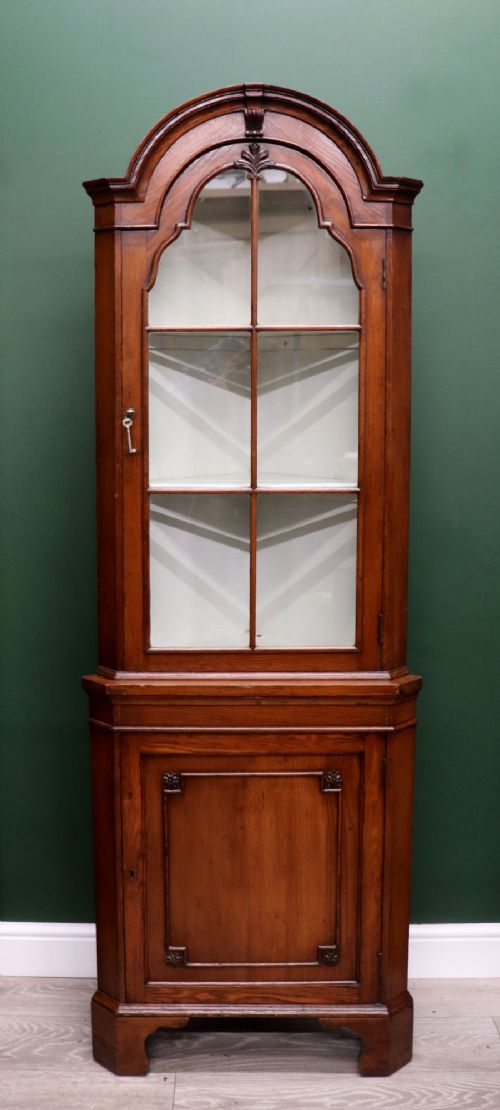
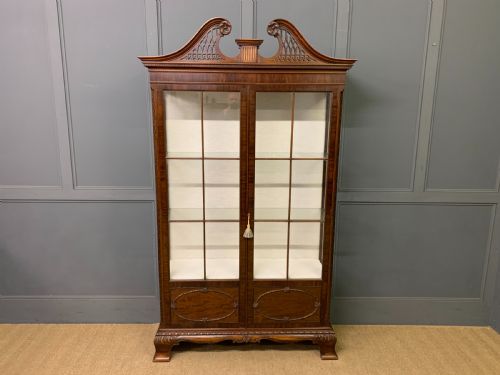
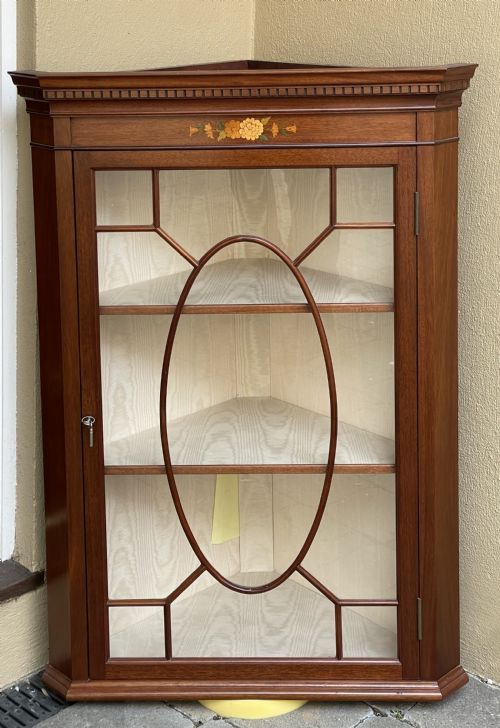
A georgian style vitrine serves primarily to showcase and protect porcelain, glass and small collectables behind glazed doors. The pieces seen here span floor-standing display cabinets, corner cabinets and wall-hanging units.
Most examples date from the nineteenth and early twentieth centuries, drawing heavily on eighteenth-century design vocabularies like Sheraton Revival and Chippendale. Mahogany forms the backbone of these selections, frequently enriched with satinwood inlay or marquetry.
Floor-standing breakfront bookcases and cabinets on stand offer greater presence, whilst corner cupboards utilise domestic angles effectively. Glazing bars often feature astragal patterns to break up the glass area into elegant lights.
Construction and materials
Makers built these cabinets using solid timber carcases faced with carefully chosen veneers such as mahogany, walnut and satinwood. Cabinetmakers applied decorative details through contrasting inlay, painted motifs and marquetry panels.
Glazing relies on timber framing known as astragal bars, holding individual panes of glass securely within the door frames. Brass hardware, including hinges, escutcheons and locks, completes the functional joinery of the period.
Georgian Style Vitrine Retail Price Guide 2026
Typical asking prices for georgian style vitrine among the pieces listed under this phrase on Sellingantiques today, from the lower quarter to the upper quarter. They describe what is for sale here now, not the wider market.
Some corner cupboards are so secretive they practically hide your best tea service behind locked mahogany doors.
Judging quality in a vitrine
Quality rests on the crispness of carved details, the precision of inlay work and the structural integrity of the timber framing. Finer pieces demonstrate careful timber selection, where veneers match symmetrically across drawer fronts and doors.
The sophistication of the glazing bar arrangement and the weight of the brass fittings further distinguish standard production from exceptional cabinetmaking. Surface finishes that retain a warm, polished lustre without obscuring the grain elevate the piece considerably.
Edwards & Roberts·Waring & Gillow
The Georgian Style Vitrine Glossary
- Astragal
- Moulded timber bars dividing a glass window or door into smaller panes. They create the characteristic geometric grid seen on classical glazed cabinet doors.
- Marquetry
- Decorative patterns formed from contrasting pieces of veneer applied to a timber carcase. This technique creates pictorial or floral designs across cabinet doors and friezes.
- Breakfront
- A piece of furniture where the central section projects forward from the flanking wings. This architectural arrangement adds depth and visual interest to large display cabinets.
- Bijouterie cabinet
- A glazed display table or cabinet designed specifically for small precious objects, medals or jewellery. These pieces usually feature glass tops and sides for all-round visibility.
- Corner cupboard
- A cabinet built with a triangular plan to fit neatly into the corner of a room. Versions range from floor-standing units to wall-hanging cupboards.
Georgian Style Vitrine: Frequently Asked Questions
Where should I place a corner cabinet?
A corner cabinet fits neatly into unused angles of a dining room or drawing room, making efficient use of awkward floor space while adding vertical interest to the corner.
Ensure the door swings freely without obstruction from nearby furniture, and position it away from direct sunlight to protect internal timber and displayed items.
How do I care for mahogany veneer?
Dust mahogany surfaces regularly with a soft, dry cloth and apply a quality beeswax sparingly to nourish the timber grain.
Keep these cabinets away from radiators and damp walls to prevent the veneer from lifting or the solid wood from splitting.
How do I identify Sheraton Revival style?
Sheraton Revival pieces take inspiration from late eighteenth-century classical designs, featuring straight tapered legs and delicate satinwood inlay. Look for symmetrical proportions, painted floral husks and neoclassical motifs.
These later interpretations often utilise richer timbers and refined cabinet techniques typical of the Edwardian era.