
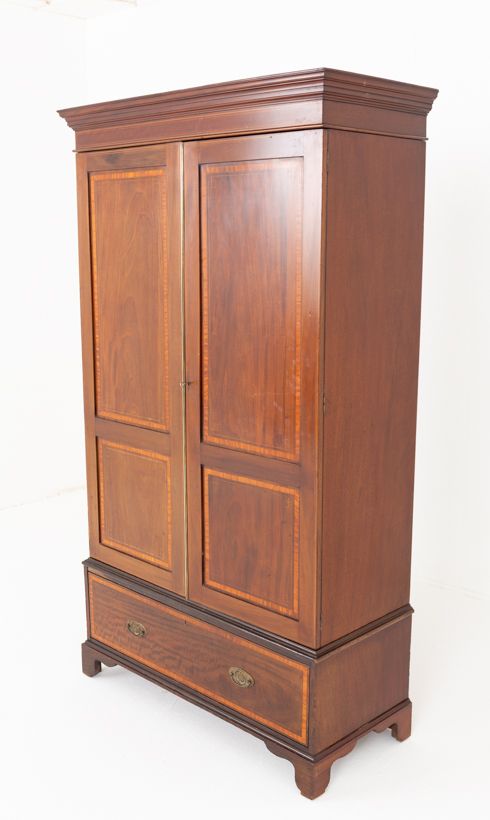
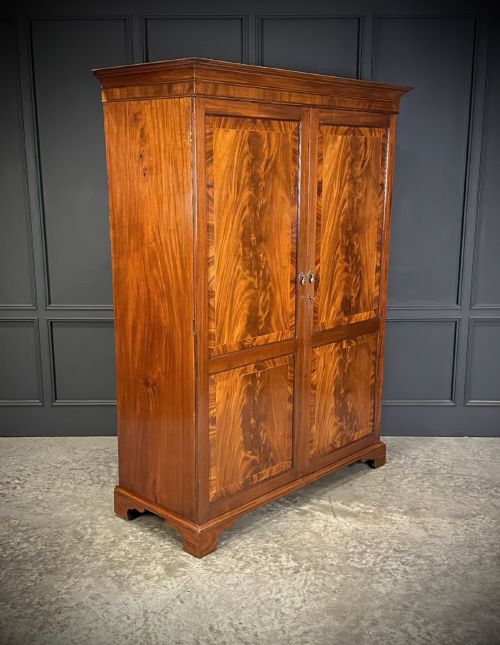
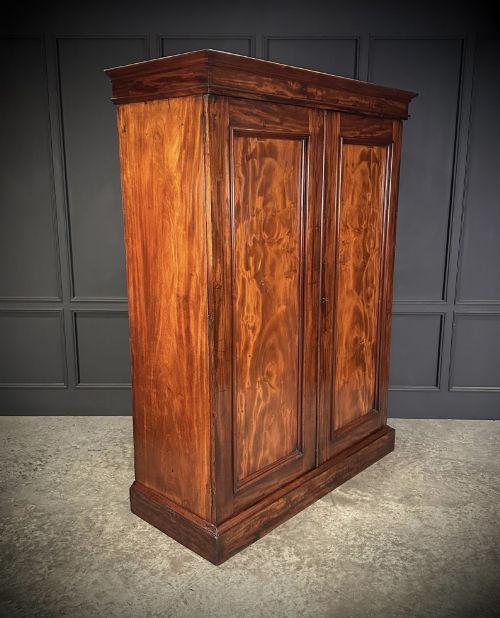
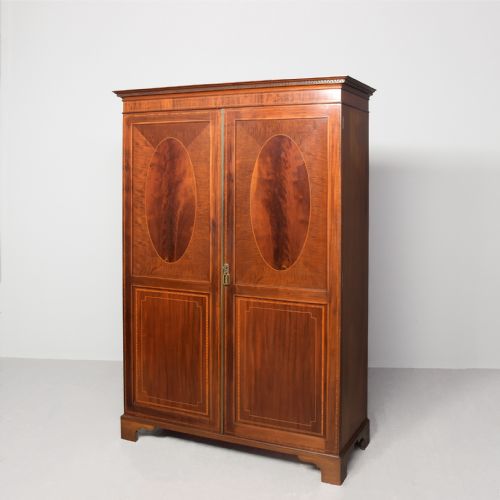
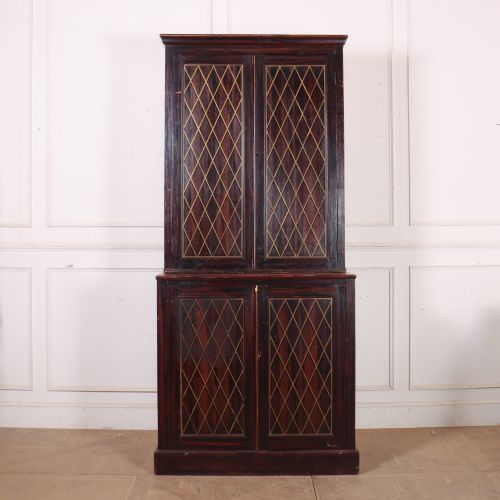

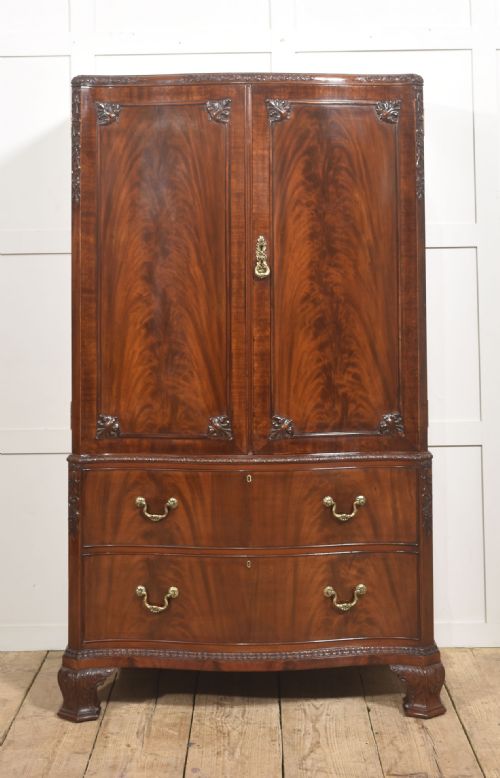
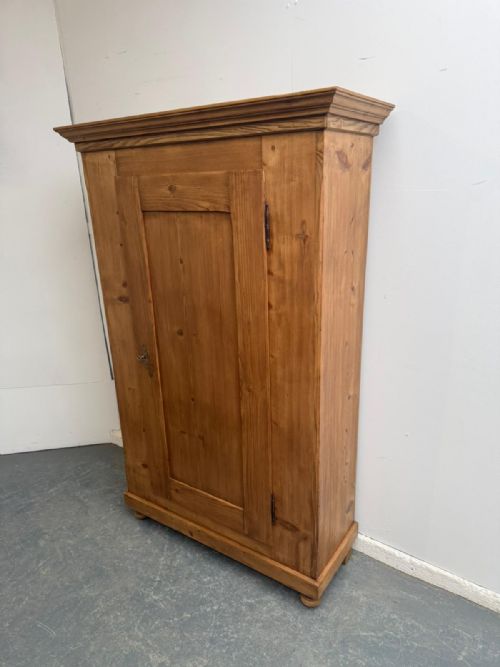


Georgian Style Press Cupboard
A georgian style press cupboard offers substantial storage with timeless architectural presence, combining upper linen presses with lower drawer chests.
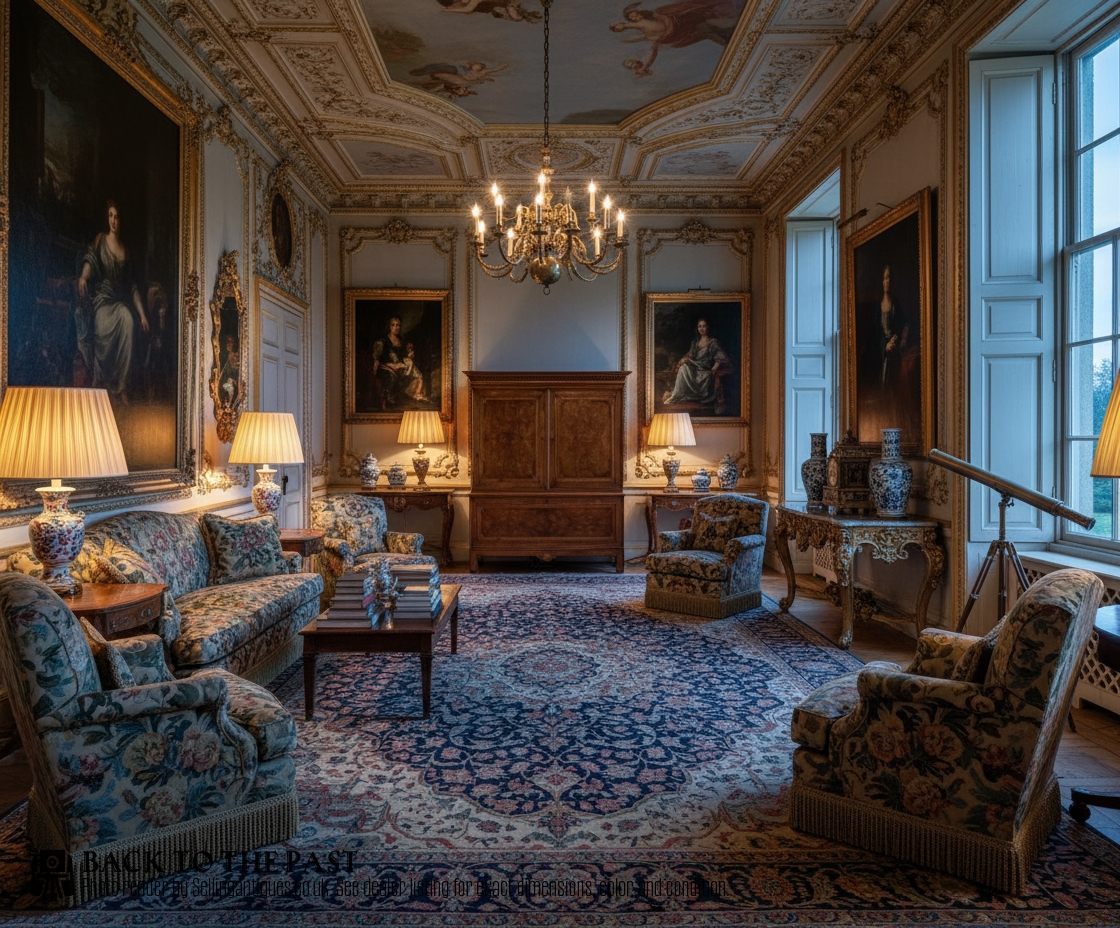
Georgian Style Press Cupboard
A georgian style press cupboard serves as a grand storage solution, combining an upper section for hanging garments or sliding linen trays with a chest of drawers below. You will encounter genuine period pieces alongside later revivals, reflecting how enduringly popular this architectural furniture form remains.
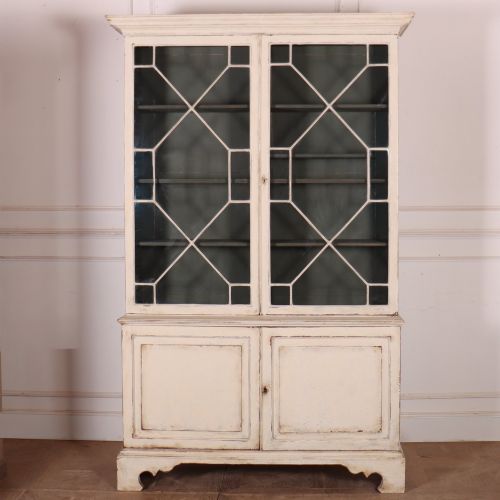
The pieces listed on this page span the eighteenth and nineteenth centuries, stretching into early twentieth-century revivals like Edwardian interpretations. Mahogany and oak dominate the selection, often enhanced by flame veneers, satinwood inlay, or painted finishes.
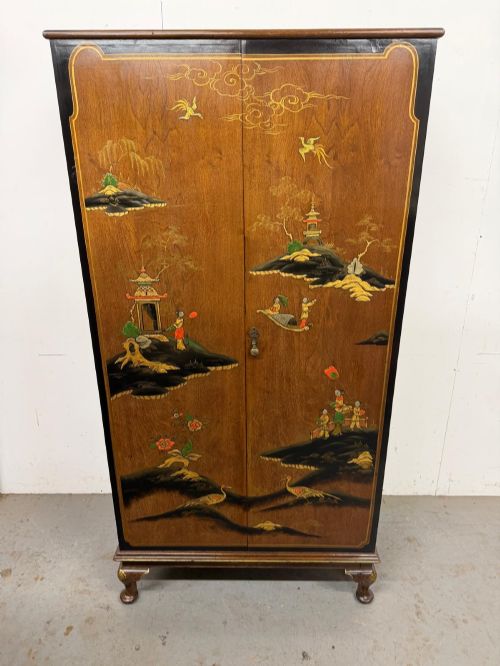
Forms vary from tallboy linen presses to shallow hall wardrobes and housekeepers cupboards. Whether you inspect a George III original or a later revival piece, the dual-section silhouette remains the defining characteristic.
Assessing quality in a press cupboard
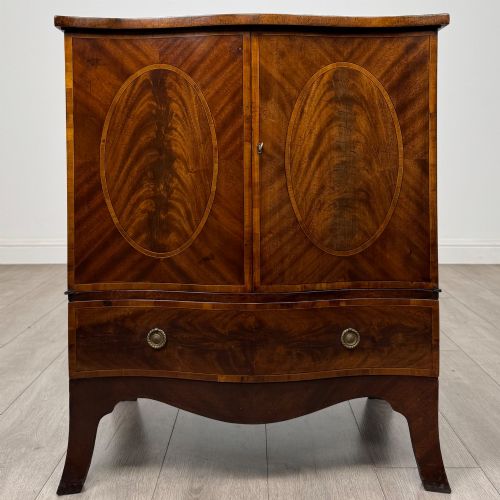
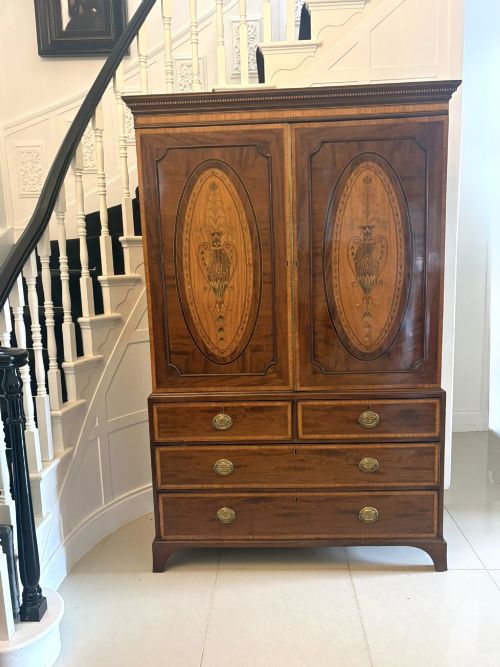
The choice of timber grain sets superior examples apart, particularly where figured mahogany or matched flame veneers create symmetrical patterns across large doors. Finer pieces demonstrate restraint in their carved detail and precision in the banded inlay work.
Structural harmony between the upper press and lower chest dictates the overall success of the piece, alongside the preservation of original brass hardware and internal sliding trays. A faded, untouched patina earned through age elevates the standing of nineteenth-century revivals and eighteenth-century originals alike.
Listings feature mahogany, oak, pine, and walnut, complemented by brass hardware and satinwood inlay.
Gillows
The Georgian Style Press Cupboard Glossary
- Linen Press
- A large cabinet designed specifically for storing folded sheets and textiles, typically featuring sliding trays behind upper doors. These internal trays distinguish the press from a standard hanging wardrobe.
- Housekeepers Cupboard
- A utilitarian storage piece traditionally used in large domestic kitchens or corridors for provisions and household linens. They often combine deep lower drawers with spacious upper cupboards.
- Flame Mahogany
- A wood veneer cut from timber fork sections where branches join the main trunk, creating a distinctive flickering flame pattern. Cabinet makers reserved this highly decorative veneer for principal drawer fronts and door panels.
- Satinwood Inlay
- Contrasting light-coloured wood inserted into recesses on a darker primary timber to form geometric borders or decorative motifs. This technique brightened mahogany facades during the late eighteenth and nineteenth centuries.
- Compactum
- A multi-functional wardrobe designed to maximise internal storage by dividing the interior between hanging space, shelves, and drawers. These pieces became particularly prevalent during the Edwardian period.
Georgian Style Press Cupboard: Frequently Asked Questions
What is a georgian style press cupboard used for today?
These large cabinets provide versatile storage for modern bedrooms, hallways, or living rooms, easily accommodating folded clothing, linen, or media equipment.
The deep lower drawers and upper shelved compartments help organise household items while adding distinct architectural character to a room.
How do I tell an 18th century piece from a later revival?
Examine the secondary timbers inside the drawers and the construction methods used on the backboards and drawer linings. Eighteenth-century pieces generally show hand-cut dovetails and timber characteristics consistent with period workshop practices.
Later Victorian and Edwardian revivals often utilise machine-sawn elements and standardised fixings while faithfully copying the earlier Georgian proportions.
What is the difference between a wardrobe and a press cupboard?
A traditional wardrobe focuses primarily on vertical hanging space for garments behind full-length doors. A press cupboard incorporates internal sliding trays or shelves within the upper section, designed specifically for flat textiles and folded linens.