
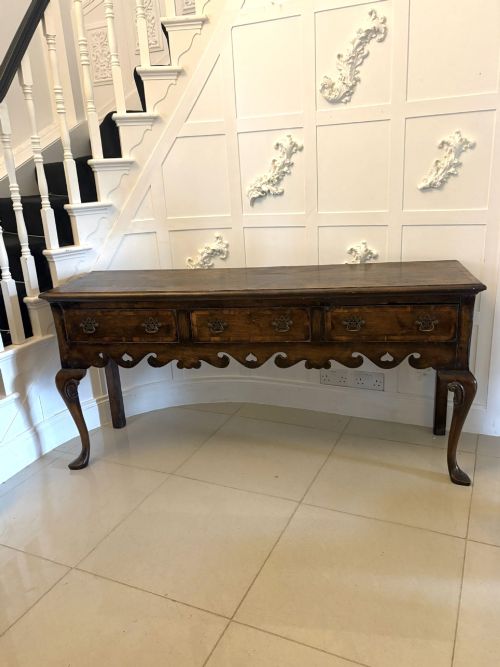
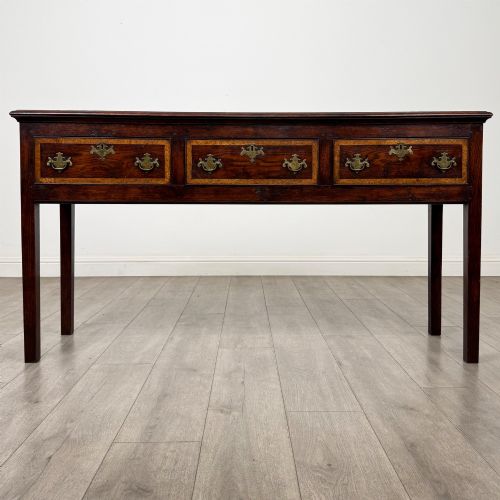
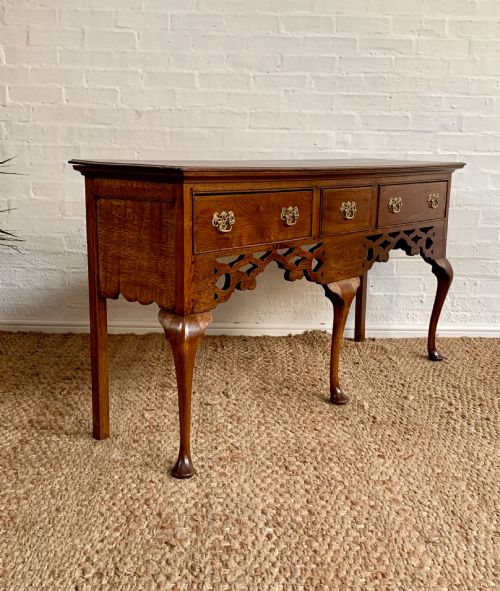
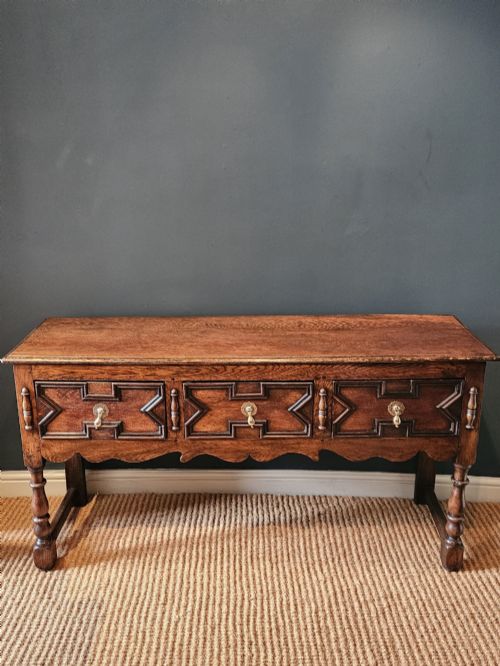



Georgian Style Oak Sideboard
A georgian style oak sideboard brings rustic warmth and classical proportions into a room, offering sturdy storage rooted in centuries of cabinetmaking tradition.
Georgian Style Oak Sideboard
When you search for a georgian style oak sideboard, you encounter robust forms closely linked to dresser bases, console tables, and servers. These pieces combine utilitarian origins with the refined symmetry characteristic of earlier British design traditions.
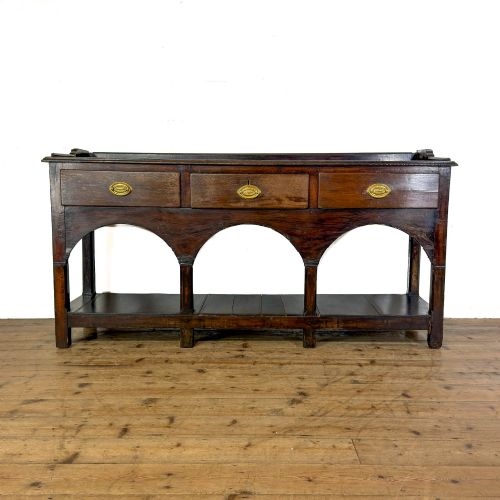
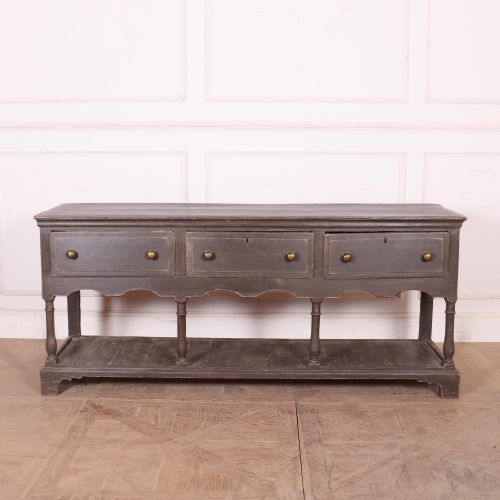
The selections span genuine period examples alongside later revivals from the nineteenth and early twentieth centuries. You will frequently find pieces featuring three drawers, potboards, or enclosed cupboards suited to modern living spaces.
Origins stretch from English country workshops to Welsh domestic settings, reflecting varied regional preferences in timber selection and decorative carving. The overarching aesthetic remains grounded in functional storage with enduring presence.
Materials and construction methods
Construction relies primarily on solid oak, frequently chosen for its durability and prominent grain pattern. Secondary timbers such as pine sometimes appear in internal drawer linings or backing boards.
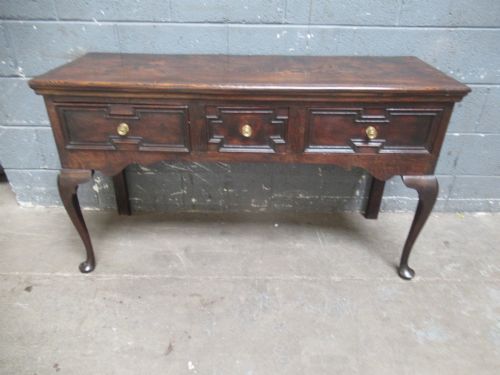
Surface finishes range from natural honey tones to painted timber treatments and geometric mouldings. Brass hardware often accents the drawers and doors, providing functional handles and escutcheons.
Some nineteenth-century makers had such a soft spot for earlier centuries that they built brand new furniture disguised as ancient monarch time capsules.
Distinguishing quality in craftsmanship
Quality reveals itself in the crispness of carved details and the structural integrity of the joints. Finer examples display thoughtful timber selection where grain patterns align harmoniously across the facade.
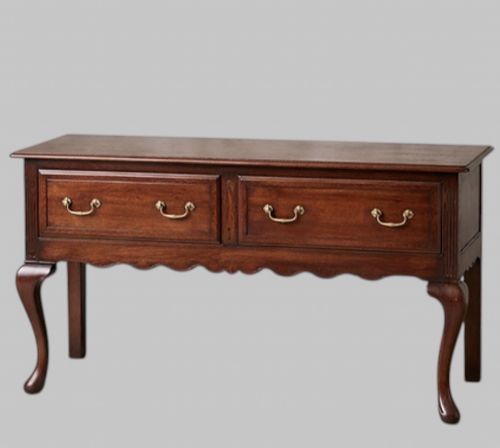
The sophistication of the design, whether through restrained geometric mouldings or elegant cabriole legs, separates standard utility items from more ambitious cabinet work.
The Georgian Style Oak Sideboard Glossary
- Potboard
- An open lower shelf built into a dresser base or sideboard, traditionally used for storing ceramic pots and heavy kitchenware.
- Dresser base
- A low cabinet featuring drawers and sometimes cupboards, serving the same function as a modern sideboard.
- Cabriole leg
- A furniture leg that curves out and then in, mimicking the shape of an animal's leg with a bent knee.
- Geometric moulding
- Raised wooden profiling arranged in repeating symmetrical patterns, frequently seen on seventeenth and eighteenth-century drawer fronts.
- Court cupboard
- An enclosed antique storage piece with upper and lower tiers, constructed heavily in solid oak.
Georgian Style Oak Sideboard: Frequently Asked Questions
What is the difference between a sideboard and a dresser base?
A sideboard and a dresser base often describe similar low storage furniture with drawers, though dresser bases historically served domestic food preparation and display.
Many pieces listed under these terms share identical proportions, making them equally adaptable for dining rooms or hallways.
How do I date an oak sideboard?
Dating relies on examining construction marks, timber characteristics, and stylistic details such as hardware and moulding profiles.
Earlier pieces show hand-tool marks and pegged joinery, while revival pieces from later centuries adopt historical idioms using contemporary workshop methods.
Are painted oak sideboards original?
Some period country furniture received painted finishes during its working life to protect the timber or update its appearance.
Later decorative painting also appears on revival pieces, adding colour and texture while retaining the underlying traditional form.
How should I care for antique oak furniture?
Maintain oak surfaces by keeping them away from direct heat sources and sudden humidity changes to prevent the timber from splitting.
Regular dusting and occasional application of appropriate natural waxes will preserve the lustre of the grain over time.