

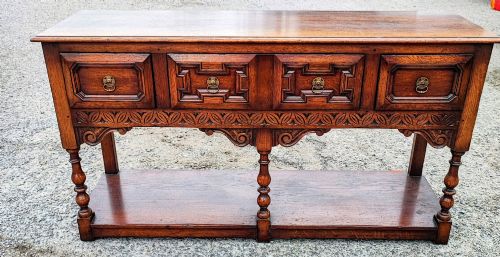
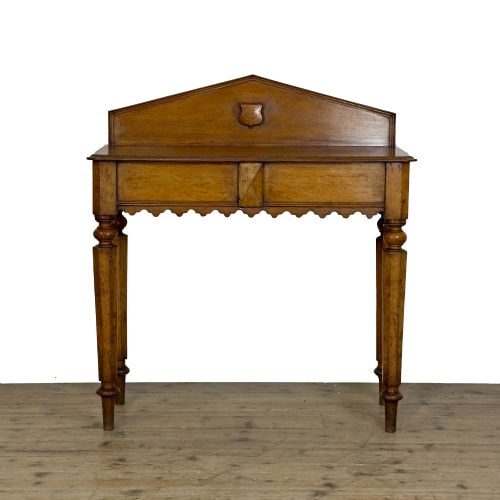
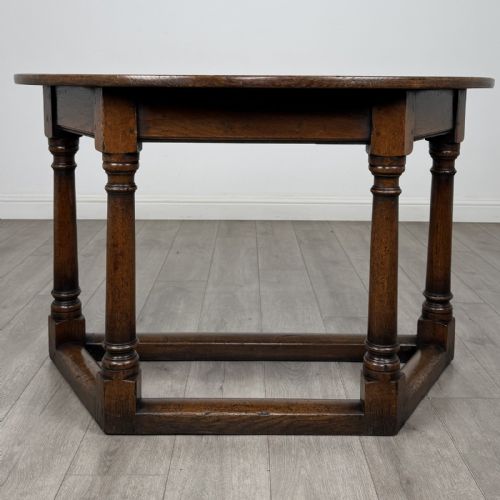
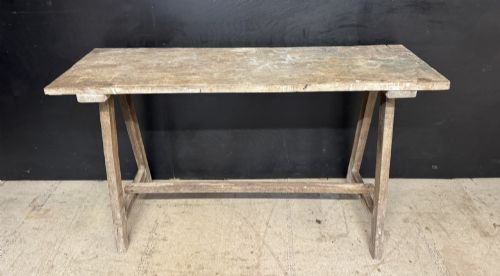



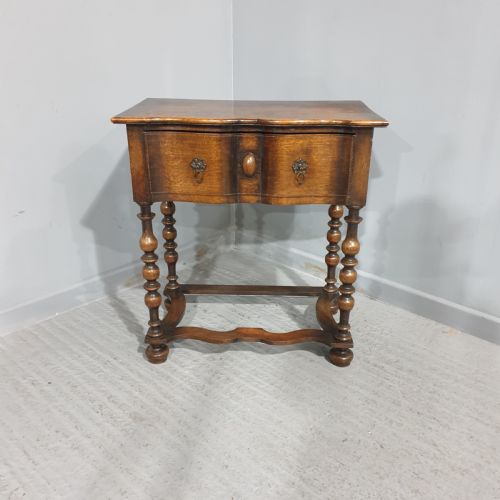
Traditional Oak Hallway Table
A traditional oak hallway table anchors an entrance with dependable timber and practical surface space.
Traditional Oak Hallway Table
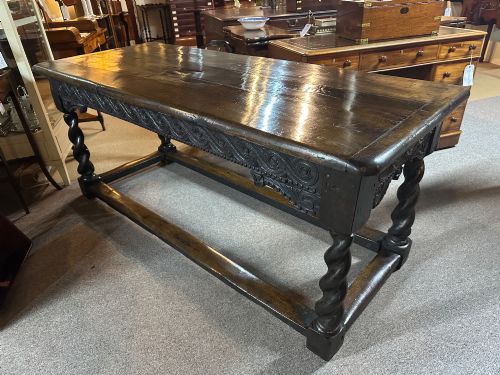
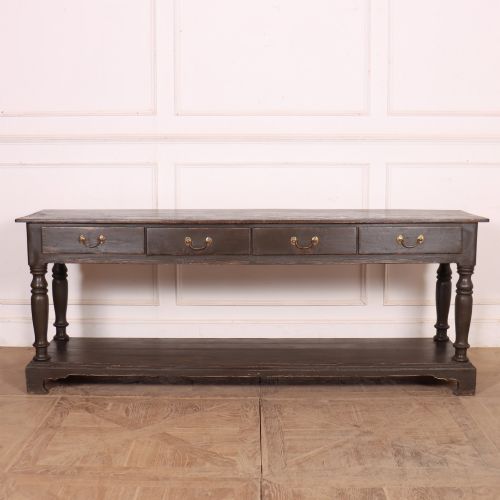
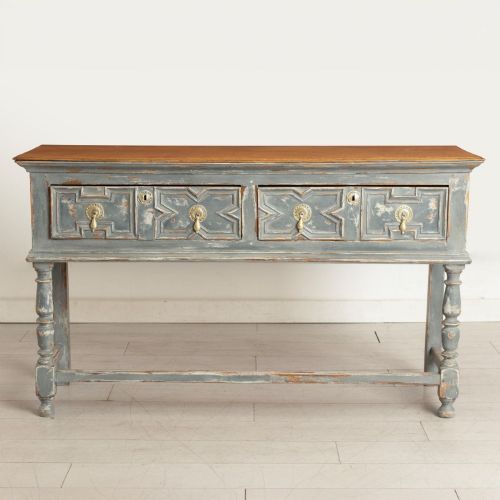
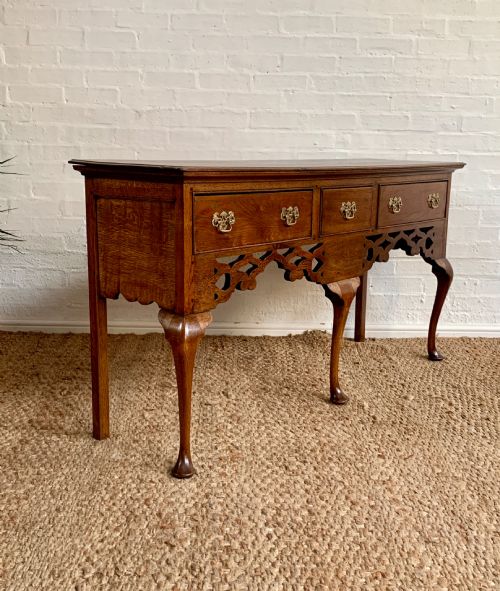
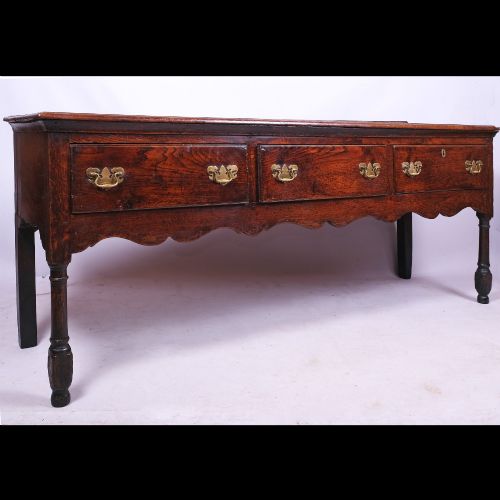
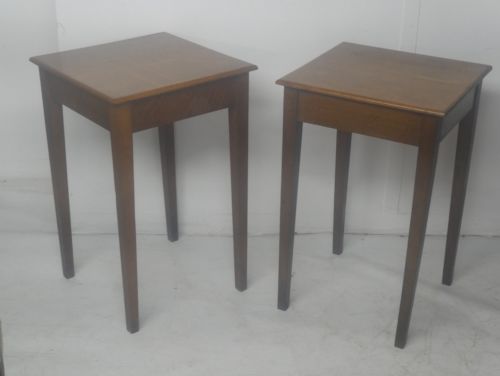
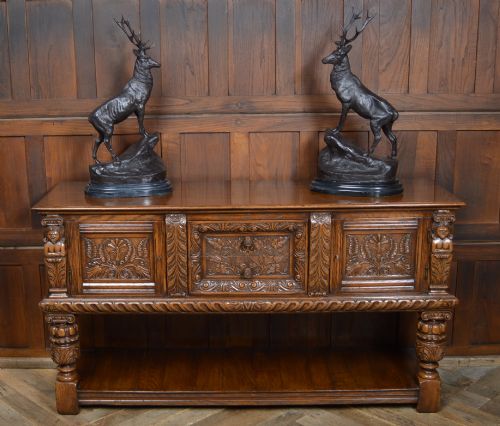
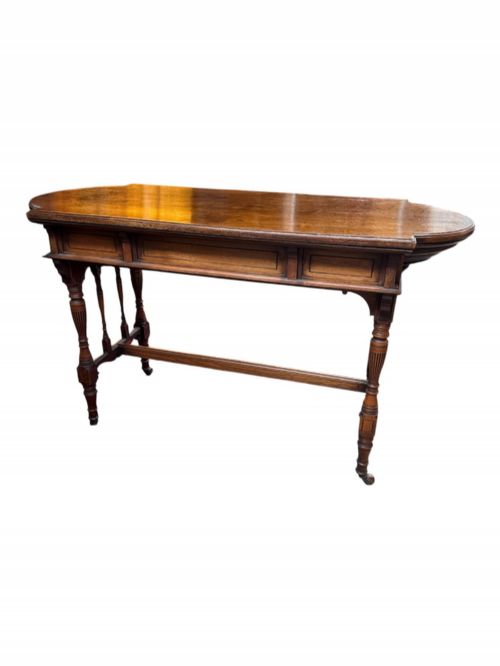
A traditional oak hallway table serves as the first point of utility upon entering a home, offering sturdy surfaces and practical storage. The pieces gathered under this term span several decades and centuries, ranging from compact side tables to long dresser bases and hall benches. You will frequently encounter Edwardian examples alongside earlier 18th century and 19th century items.
The selection includes console tables, lamp tables, and monks benches that double as seating with lift-up lids. Styles lean towards English country, rustic farmhouse, and Jacobean revival, reflecting the enduring appeal of heavy timber in domestic spaces. These forms provide the necessary scale for narrow corridors and grander entrance halls alike.
What varies in quality
The distinction between ordinary and superior pieces rests on the selection of the timber and the crispness of any carved ornamentation. Heavier construction, thoughtful proportions for narrow spaces, and well-figured grain separate finer examples from standard utility items.
Original hardware, integrated pot boards, and clean structural integrity further elevate certain tables above simpler workshop productions. The coherence of revival styling, such as faithful Queen Anne or Jacobean details, also marks out the more accomplished pieces.
Traditional Oak Hallway Table Retail Price Guide 2026
Typical asking prices for traditional oak hallway table among the pieces listed under this phrase on Sellingantiques today, from the lower quarter to the upper quarter. They describe what is for sale here now, not the wider market.
Some oak benches double as secret storage boxes with lift-up seats and fold-over tops for unexpected letters.
The Traditional Oak Hallway Table Glossary
- Dresser base
- A low sideboard or table with drawers, originally used in kitchens or dining areas for food preparation and storage.
- Pot board
- An open lower shelf fitted between the legs of a dresser base or table, traditionally used for storing pots and pans.
- Monks bench
- A multifunctional piece of furniture featuring a hinged top that converts a bench seat into a table.
- Demi lune
- A half-moon shape, typically describing a console table designed to sit flush against a wall.
- Jacobean Revival
- A style of design popular in the 19th and 20th centuries that emulates the heavy, carved oak furniture of the 17th century.
Traditional Oak Hallway Table: Frequently Asked Questions
What is a traditional oak hallway table used for?
These tables provide a convenient surface in entryways for everyday items like keys, post, and decorative lamps. Many versions also incorporate drawers, shelves, or integrated seating to maximise utility in limited spaces.
They help maintain an organised entrance while introducing natural wood grain and period character to the home.
How do I date a traditional oak hallway table?
Dating relies on observing construction methods, timber patination, and stylistic details such as carved motifs or leg shapes. Pieces span from the 18th century through the Victorian and Edwardian eras into the 1930s.
Revival styles often borrow elements from earlier centuries, so examining the backboards, fixings, and wear patterns helps clarify the true age of the piece.
Will an oak hallway table fit a narrow corridor?
Many forms in this category, particularly narrow side tables and demi lune console tables, are specifically proportioned for compact spaces. Their shallow depth allows them to sit against a wall without obstructing passage.
Measuring the available corridor width against the table dimensions ensures smooth clearance for doors and movement.
What maintenance does solid oak furniture require?
Solid oak benefits from occasional dusting with a soft cloth and minimal exposure to direct heat sources or strong sunlight. Maintaining a stable indoor environment prevents the timber from drying out or splitting.
Periodic application of appropriate wax polish helps nourish the surface and preserve the natural lustre of the wood.