



Georgian Style Mantel Clock
A georgian style mantel clock brings traditional timber and gilt bronze into a room, offering both reliable timekeeping and period character.
Georgian Style Mantel Clock
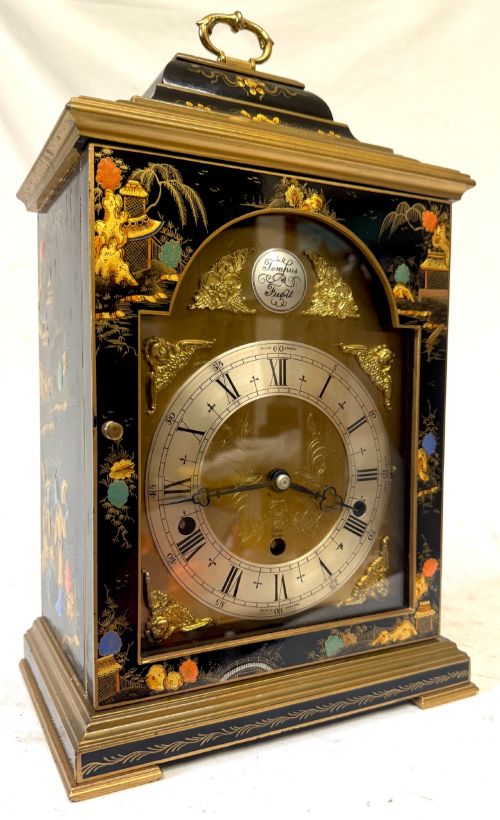
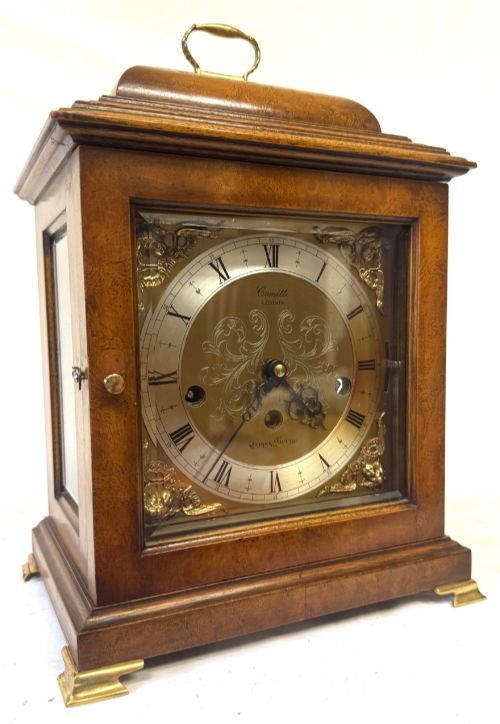
A georgian style mantel clock takes the classic forms of the eighteenth century and reproduces them across various later periods, including Regency, Victorian, Edwardian, and mid-twentieth century revivals. These timepieces typically manifest as bracket clocks, table clocks, and library clocks designed to sit on a mantelpiece or shelf.
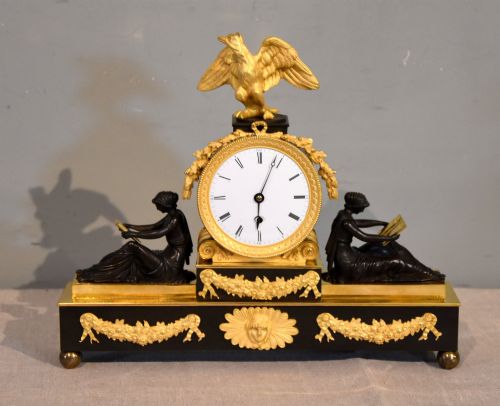
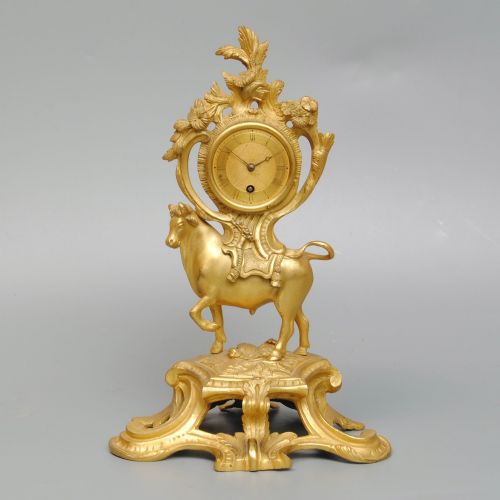
The materials span rich woods like mahogany, burr walnut, and pollard oak, alongside metal cases of brass, ormolu, and gilt bronze. Many examples incorporate glass panels, silvered dials, and enamel faces to display the intricate movements within.
Buyers encounter pieces ranging from authentic Regency originals to twentieth-century revivals by makers such as Comitti of London and Elliott. The forms vary from break-arch wooden cases to elaborate architectural or figural bronze housings.
How they were made
Cabinetmakers constructed the wooden housings using solid and veneered timbers like mahogany, walnut, and satinwood, frequently employing intricate inlay techniques and polishing the surfaces to a deep sheen. Metal cases relied on cast brass, ormolu, and gilt bronze, often incorporating patinated finishes and delicate mounts.
Horologists fitted these enclosures with mechanical movements, utilising fusee systems, single or multiple trains, and chiming mechanisms such as Westminster strikes. Dials received careful treatment through silvering, enamel work, and hand-painted numerals.
Listings feature cases spanning mahogany, burr walnut, pollard oak, brass, and gilt bronze across Regency, Victorian, and Edwardian periods.
What varies in quality
The standard of a piece depends heavily on the crispness of the cabinetwork and the precision of the cast metal mounts. Finer clocks display hand-selected timber veneers, tight joinery, and well-proportioned architectural details rather than cast-moulded shortcuts.
Movement sophistication also dictates value, with multi-train fusee mechanisms and signed dials marking out the more accomplished workshops. The integration between the clock case and its internal movement reveals the care taken during assembly.
Mappin & Webb·Viner·Garrards·Paul Philip Barraud·Pennington·McCabe·FB Adams London·Baldwin of Loughborough·Bently & Beck·Comitti Of London·Elliott
The Georgian Style Mantel Clock Glossary
- Fusee
- A conical pulley used in spring-driven clocks to equalise the torque of the mainspring as it unwinds. This mechanism helps maintain steady timekeeping accuracy across the power reserve.
- Bracket clock
- A portable table clock originally designed to sit on a wall bracket to aid in projection of sound. Later examples simply rested on mantelpieces or tables.
- Ormolu
- Gilt bronze produced by applying a mercury and gold amalgam to a bronze base and firing it. This technique creates a durable golden finish seen on classical mounts.
- Break-arch
- A cabinet top shape featuring a central arched section flanked by smaller horizontal steps. This silhouette is common in traditional clock case design.
- Silvered dial
- A brass clock face treated with a silver solution to create a matte metallic finish. Numerals and text are typically engraved and darkened for legibility.
Georgian Style Mantel Clock: Frequently Asked Questions
How do I wind a fusee mantel clock?
Winding requires a dedicated key inserted into the dial arbor, turning it slowly clockwise until resistance stops the movement. Care must be taken not to overwind the mainspring.
Most chain or gut fusee clocks require winding once a week or every eight days. Keeping a consistent winding schedule preserves the tension on the movement.
Where should I place my mantel clock?
Position the clock on a stable, level surface away from direct sunlight, radiators, and damp exterior walls. Wooden cases expand and contract with temperature shifts.
Placing the clock on a solid mantel or sideboard ensures the pendulum or balance wheel operates without interference. A level base keeps the tick even and prevents stopping.
How do I tell an original Regency clock from a later revival?
Examine the construction of the movement plates, screw types, and timber ageing beneath the surface. Regency pieces show hand-cut components and period-specific brass casting techniques.
Revival pieces from the Edwardian era or mid-twentieth century often utilise standardised modern screws and machine-finished plates. Maker signatures and style cues also help anchor the date of production.
Why does my clock chime different tunes?
Many multi-train bracket clocks feature musical movements capable of playing melodies like Westminster chimes on bells or gongs. These mechanisms use pinned cylinders or stacked chime barrels.
A selector lever usually allows the owner to switch between chime melodies or silence the strike entirely. The complexity of the train dictates how many distinct tunes the movement offers.
How do I care for the wood and ormolu case?
Dust the timber and metal surfaces regularly with a soft, dry lint-free cloth to prevent grime accumulation. Avoid using modern aerosol sprays or silicone polishes.
Occasional application of pure beeswax preserves polish on mahogany and walnut cases. Ormolu mounts require gentle cleaning without abrasive agents that strip the mercury gilt layer.