

Georgian Style Chest of Drawers
These georgian style chest of drawers pieces bring classic proportions and timber grain into a room, offering practical storage with distinct period character.
Georgian Style Chest of Drawers
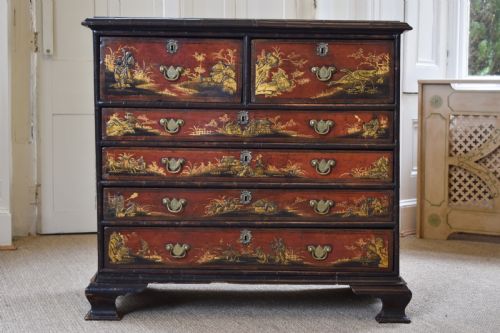
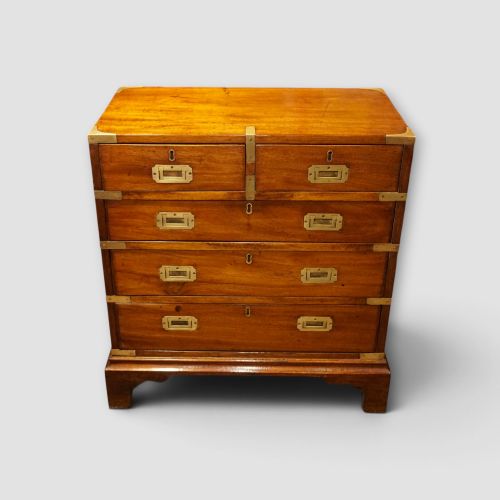
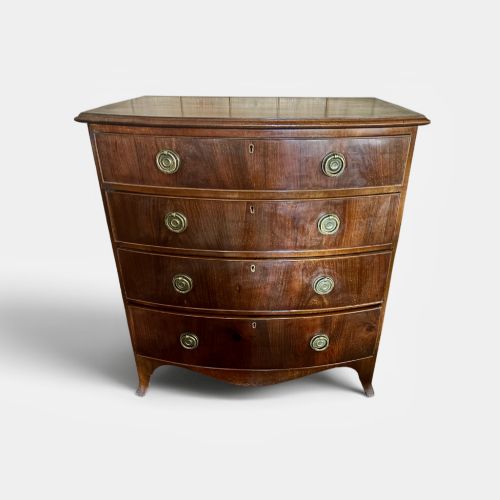
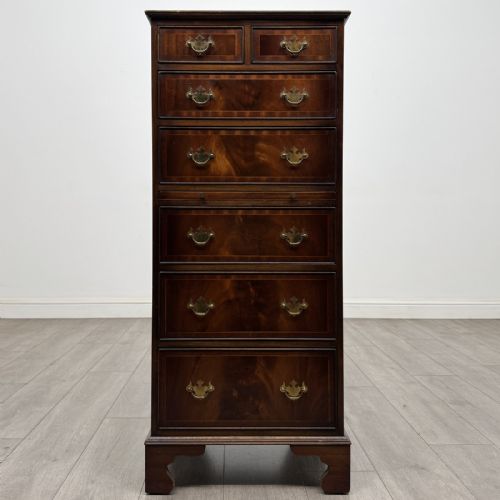
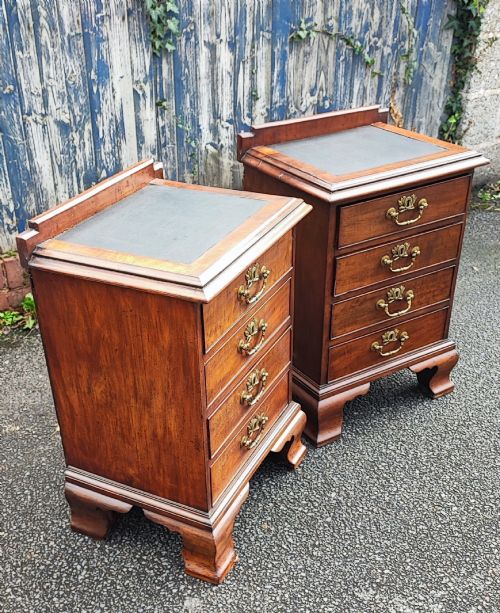
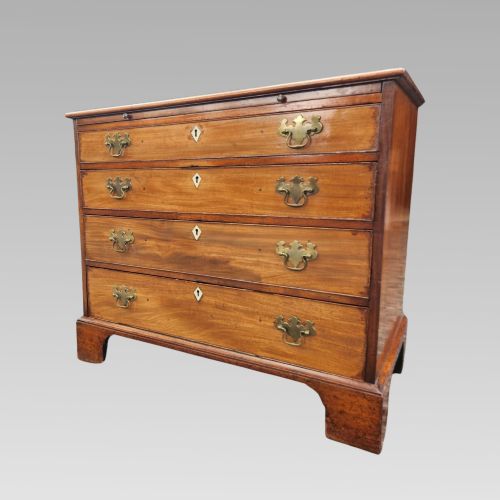
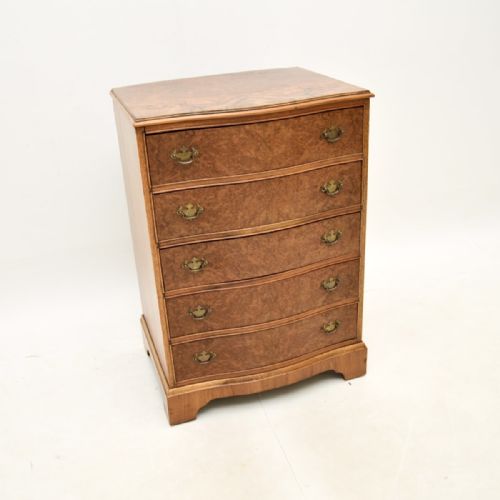
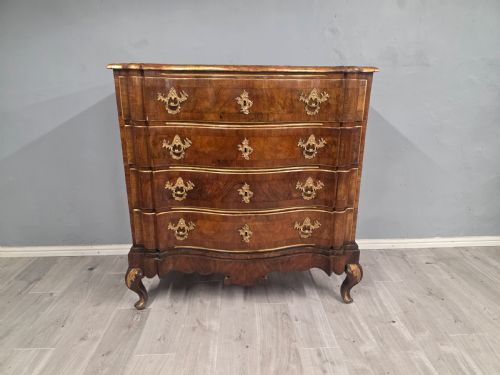
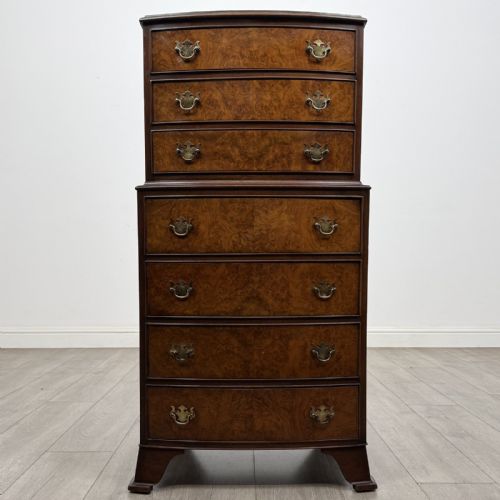
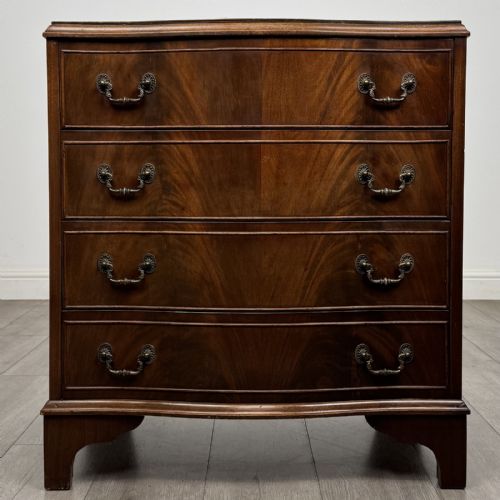
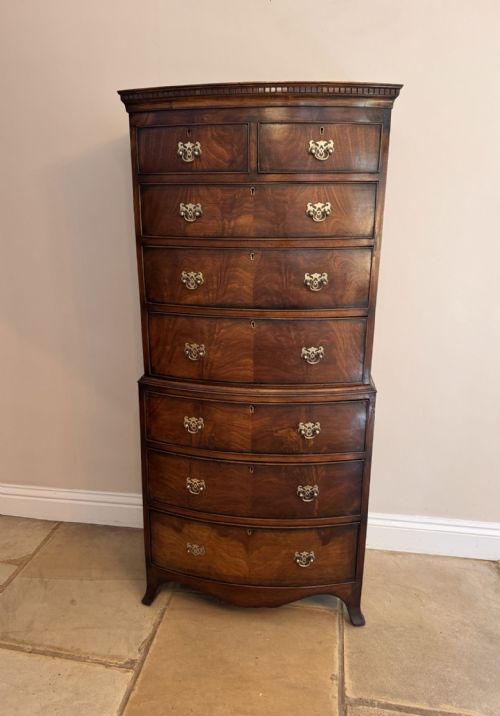
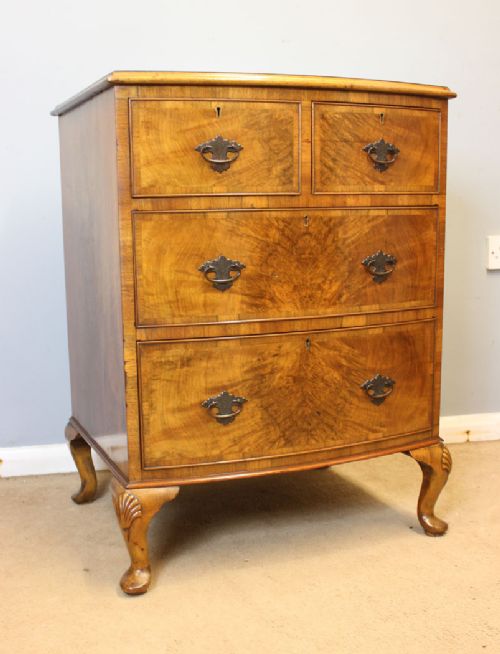
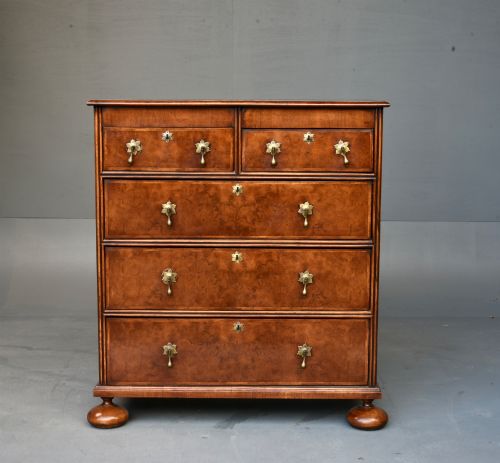
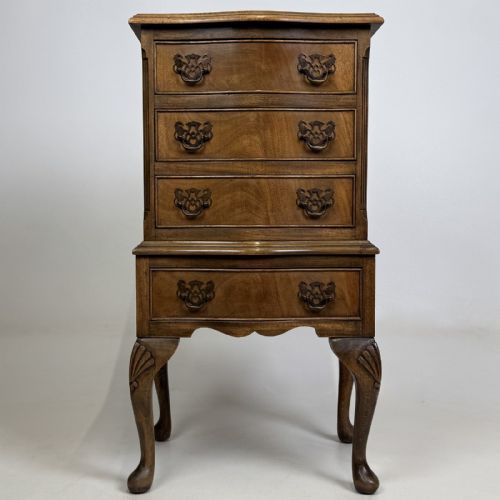
When you search for a georgian style chest of drawers, you encounter pieces originating from the eighteenth century up to twentieth-century revivals. The forms span tallboys, bow fronts, serpentine commodes, and bachelor chests with bracket feet or cabriole legs.
The most common examples on this page are revival pieces from the early twentieth century alongside genuine Georgian originals. Mahogany and burr walnut dominate the selection, often finished with crossbanding and boxwood inlay.
Makers such as Whytock and Reid and Reprodux appear alongside period items, demonstrating how cabinetmakers adapted traditional designs across different eras. Oak and yew also feature in smaller formats and country house variants.
Materials and construction
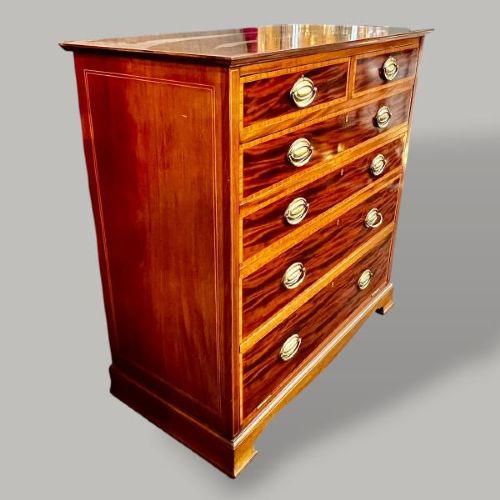
Cabinetmakers utilised solid timbers and figured veneers, selecting mahogany, burr walnut, and oak for their structural strength and rich grain patterns. Crossbanding and boxwood inlay frame the drawer fronts, adding geometric contrast to curved and straight surfaces.
Drawer construction relies on hand-cut dovetails, while brass handles, escutcheons, and occasional ormolu mounts secure the functional elements. Bracket feet, plinth bases, and bracketed supports distribute weight evenly beneath the carcase.
Georgian Style Chest of Drawers Retail Price Guide 2026
Typical asking prices for georgian style chest of drawers among the pieces listed under this phrase on Sellingantiques today, from the lower quarter to the upper quarter. They describe what is for sale here now, not the wider market.
Assessing craftsmanship and finish
The degree of refinement in the timber selection dictates the visual impact, particularly where matched burr walnut or figured mahogany veneers flow symmetrically across the drawer fronts. Finer pieces demonstrate precise joinery in the drawer linings and smooth operation in sliding mechanisms like brushing slides.
Proportion and decorative restraint separate standard production from superior examples. Sharply defined mouldings, crisp inlay work, and original brass hardware elevate a piece above simpler utilitarian versions.
Whytock and Reid·Reprodux
The Georgian Style Chest of Drawers Glossary
- Serpentine
- A shaped front curving outward at the sides and inward at the centre. This undulating profile requires skilled carpentry to execute on solid timber or veneer.
- Tallboy
- A tall chest of drawers standing upon another chest or a base stand. It maximises vertical storage space while maintaining a compact footprint.
- Crossbanding
- A border of veneer laid around the perimeter of a drawer front with the wood grain running perpendicular to the central panel. It creates a contrasting visual frame.
- Brushing slide
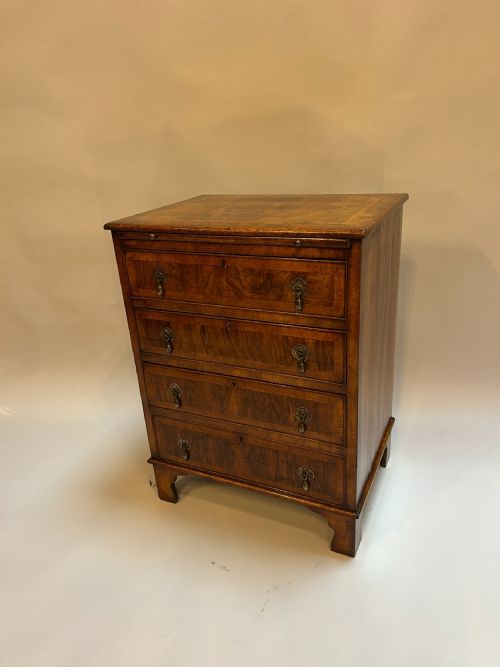
- A pull-out shelf positioned above the top drawers. Historically utilised as a writing surface or for brushing clothes.
- Bracket feet
- Corner feet formed by two mitred pieces meeting at a bracket, common on eighteenth and twentieth-century case furniture.
Georgian Style Chest of Drawers: Frequently Asked Questions
How do I spot a revival piece?
Twentieth-century revival pieces often display standardised interior secondary timbers and machine-cut construction details hidden behind traditional exterior styling.
Examine the drawer linings and backboards to differentiate between eighteenth-century hand-tool methods and later manufacturing processes.
Where should I place a bow front chest?
A bow front chest requires sufficient clearance to let its curved projection command the wall without obstructing walkways in a bedroom or hallway.
Pair the piece with a plain backdrop to highlight the curved drawer configuration and timber grain.
What is a brushing slide used for?
Historically, the pull-out slide served as a temporary writing desk or a surface for folding garments.
Today, it operates as a functional shelf for staging small items or brief tasks without opening the main drawers.
Are tallboys stable on modern floors?
Tall furniture relies on proper weight distribution and wall fixings if floor levels are uneven.
Heavier items belong in the lower drawers to maintain balance across the entire carcase.