
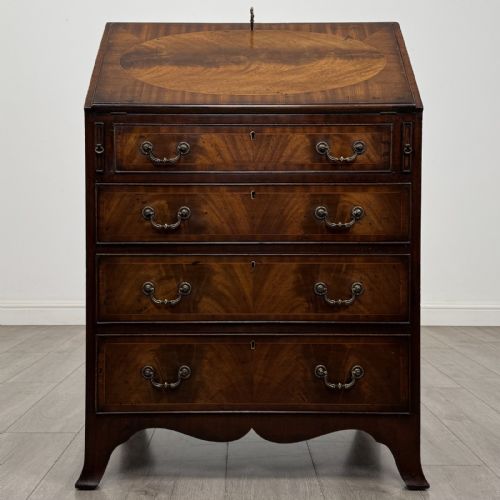
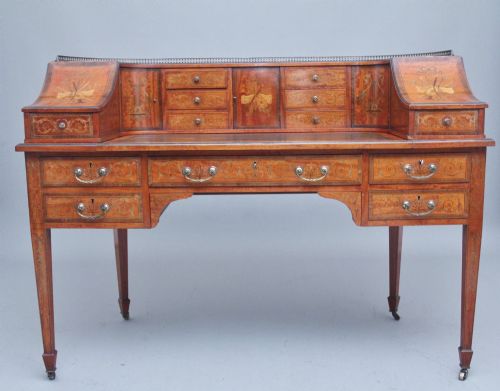
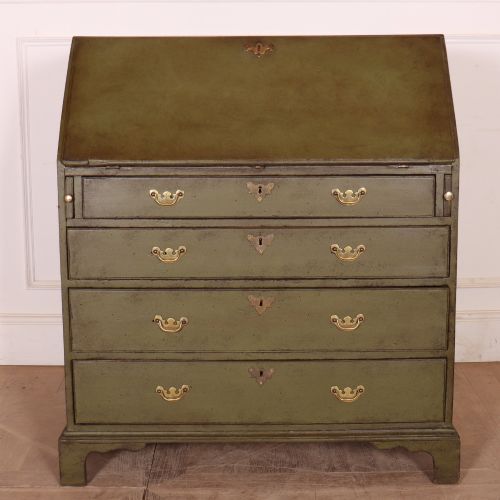


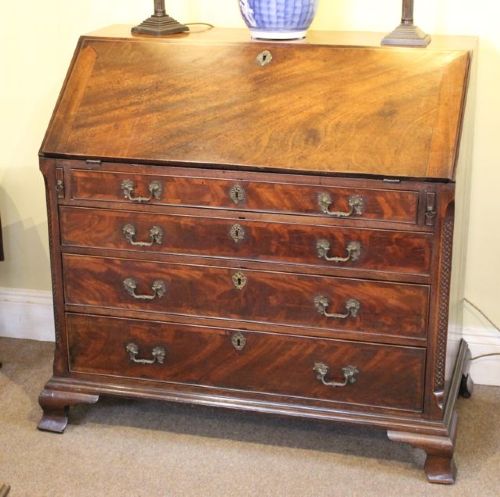
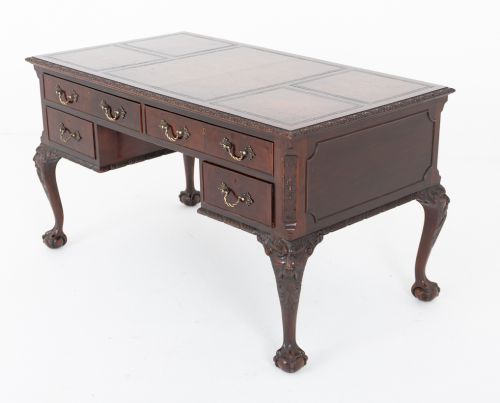
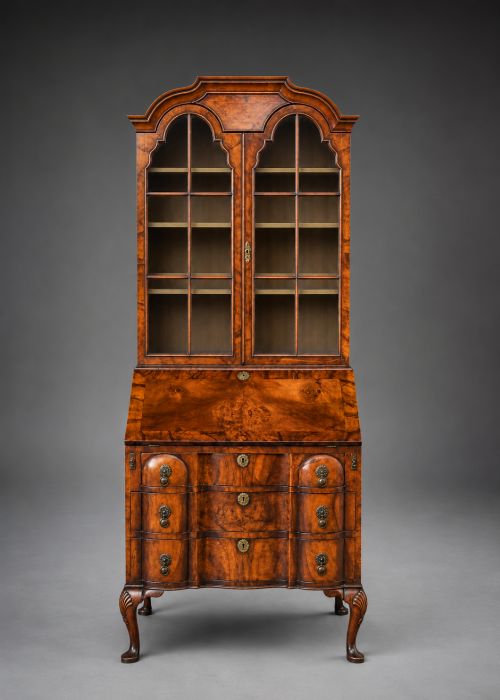
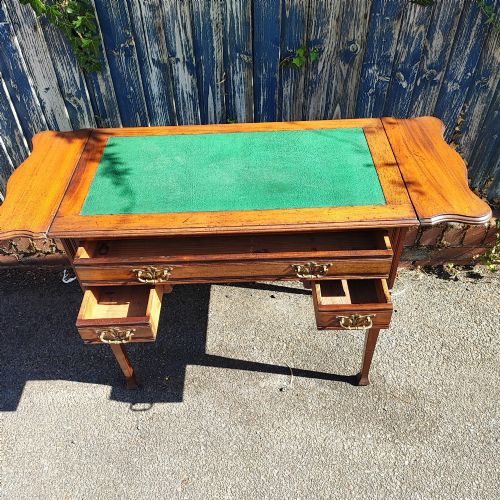
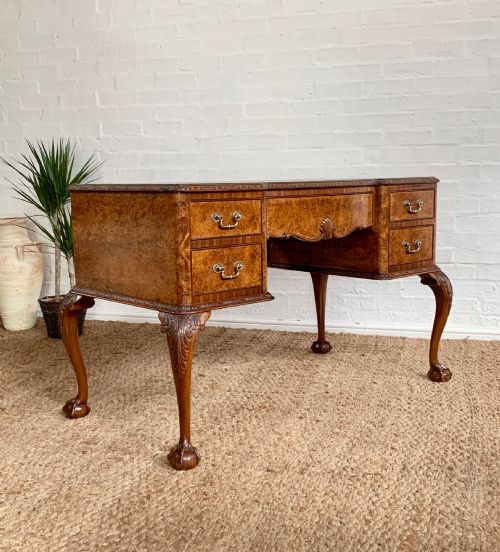
Georgian Style Bureau Desk
A georgian style bureau desk brings centuries of refined writing space and fitted pigeonholes into a modern room.
Georgian Style Bureau Desk
When searching for a georgian style bureau desk, buyers encounter forms designed for correspondence and document storage, combining a sloping fall-front lid with a writing surface and interior compartments.
The versions most frequently met on this page include mahogany and walnut pieces built across various periods, ranging from eighteenth-century originals to later revival interpretations from the Edwardian era and the twentieth century.
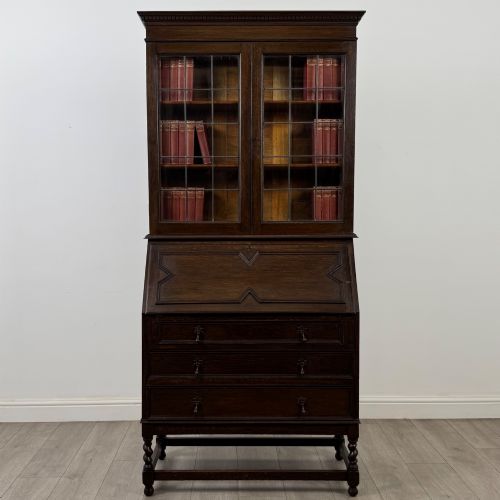
These items frequently incorporate nested drawers and pigeonholes hidden behind the primary writing flap, sometimes expanding upward into taller bookcase configurations or resting upon slender stands.
Materials and construction methods
Cabinetmakers utilised dense timbers such as mahogany, oak, and walnut, often applying decorative veneers like burr walnut, satinwood, and flame mahogany across the primary exterior surfaces.
Structural elements frequently involved brass handles and escutcheons, alongside inset leather writing surfaces that provided a durable panel for daily correspondence.
Joinery techniques relied on traditional dovetailed drawer construction and precise framing to support the heavy drop-front writing slopes.
Listings feature mahogany, oak, walnut, satinwood, and exotic padauk wood alongside brass and leather components.
Separating grades of craftsmanship
Quality rests upon the selection of timber figures and the precision of the underlying cabinetwork, where carefully matched veneers and unwarped writing flaps demonstrate superior workshop practices.
The intricacy of the interior arrangement dictates much of the distinction, separating simple partitions from complex nests of secret drawers and shaped pigeonholes.
Original brass hardware and the crispness of carved mouldings or inlaid stringing elevate individual pieces above standard production examples.
Tudor & Burrey·Maples of London
The Georgian Style Bureau Desk Glossary
- Bureau
- A writing desk featuring a sloping hinged lid that opens to reveal a fitted interior of small drawers and pigeonholes. This form provides a concealed workspace that can be locked shut when not in use.
- Secretaire
- A piece of furniture containing a built-in writing drawer or drop-front desk compartment. The term often applies to upper bookcase sections equipped with a pull-down writing surface.
- Burr walnut
- Timber harvested from the gnarled growth knots of walnut trees, yielding highly swirled grain patterns. Cabinetmakers sliced this wood into thin veneers for decorative drawer fronts and panel surrounds.
- Pigeonhole
- A small, open compartment within a desk interior designed for sorting letters and papers. These compartments frequently sit beneath small internal drawers.
- Kneehole desk
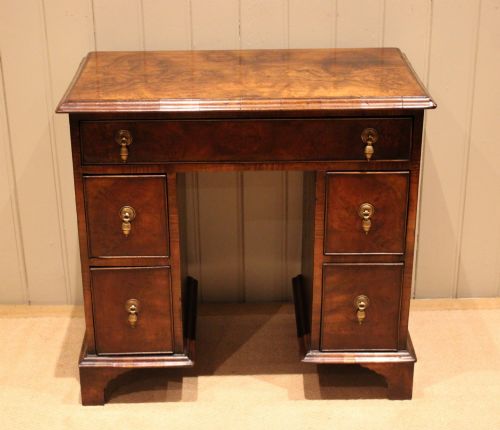
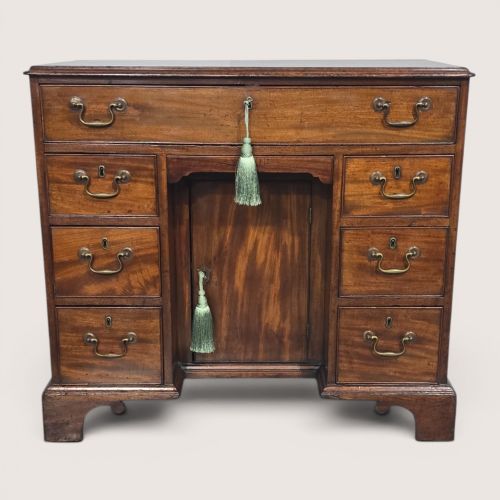
- A compact desk featuring a central recess for the user's legs, flanked by pedestals of stacked drawers. This configuration maximises storage space without enlarging the furniture footprint.
Georgian Style Bureau Desk: Frequently Asked Questions
How do I use a bureau desk?
Lower the hinged writing flap until it rests flat upon the pull-out support arms, exposing the inner compartments and creating a stable platform for writing letters.
Store stationery and documents within the pigeonholes and small interior drawers before closing and locking the sloping lid to keep the workspace tidy.
Are these desks suitable for laptops?
Many of these writing surfaces accommodate modern compact laptops within the internal dimensions of the open flap, provided the depth of the drop-front matches the device size.
Measure the interior writing surface carefully before placing electronic equipment inside, as historical proportions often cater to ledgers and paper rather than modern technology.
How do I tell an 18th century piece from a revival?
Eighteenth-century examples display construction methods appropriate to their period, including hand-cut dovetails, specific timber ageing, and native secondary woods behind the primary facades.
Revival pieces from the Edwardian era or the twentieth century often utilise standardised machine-sawn components and different interior framing while copying earlier proportions.
How should I care for walnut veneer?
Protect the thin wooden veneers by maintaining stable room humidity and keeping the furniture away from direct sources of heat and strong sunlight.
Apply occasional appropriate wax polish and buff gently with a soft cloth to nourish the grain without causing moisture damage to the finish.