



Georgian Sterling Silver Pot
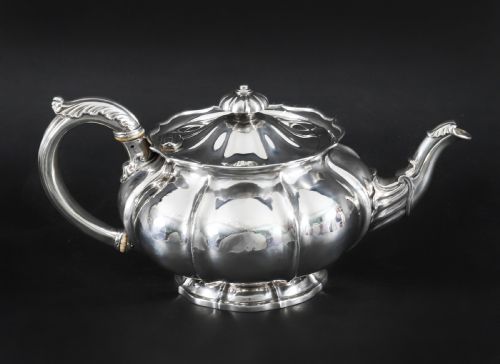
When you explore a georgian sterling silver pot, you handle functional vessels shaped by eighteenth and nineteenth century silversmiths for tea, coffee, and condiments.
Georgian Sterling Silver Pot
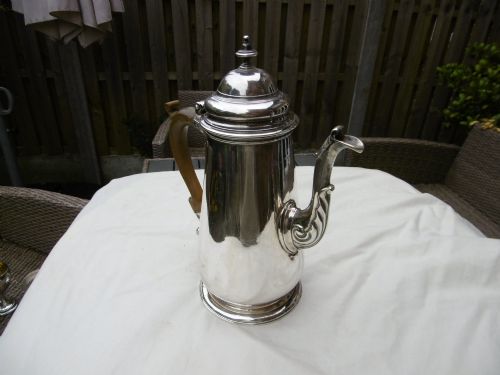
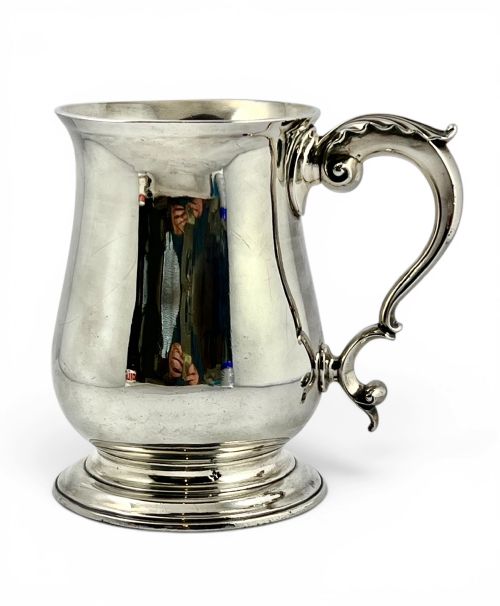
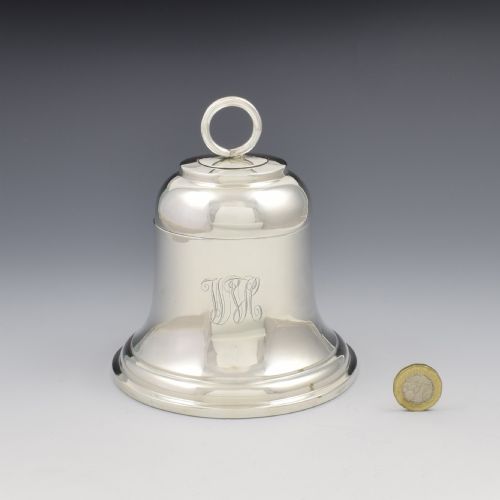
A georgian sterling silver pot encompasses several domestic vessel forms created primarily for beverages and condiments. Teapots and coffee pots dominate the selection, accompanied by smaller vessels such as mustard pots, pounce pots, and pepper casters.
Makers shaped these utilitarian objects during the Georgian reigns, alongside later revivals spanning the nineteenth and early twentieth centuries. The primary metal used is sterling silver, frequently complemented by glass liners in mustard pots and wooden handles on teapots.
Buyers encounter provincial pieces from Newcastle and Dublin alongside major works originating in London workshops. These domestic vessels served formal dining and tea rituals across elite and middling households.
Materials and construction
Silversmiths hammered and cast sterling silver into hollowware bodies, soldering seams and attaching spouts and handles. Handles often incorporate insulating materials such as wood or bone to protect users from heat during tea service.
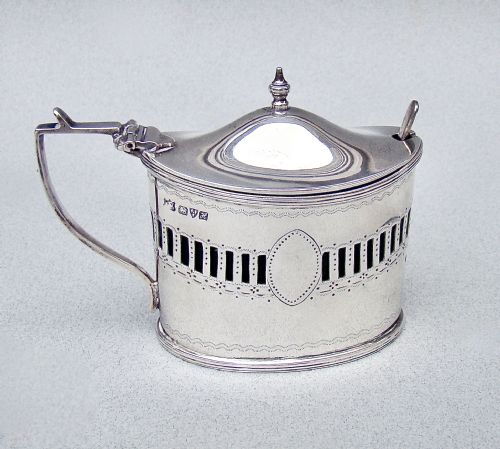
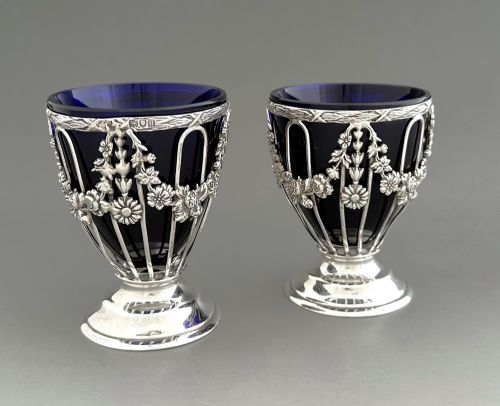
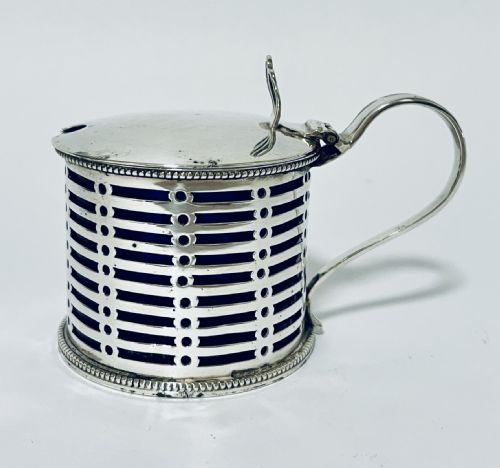
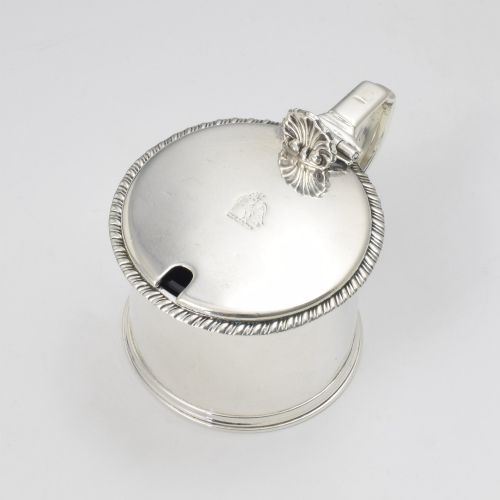
Vessels intended for condiments utilise blue cobalt glass liners inserted within pierced silver frames or solid drum mustard pots. Gilding appears inside specific vessels, providing a protective layer against acidic contents like mustard.
Listings feature sterling silver, cut glass, bone, and cobalt glass components across various serving forms.
Distinctions in execution
The weight of the silver body and the crispness of chased or engraved decoration separate standard utility items from masterworks. Prominent makers execute handles, finials, and cast feet with anatomical precision and balanced proportions.
The legibility of hallmarks stamped into the metal indicates official assay office standards and maker identity. Surviving original stands and matching liners enhance the integrity of tea and mustard sets.
Paul Storr·Richard Gurney·Charles Fox II·William Grundy·Edward Power·James Goodwin·Matthew Boulton·Robert Hennell I·Charles Stuart Harris·Thomas Pritchard·Robert Hennell II·Jonathan Douglas·Joseph Craddock·Alfred Marston·John Emes·Hester Bateman
The Georgian Sterling Silver Pot Glossary
- Sterling silver
- A silver alloy consisting of 92.5 percent pure silver and 7.5 percent other metals, typically copper, chosen for durability in tableware. This standard has governed British silversmithing for centuries.
- Pounce pot
- A small perforated container used to sprinkle sand or resin powder over freshly written ink to accelerate drying. These cylindrical or shaker-style vessels often match inkstands on writing desks.
- Mustard pot
- A small lidded vessel designed to hold prepared mustard on the dining table, frequently featuring a blue glass liner and a spoon. Silversmiths produced these in drum, pierced, and urn shapes.
- Castor
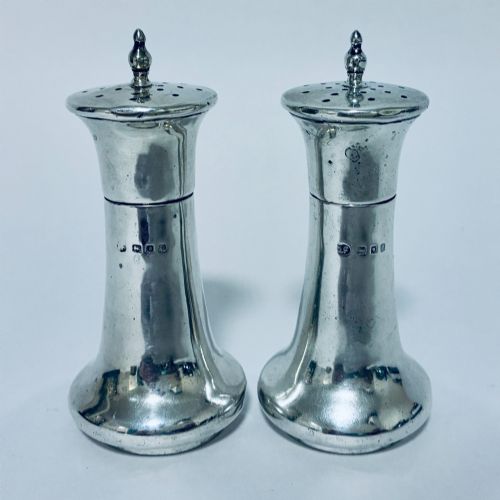
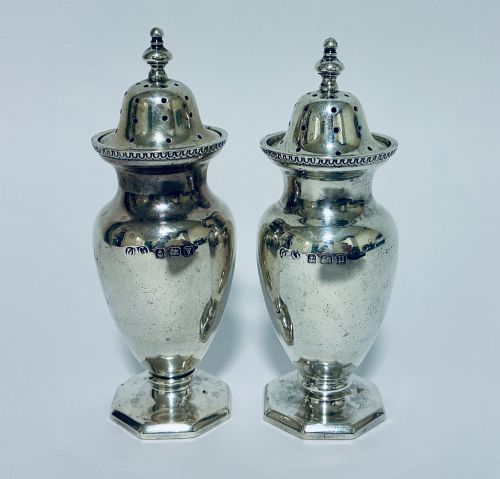
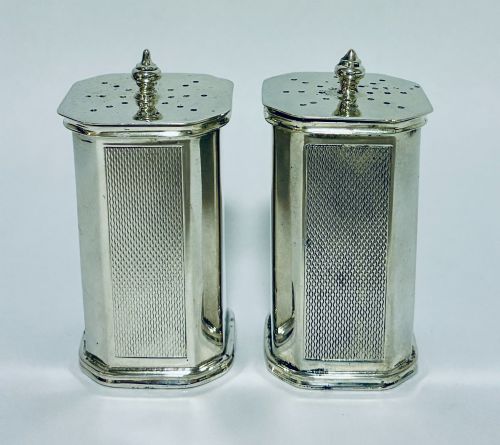
- A cylindrical table vessel with a pierced dome top used for shaking sugar, pepper, or other dry condiments onto food. Sets of three castors often appear together on a tray.
- Hallmark
- A series of stamped symbols on precious metal indicating the maker, assay office, standard of purity, and date of manufacture. These marks provide the primary evidence for dating antique hollowware.
Georgian Sterling Silver Pot: Frequently Asked Questions
What is a pounce pot used for?
A pounce pot held fine powder made from cuttlefish bone or sand, which writers sprinkled onto wet ink to absorb excess moisture.
Scribes and writers used this powder before blotting paper became common in offices and writing rooms.
How do I clean antique silver?
Antique silver requires gentle washing with warm soapy water and a soft cloth to preserve the surface and patina. Harsh abrasive polishes wear away engraved details and thin silver plating over time.
Storing pieces in dry conditions prevents accelerated tarnishing between uses.
Why do some mustard pots have glass liners?
Cobalt glass liners protected the sterling silver body from the corrosive acids present in prepared mustard.
These removable blue glass inserts allowed users to clean the vessel easily without damaging the silver interior.
How do I identify a Georgian teapot?
Georgian teapots feature hallmarks stamped on the base or body indicating London, provincial assay offices, and active eighteenth or early nineteenth century dates.
Stylistic markers include wooden scroll handles, cast finials, and restrained body shapes distinct from later Victorian ornamentation.