
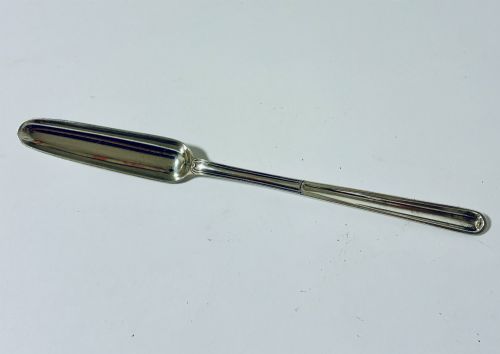
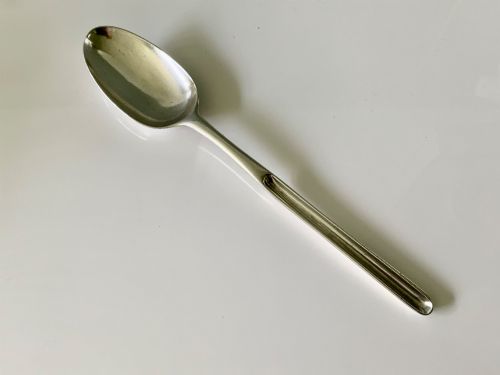
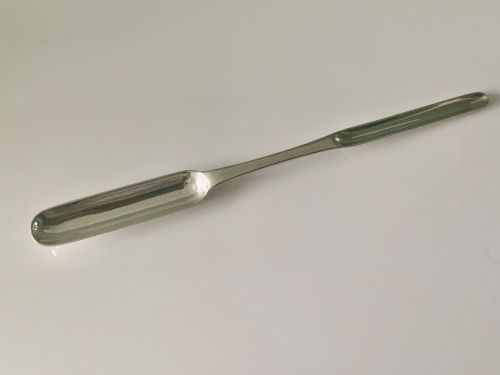
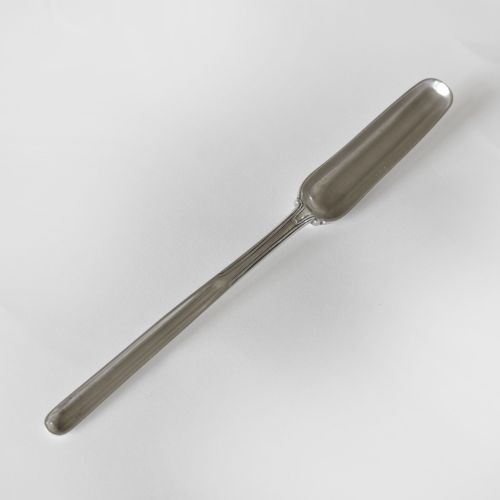
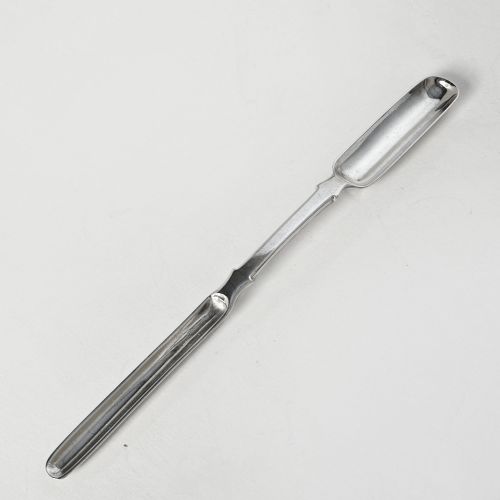
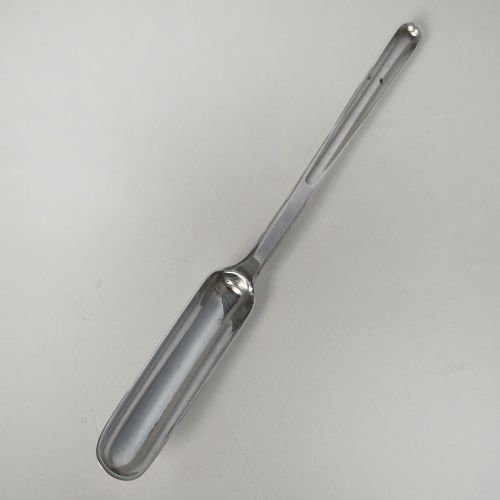


Georgian Sterling Marrow Spoon
A georgian sterling marrow spoon is a heavy silver table implement designed to scoop marrow from bones at grand dinners.
Georgian Sterling Marrow Spoon
When you search for a georgian sterling marrow spoon, you encounter heavy silver table implements designed to extract marrow from bones during formal dining. These items appear across the Georgian and 19th Century periods, spanning dates from 1700 through the William IV era.
The pieces on this page take the form of marrow scoops and marrow spoons, classified broadly under cutlery, flatware, and silverware. English and Irish origins predominate among the items, reflecting the primary centres of production.
You are most likely to meet standard Georgian and 19th Century silver marrow scoops forged in London or Ireland. These functional implements demonstrate the domestic dining habits of past centuries through their double-ended or single-ended bowl designs.
How they were made
Makers fashioned a georgian sterling marrow spoon from solid silver, sterling silver, and standard silver. Smiths worked the metal into substantial gauges to withstand the leverage needed at the table.
Techniques relied on traditional silversmithing methods, shaping the narrow, elongated bowls and channelled stems by hand. Individual makers struck their marks into the metal alongside town and date stamps.
Listings span the eighteenth and nineteenth centuries, featuring solid silver from English and Irish makers.
What varies in quality
Quality in a georgian sterling marrow spoon rests upon the crispness of the maker marks and the retention of gauge in the silver bowls. Pieces bearing clear hallmarks from notable silversmiths command greater attention from collectors.
The weight of the solid silver and the balance of the elongated channel also distinguish superior examples. Wear from use alters the depth of the hallmarks and thins the edges of the narrow scoops over time.
Edward Power·Jonathan Hayne·Thomas Johnson
The Georgian Sterling Marrow Spoon Glossary
- Marrow scoop
- A dual-ended silver utensil featuring one narrow trough for long bones and a smaller spoon bowl for smaller bones.
- Hallmark
- A set of official stamps struck into silver indicating the maker, city, and year of assay.
- Sterling
- A silver alloy containing ninety-two point five percent pure silver by mass, standard for British plate.
- Flatware
- Table cutlery designed for eating or serving, encompassing spoons and forks.
Georgian Sterling Marrow Spoon: Frequently Asked Questions
What is a marrow spoon used for?
A georgian sterling marrow spoon served a specific purpose at formal dining tables. Diners used the narrow channel to extract bone marrow from roasted joints.
The smaller bowl at the opposite end handled smaller bones or served sauces. These implements highlight the richness of Georgian dining customs.
How do I date a silver marrow scoop?
Dating relies upon the hallmarking system stamped directly into the silver. Assay office marks and date letters reveal the exact year of production.
Makers' marks further narrow down the origin to specific workshops in London or Ireland.
Are these spoons made of solid silver?
Marrow scoops from this era consist of solid silver or sterling silver. Smiths utilised heavy gauges of metal to ensure durability during use.
Plated metals do not appear among these genuine Georgian pieces.
Where were marrow spoons made?
Production centred primarily in English and Irish workshops. London assay offices handled a large proportion of these pieces.
Irish makers also produced distinct regional variants during the nineteenth century.