




Georgian Spirit Bottles
Georgian spirit bottles encompass heavy glass decanters, flasks and fitted cellarettes designed to hold the contents of the spirits cabinet securely.
Georgian Spirit Bottles
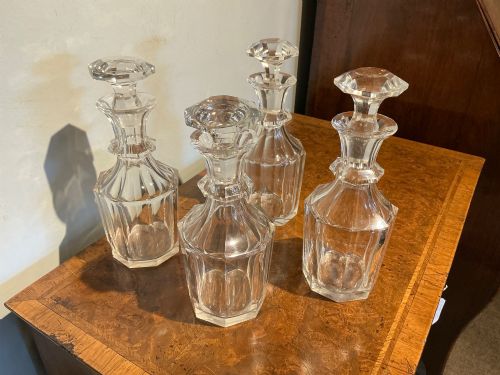
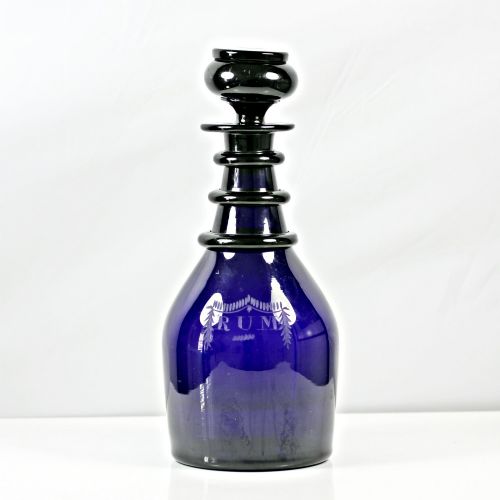
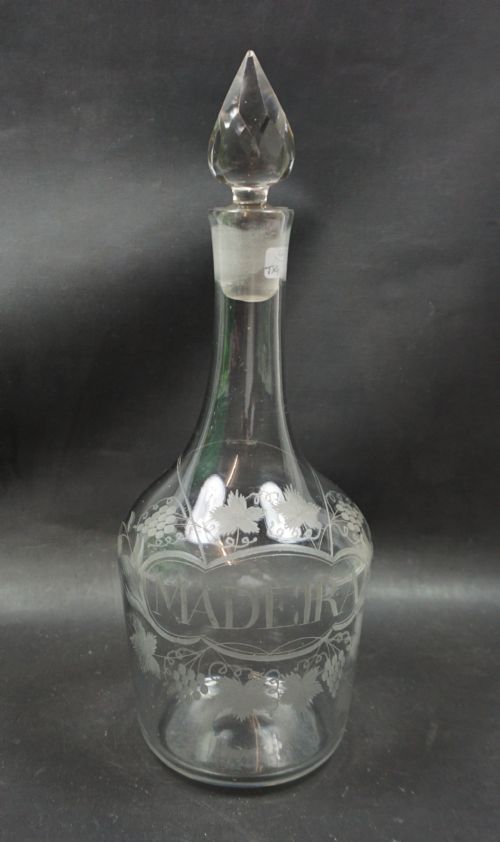
When you search for georgian spirit bottles, you encounter lead glass decanters, coloured flasks and silver-labelled bottles spanning the eighteenth and early nineteenth centuries. These vessels held rum, gin, Madeira or whiskey for the dining table and sideboard.
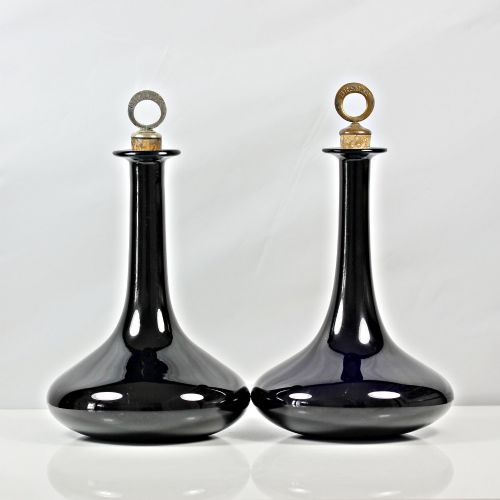
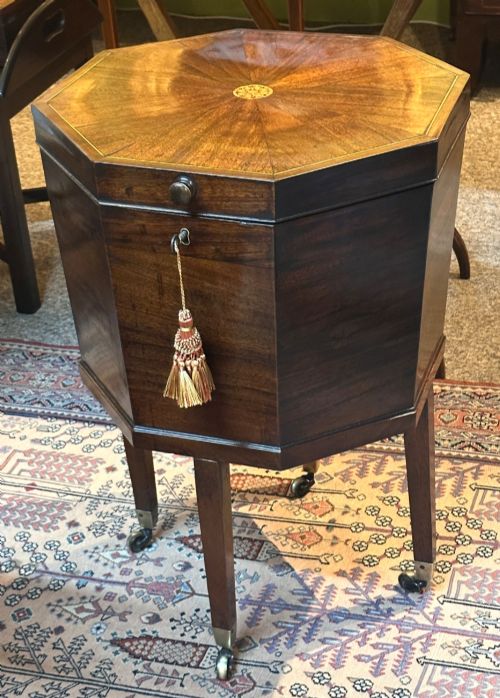
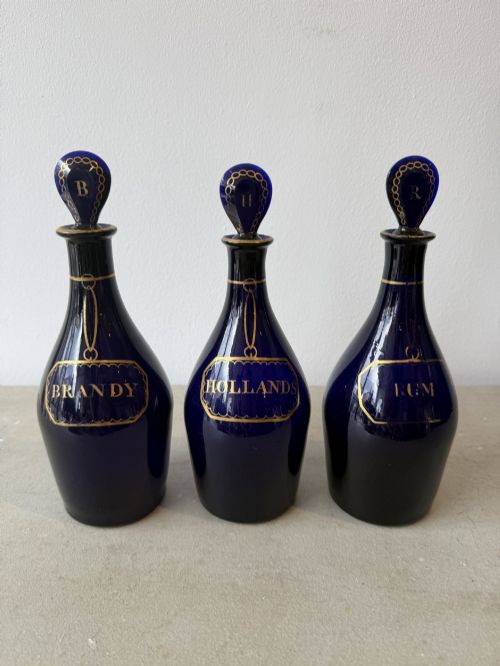
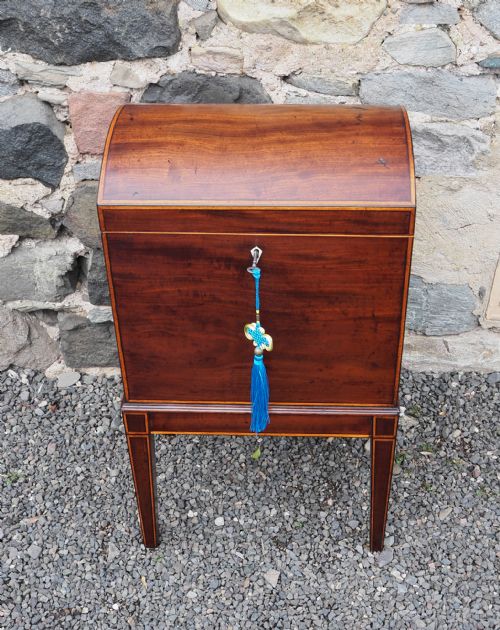
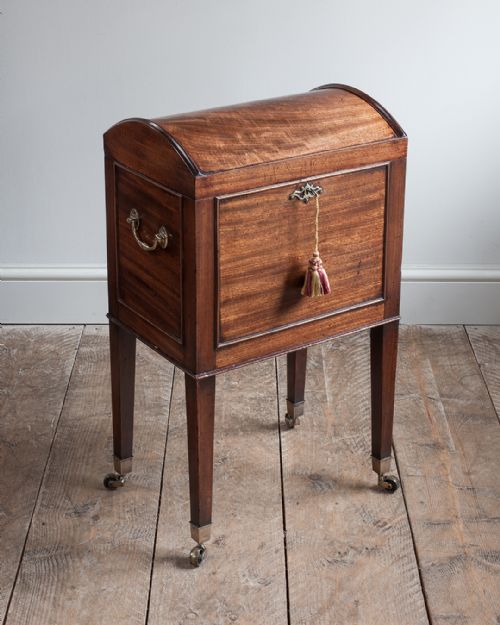
Bristol blue, emerald green and clear lead crystal dominate the forms on this page, often shaped as mell decanters, sugarloaf beer decanters or pocket flasks. They sit alongside mahogany cellarettes and wine boxes designed to house multiple bottles safely during transport or service.
How they were made
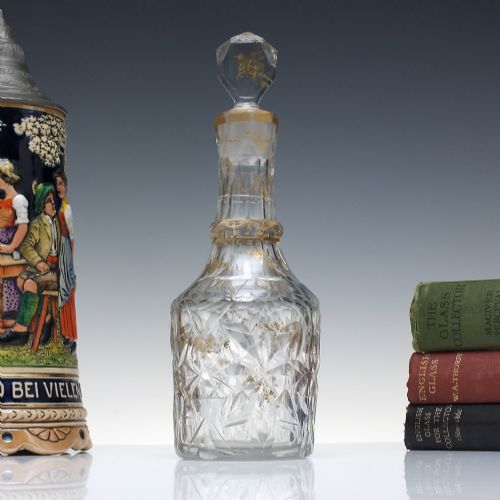
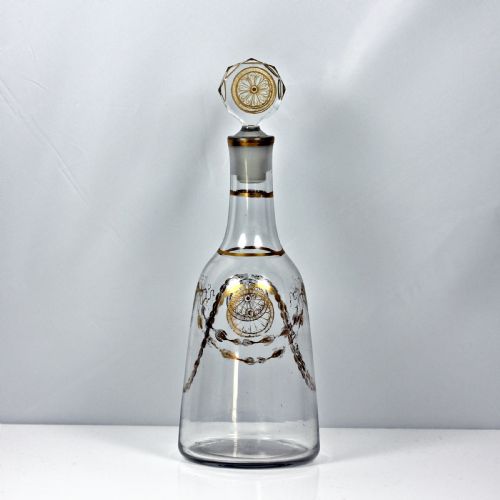
Makers shaped lead glass and crystal by blowing molten metal into moulds or free-blowing before cutting geometric facets and three-ring necks by hand. Guilds and independent workshops also applied gold leaf, enamel painting and engraved details directly onto the glass surface.
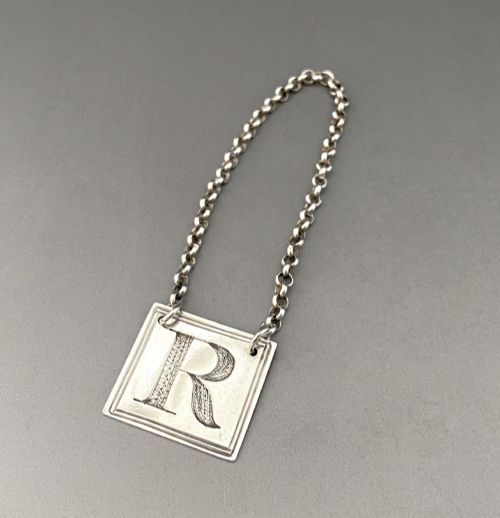
Silver and Old Sheffield Plate provided the identifying labels hung from chains around the bottle necks, while mahogany and brass formed the structural boxes and cellarettes that kept the bottles upright.
Materials span cut glass, lead crystal, mahogany, sterling silver, gold leaf and Old Sheffield Plate across eighteenth and nineteenth-century pieces.
What varies in quality
The weight and clarity of the lead crystal separate standard production bottles from exceptional examples, as heavier metal allows for deeper, crisper hand-cutting. Original stoppers that match the body in tint and cut also distinguish superior pieces.
Finely executed enamel decoration, such as the work attributed to James Giles, alongside hallmarked silver neck labels bearing identifiable maker marks, elevate the status of an individual bottle.
James Giles·Digby Scott Benjamin Smith·William Sharp·Elizabeth Morley
The Georgian Spirit Bottles Glossary
- Mell decanter
- A decanter shaped like a mallet with a broad base and tapered shoulders, designed to prevent tipping on board ships or crowded tables.
- Cellarette
- A fitted wooden cabinet or box, often lined and partitioned, used for storing multiple decanters and bottles.
- Decanter label
- A small plaque of silver or plated metal hung by a chain around the neck of a bottle to identify the spirit inside.
- Lead crystal
- Glass containing lead oxide that increases refractive index, weight and clarity, producing a resonant ring when struck.
- Nailsea glass
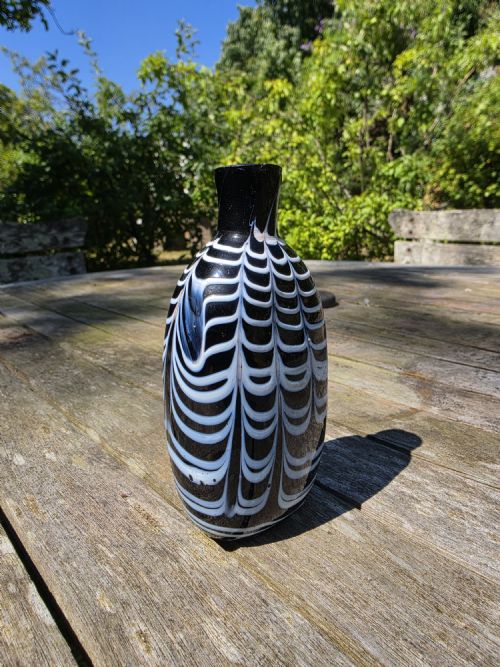
- Glassware characterised by looped or speckled enamel and glass-thread decoration, produced in Somerset and associated with nineteenth-century flasks.
Georgian Spirit Bottles: Frequently Asked Questions
How do I clean old glass decanters?
Resist using harsh abrasives or extreme temperature shifts on fragile antique lead glass. Warm water and soft cleaning beads generally remove interior residue without harming the historical surface.
Dry the vessel thoroughly and store the stopper separately to prevent moisture trapping inside the neck.
How can I tell a Georgian decanter from a Victorian one?
Examine the base for a polished pontil mark where the blowpipe was snapped off and ground flat, which is typical of eighteenth and early nineteenth-century manufacture. Heavier moulding and deeper chemical tints often point towards later nineteenth-century production.
Checking the style of the cut rings and the accompanying silver hallmarks provides a clearer date range.
Were these bottles meant for dining tables?
Wealthy households used decanters to serve spirits and wines directly from the sideboard or dining table after servants cleared the main meal. Smaller pocket flasks travelled in campaign chests or officers' campaign sets for personal use.
Fitted cellarettes kept multiple bottles secure during movement between rooms or during travel.
What spirits did they hold?
Silver labels on these bottles specifically name contents like Madeira, rum, gin, sherry and schnapps. Strong spirits required sturdy lead glass containers with secure stoppers to prevent evaporation.
Individual bottles often bore specific labels so guests could identify the contents easily.