



Green Glass Spirit Decanters
Green glass spirit decanters bring vibrant colour and historic craftsmanship to a dining table.
Green Glass Spirit Decanters
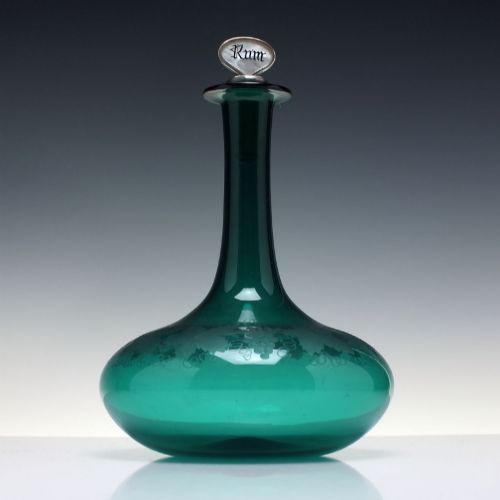
Green glass spirit decanters are distinctive vessels designed to hold and serve spirits, appearing across periods from the eighteenth century through to the art deco era. When searching for green glass spirit decanters, collectors encounter a variety of forms ranging from classic club-shaped bottles to fitted sets housed in wooden boxes. The pieces available reflect diverse stylistic influences, including Georgian, Victorian, art nouveau, and art deco designs.
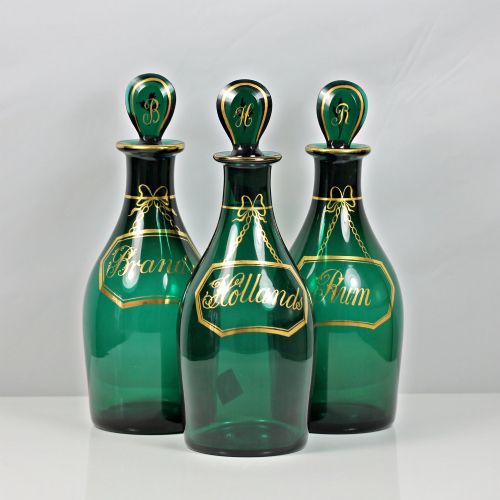
The assortment on this page includes individual flagons, paired decanters, and complete sets accompanied by silver plate, enamel, or gilt detailing. Buyers frequently meet nineteenth-century Bristol green examples alongside continental glass productions from the nineteen-thirties. Each object demonstrates the practical utility and decorative appeal valued by historic hosts.
Materials and manufacture
The fabrication of these vessels relies primarily on traditional glassblowing techniques, yielding deep green hues characteristic of nineteenth-century and earlier workshops. Artisans shaped the molten metal into robust bottle and club forms designed to withstand regular domestic use.
Mountings and ornamentation incorporate secondary materials such as silver plate, enamel decoration, and gold leaf applied to the glass body. Fitted storage containers utilise mahogany lined with baize and furnished with brass hardware to secure the bottles safely.
Green Glass Spirit Decanters Retail Price Guide 2026
Typical asking prices for green glass spirit decanters among the pieces listed under this phrase on Sellingantiques today, from the lower quarter to the upper quarter. They describe what is for sale here now, not the wider market.
Listings feature items spanning the eighteenth, nineteenth, and twentieth centuries, incorporating materials like mahogany, brass, enamel, and gold leaf.
Assessing quality
Distinctions in quality rest upon the depth and uniformity of the glass colour and the crispness of any hand-applied enamel or gilding. Superior examples display balanced proportions in their silhouette, whether formed as a simple flagon or an elaborate club shape.
The integration of metal mounts and fitted boxes elevates the sophistication of a piece, demonstrating careful coordination between the glassmaker and metalworker. Finer sets maintain their original stoppers and undamaged decorative surfaces, marking them out from simpler utilitarian bottles.
The Green Glass Spirit Decanters Glossary
- Bristol green
- A deep, saturated shade of green glass historically associated with West Country production centres during the eighteenth and nineteenth centuries. This intense colour protects contents from light degradation while offering a striking visual display.
- Club shape
- A traditional decanter silhouette featuring a rounded base tapering upward to a slender neck. This classic proportion ensures a comfortable grip when pouring spirits.
- Flagon
- A large bottle-like vessel fitted with a stopper or closure, designed specifically for holding liquors. These pieces often lack handles, relying on their body contour for handling.
Green Glass Spirit Decanters: Frequently Asked Questions
What spirits went into these decanters?
These vessels typically held strong liquors such as gin, brandy, or cordials served at the conclusion of a meal.
Their secure stoppers helped preserve the strength and flavour of the spirits over extended periods of storage on the sideboard.
How do I date green glass decanters?
Dating relies on examining the pontil mark at the base, the style of the lip, and the overall silhouette of the vessel.
Georgian and Victorian examples display different weight and colour characteristics compared to twentieth-century art deco pieces.
Are original stoppers important?
Matching stoppers greatly enhance the integrity and visual harmony of a decanter set.
Original stoppers often bear matching grind marks or numbers corresponding to the neck of the bottle.
How should I clean them?
Gentle washing with warm water and mild soap preserves the delicate interior residue without scratching the historic glass.
Harsh brushes or modern dishwashers must be avoided to protect antique enamel and gold leaf details.