




Georgian Specimen Chest
A georgian specimen chest is a purpose-built cabinet designed to organise natural history specimens or small curiosities.
Georgian Specimen Chest
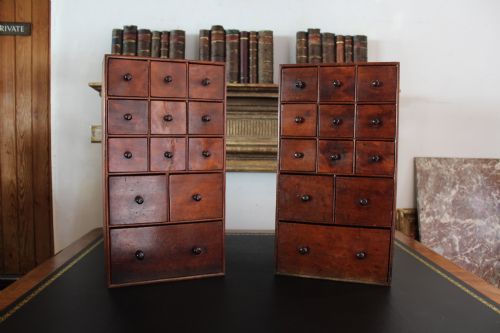
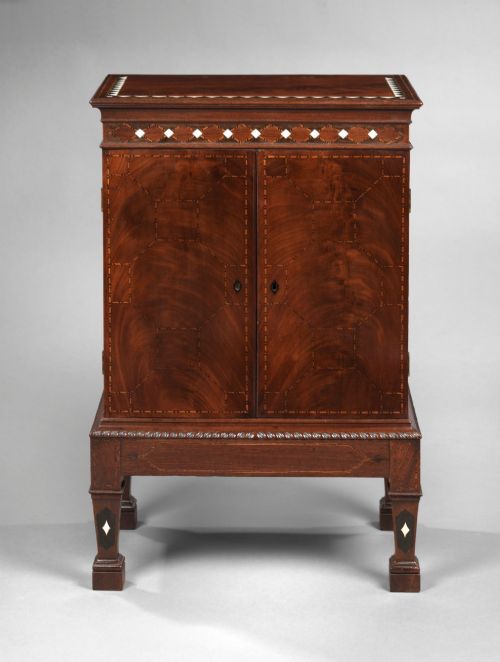
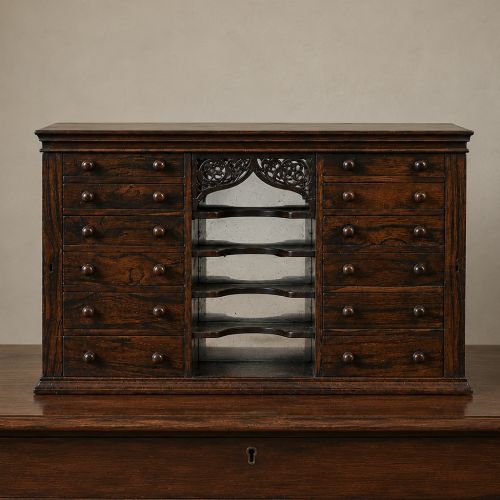
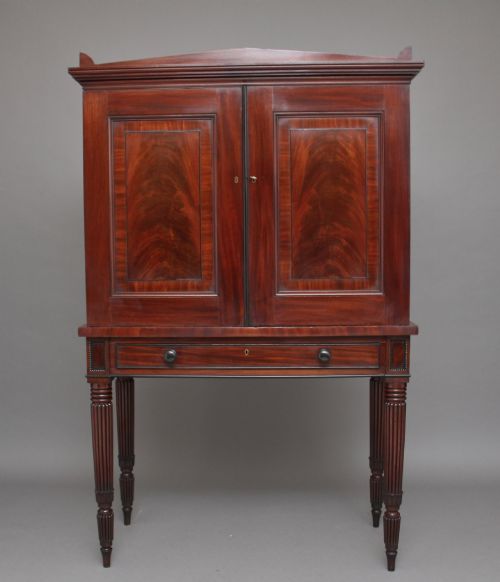
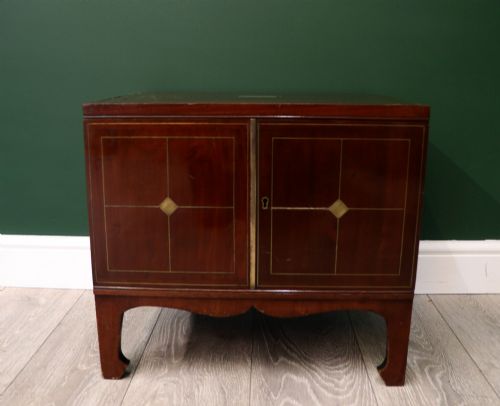
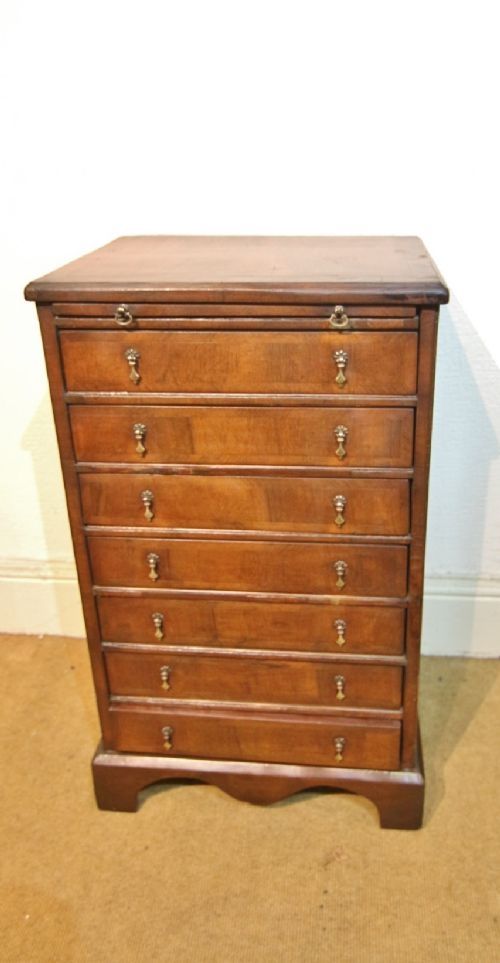
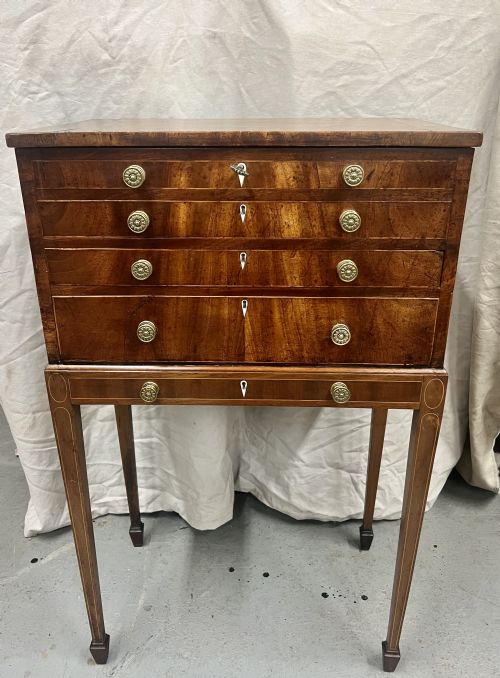
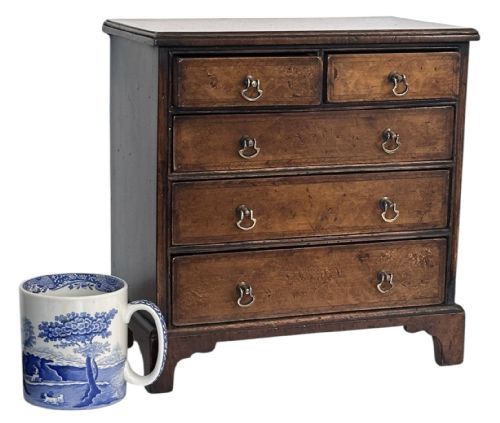
When you examine a georgian specimen chest, you look at compact cabinetry designed to house natural history specimens, coins, or small curiosities. The pieces listed span periods from the eighteenth century through the nineteenth, adopting forms like miniature chests, cabinets on stands, and multi-drawer banks.
These items serve as intimate storage solutions created for private collectors and naturalists. The forms reflect an era of intense scientific interest and methodical classification.
How they were made
Cabinet makers constructed these pieces primarily using dense timbers such as mahogany, walnut, and oak, occasionally incorporating secondary woods like pine. Surfaces display brass handles, brass inlays, or bone details.
The internal construction relies on tightly fitted banks of shallow drawers designed to slide smoothly without disturbing fragile contents. Joinery reflects period techniques suited to miniature proportions and heavy daily use.
Listings feature woods including mahogany, walnut, oak, yew, fruitwood, amboyna, and pine, alongside brass and bone inlay.
What varies in quality
The distinction between tiers of quality rests on the selection of timber veneers, such as figured walnut or Cuban mahogany, and the precision of the internal drawer construction. Finer examples display meticulous grain matching and sophisticated hardware like recessed brass campaign handles.
Charles William Schofield·William John Burchall·J C Dale
The Georgian Specimen Chest Glossary
- Specimen cabinet
- A piece of furniture fitted with multiple shallow drawers intended for housing natural history collections, fossils, or coins. These items provide dust-proof storage while allowing orderly cataloguing.
- Campaign style
- Furniture designed for portability, typically featuring brass corner brackets and flush-fitting inset handles. This construction allowed military officers and travelling naturalists to transport possessions securely.
- Wellington chest
- A tall, narrow chest of drawers secured by a hinged locking side pilaster that fastens over the drawer edges. The design originates from the nineteenth century and maximises vertical storage capacity.
- Apprentice piece
- A miniature item demonstrating a craftsman's skill before achieving master status in a guild. These smaller objects replicate the joinery and proportions of full-scale furniture.
Georgian Specimen Chest: Frequently Asked Questions
What did people store inside a georgian specimen chest?
These cabinets housed natural history specimens, geological samples, insects, shells, or small coins. Collectors utilised the shallow drawers to organise and preserve delicate items.
The interiors provided dark, enclosed environments protected from dust and light. This prevented degradation of fragile organic and mineral collections.
How do you date a georgian specimen chest?
Dating relies on timber selection, drawer construction methods, and prevailing decorative styles. Earlier eighteenth-century pieces often employ solid oak or mahogany with simple brass pulls.
Nineteenth-century examples introduce denser secondary woods, varied veneers like amboyna or rosewood, and complex locking mechanisms. Cabinet proportions also shift from robust Georgian forms to refined Regency lines.
Are these chests the same as apothecary cabinets?
While sharing a multi-drawer format, specimen chests served a different primary function than apothecary or homeopathic cabinets. Specimen storage required shallow, dust-sealed drawers for display and classification.
Apothecary chests generally held glass phials, powders, and medical ingredients. The internal divisions and depths reflect the containment of bottles rather than flat specimens.
Where should you place a georgian specimen chest at home?
These compact chests suit tabletops, desks, or dedicated spaces where their detailed timber grain remains visible. Their modest scale allows placement in studies, libraries, or drawing rooms.
Keep them away from direct sunlight and temperature fluctuations to protect sensitive wood finishes and historical veneers. Proper placement ensures the small drawers continue to slide smoothly.