


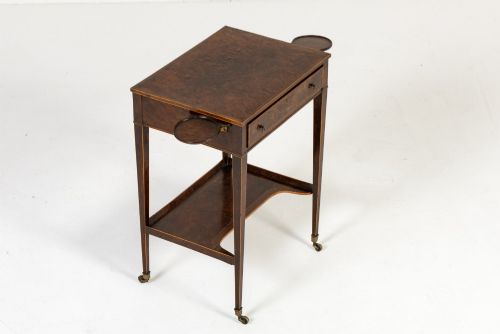
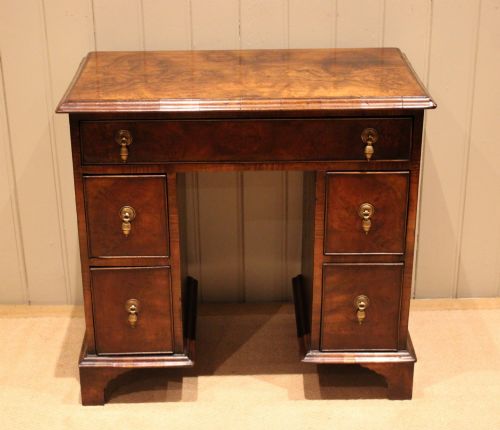
Georgian Small Writing Desk
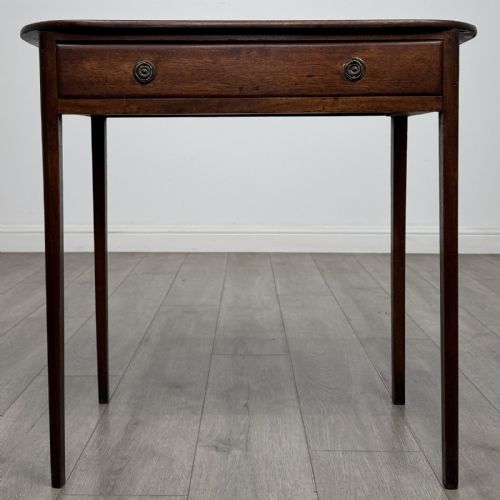
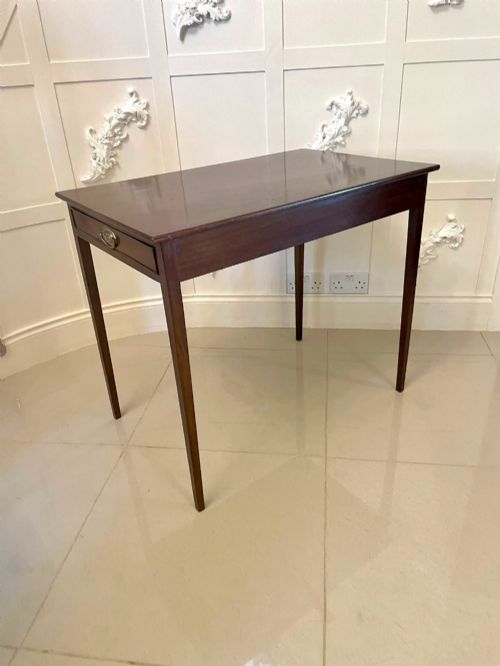
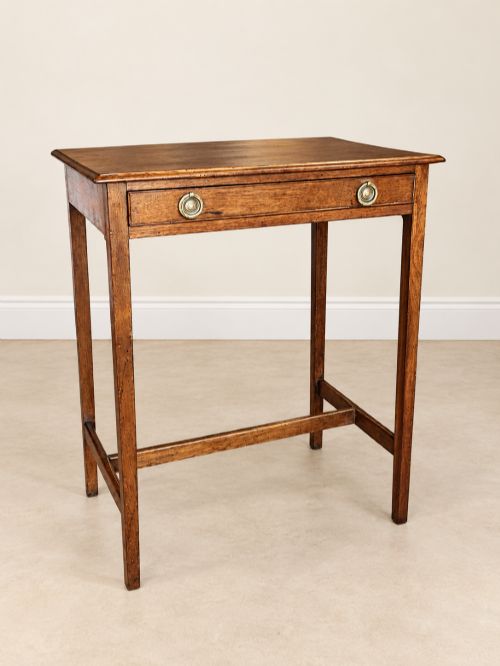
A georgian small writing desk brings compact practicality and fine cabinetmaking together in a single piece of antique furniture.
Georgian Small Writing Desk
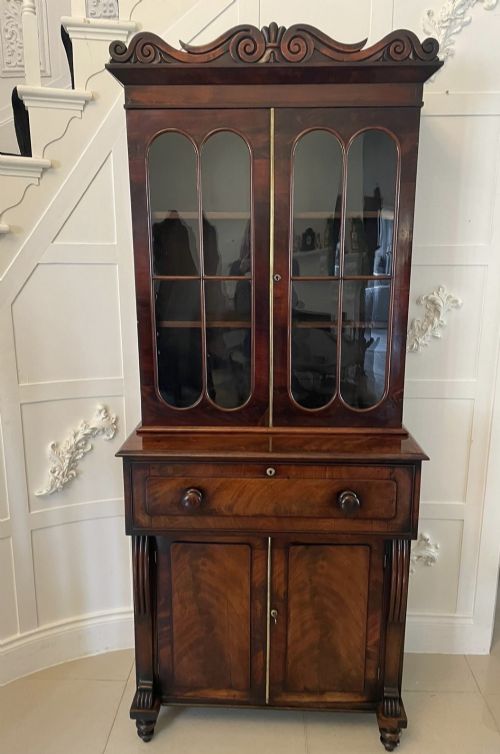
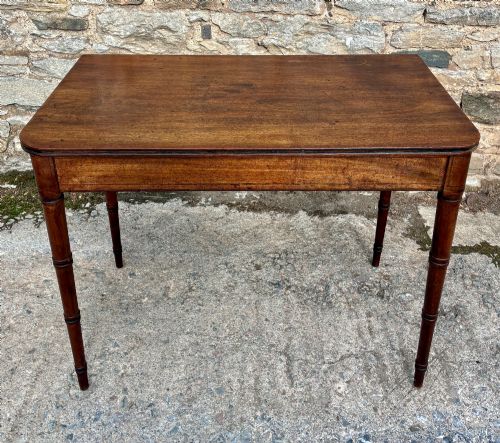
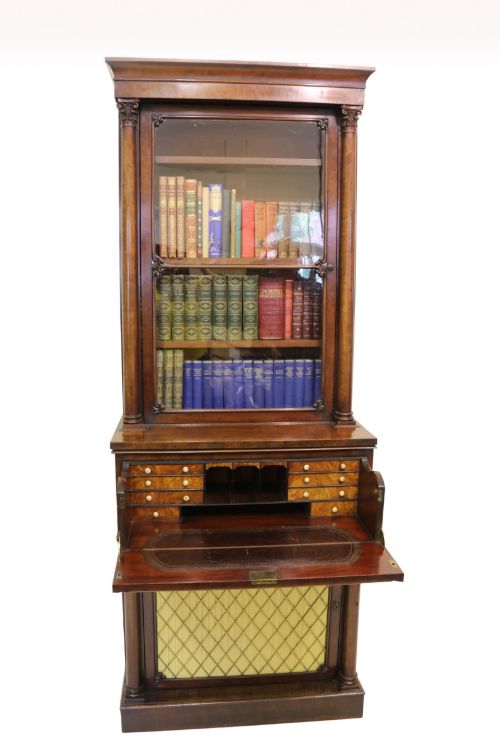
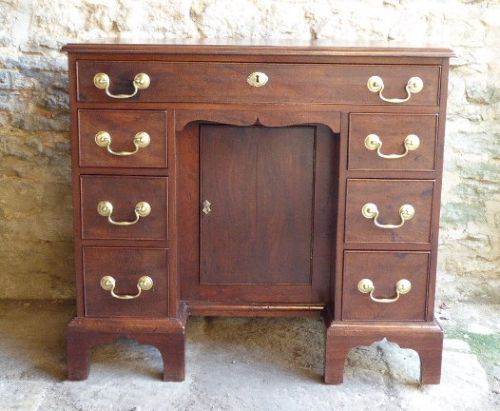
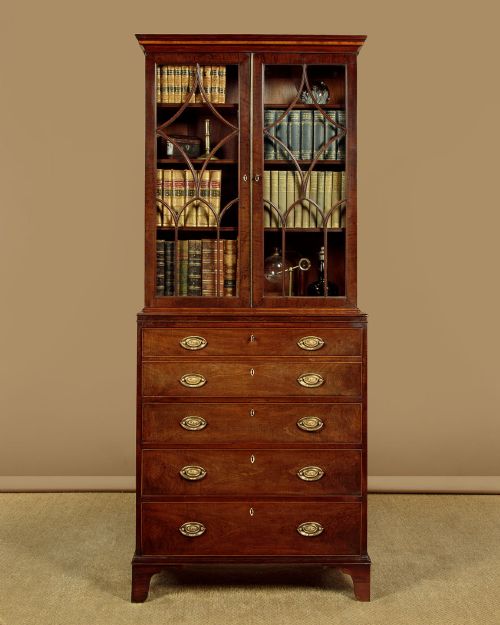
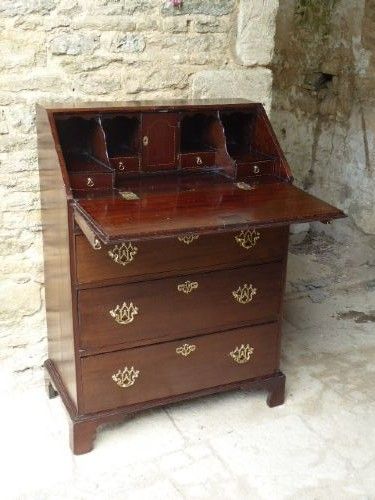
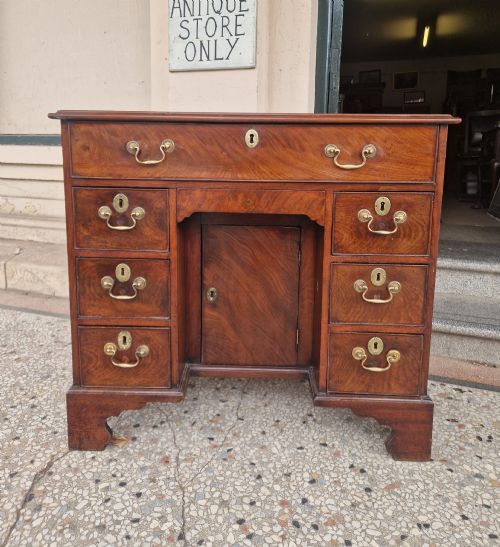
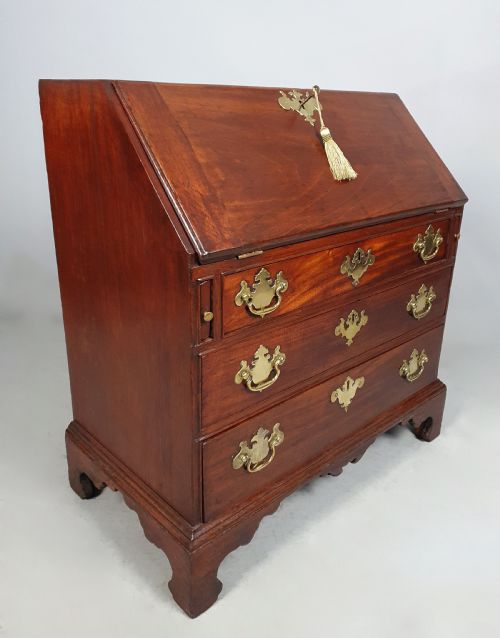
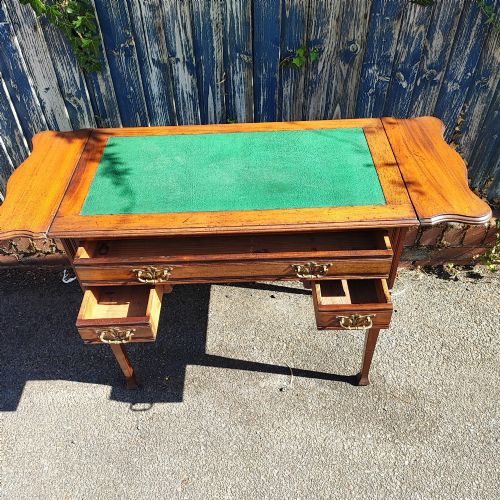
A georgian small writing desk encompasses several distinct forms designed for correspondence and private accounts, predominantly appearing as kneehole desks, bureaux, lowboys, and writing tables.
The pieces on this page span the Georgian, Regency, and 18th to 19th centuries, alongside later Georgian Revival interpretations from the early 20th century.
Mahogany and walnut form the core of what you will encounter, frequently augmented by satinwood inlay, oak linings, and fitted leather writing surfaces.
Materials and construction
Cabinetmakers utilised dense timbers like mahogany, walnut, and oak, often applying figured veneers such as burr walnut or burr yew over solid secondary woods.
Internal construction relies on traditional dovetailed drawer boxes and solid panel backs, while surfaces receive polished finishes that accentuate the natural grain of the wood.
Brass hardware, including drop handles and escutcheons, secures operational drawers and fall-front writing slopes.
Apprentice makers demonstrated their mastery by crafting miniature bureau bookcases at one-quarter scale as portable furniture samples.
Judging the work
Quality rests on the crispness of the cabinetwork, seen in tight dovetails, uniform cockbeading, and the harmonious selection of timber veneers across the facade.
Originality of handles, locks, and internal fitments elevates a piece, as does the retention of a rich, patinated surface finish developed over centuries of use.
Gillows of Lancaster
The Georgian Small Writing Desk Glossary
- Bureau
- A writing cabinet featuring a sloping fall-front that opens to reveal a fitted interior of small drawers and pigeonholes. This form provides a concealed workspace that can be locked when not in use.
- Lowboy
- A small side table fitted with one or more rows of drawers, commonly supported on slender cabriole or straight legs. These tables served multiple domestic functions including dressing and writing.
- Kneehole desk
- A pedestal desk with a recessed central cupboard space beneath the writing surface, flanked by banks of small drawers. This compact arrangement maximises storage within a restricted footprint.
- Satinwood
- A durable, lustrous exotic timber native to India and Ceylon, displaying a pale yellow colour and a reflective grain. Cabinetmakers utilised it extensively for contrasting stringing and decorative inlay.
- Davenport
- A compact pedestal desk featuring a sloping, hinged writing surface and drawers opening to the side. Gillows of Lancaster popularised this form during the Regency period.
- Crossbanding
- A narrow strip of veneer laid perpendicularly to the main grain of a furniture surface to create a decorative border. This technique frames the primary timber panels of drawer fronts and tabletops.
Georgian Small Writing Desk: Frequently Asked Questions
How do I spot a genuine georgian desk?
Examine the secondary timbers inside the drawer boxes, such as oak or pine, and check for hand-cut dovetails rather than machine-made joints. Original drawer linings and period timber shrinkage patterns offer reliable indicators of age.
Look closely at the brass hardware and the fit of the drawers within their apertures. Hand-planed surfaces and irregular tool marks further distinguish authentic 18th-century cabinetwork from later revivals.
Where were these desks used in the home?
These compact writing surfaces sat primarily in private bedchambers, withdrawing rooms, or small libraries where space remained at a premium. Owners utilised them for personal correspondence and managing household accounts.
Their modest proportions allowed them to stand against parlour walls or beside windows without dominating the room. The enclosed compartments of bureaux kept sensitive papers secure from general household view.
How do I care for an antique wood desk?
Maintain a stable room temperature and keep wooden furniture away from direct sunlight and heat sources to prevent the timber and veneers from drying out. Dust regularly with a dry, soft cloth and avoid modern silicone polishes.
Feed the polished surface occasionally with traditional beeswax to preserve the historical patina. Lift the desk entirely when moving it rather than dragging it across the floor to protect the leg joints.